
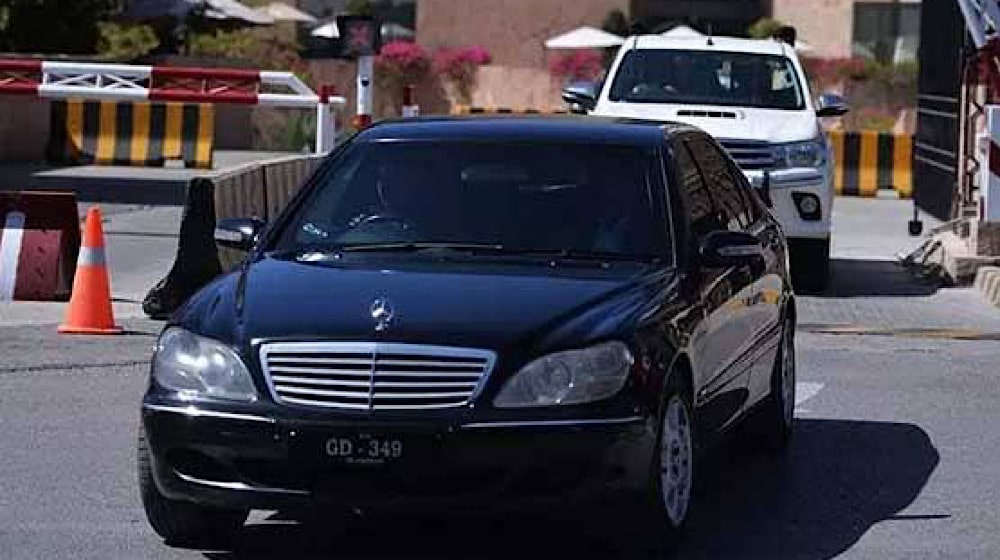
Optimizing Resource Allocation: The New Punjab Transport Policy
The Government of Punjab has strategically implemented a revised transport policy for its senior bureaucrats, meticulously updating vehicle engine capacities and monthly fuel allowances. This structural adjustment aims to enhance operational efficiency across various government departments. This new Punjab transport policy reflects a commitment to calibrated resource management within the public sector.
The Translation: Deconstructing Vehicle Entitlements
This revised framework precisely defines transport allowances, shifting from previous, less structured guidelines. Specifically, the Chief Secretary and Inspector General of Police (IG Punjab) are now authorized to operate three official vehicles: one at 2800cc, another at 1800cc, and a high-capacity 4700cc vehicle. For the 2800cc and 1800cc vehicles, a baseline of 800 liters of fuel per month is allocated. Crucially, the 4700cc vehicle has no stipulated fuel limit, presumably for mission-critical operations. Historically, these top officials were restricted to 1300cc and 1600cc vehicles with a mere 200 liters monthly. This marks a significant upgrade in operational mobility.
Revised Parameters for Senior Bureaucrats
- Grade 20–22 Secretaries: Now entitled to two vehicles (2800cc and 1800cc).
- Grade 21–22 Officers: Receive 200 liters of petrol for personal use, with unlimited fuel for official duties. Previously, administrative secretaries were assigned a single 1300cc vehicle and 200 liters.
Structural Updates for Mid-Level Management
The policy extends its revisions to various mid-tier management roles, establishing clear, enhanced provisions. This aims to empower these officers with appropriate resources for their responsibilities, ensuring smoother execution of governmental functions. This proactive adjustment supports a more responsive bureaucratic apparatus.
Specific Entitlement Upgrades:
- Grade 19–20 Special Secretaries & DIGs: Upgraded to 1600cc vehicles with 250 liters of petrol monthly. This is a notable increase from their previous 1000–1300cc vehicles and 175-liter allowance.
- Grade 19 Additional Secretaries: Now receive 200 liters of petrol monthly for a 1600cc vehicle, an increase from the previous 175 liters.
- Grade 18 Deputy Secretaries: Entitled to a 1500cc vehicle with 175 liters of petrol per month. This constitutes a substantial improvement from the prior 1000cc vehicle and 150-liter limit.
- Staff Officers (Chief Secretary & Additional Chief Secretary): Allocated 1300cc vehicles with 150 liters of petrol monthly.
- Staff Officers (Provincial Ministers): Provided with 1300cc vehicles and 125 liters of petrol per month.
The Socio-Economic Impact: Precision in Public Service
How does this calibrated adjustment directly affect the Pakistani citizen? While seemingly an internal bureaucratic matter, this revision impacts the efficiency and responsiveness of public services. Enhanced mobility for senior officers can translate to quicker on-ground responses, improved oversight of development projects, and more timely policy implementation. For professionals and students in urban and rural Pakistan, this structural enhancement signals a government striving for better operational capabilities, potentially leading to more effective service delivery in areas like infrastructure, security, and administration. Consequently, a more mobile and well-resourced bureaucracy can serve as a catalyst for economic growth and stability.
The “Forward Path”: A Stabilization Move
This revised Punjab transport policy represents a crucial stabilization move rather than a radical momentum shift. It is a strategic recalibration of existing resources to better align with current operational demands and inflationary pressures. The increased allowances aim to ensure that key governmental functions are not hampered by inadequate logistical support. This move prioritizes maintaining operational continuity and optimizing the existing administrative framework, setting a baseline for sustained, efficient governance. The focus is on robust maintenance of the system.








