
Punjab Hospital Reforms: A New Era of Patient Care
The Punjab government has launched a significant initiative, introducing mandatory rules for hospital staff. Led by Chief Minister Maryam Nawaz, this directive mandates body camera usage for various hospital personnel. This proactive step addresses increasing patient complaints about service quality and staff conduct in public health facilities. Consequently, these Punjab Hospital Reforms aim to revolutionize healthcare delivery and accountability across the province.
This bold initiative primarily seeks to enhance transparency and accountability in daily hospital operations. Authorities aim to create a more secure and trustworthy environment by documenting patient-staff interactions. Ultimately, this ensures patient care remains central to all medical activities. This decision demonstrates the Punjab administration’s commitment to overhauling the healthcare sector and resolving long-standing issues that have eroded public confidence.

Body Cameras: Driving Transparency in Punjab’s Hospitals
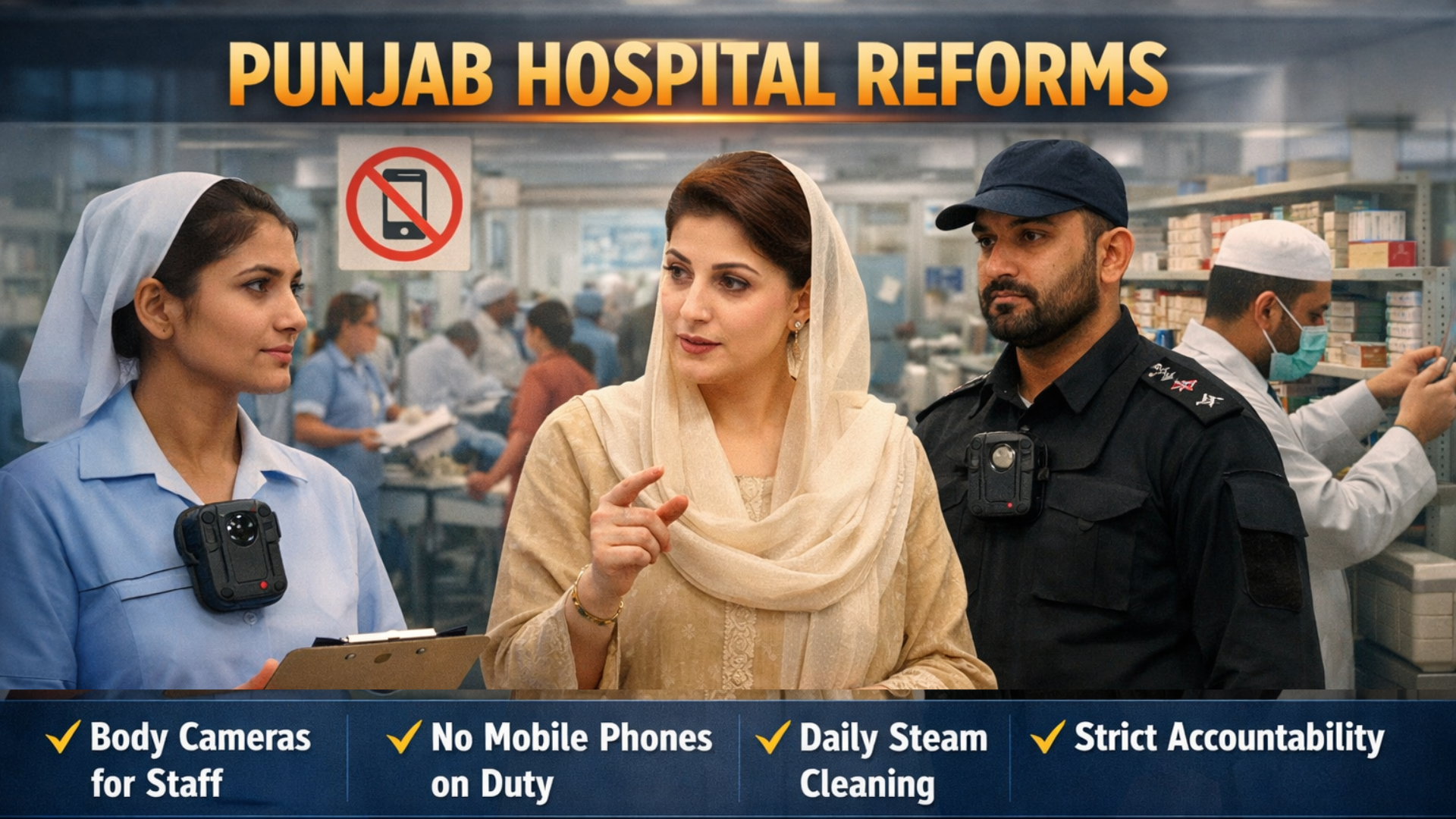
Chief Minister Maryam Nawaz recently presided over a critical meeting on provincial health projects. During this session, she unequivocally directed that nurses, ward attendants, security, and pharmacy staff must wear body cameras during duty hours. This measure is more than a formality; it serves as a vital tool for recording daily interactions. Consequently, it provides irrefutable evidence in disputes or complaints.
Furthermore, these body cameras aim to foster a culture of professionalism and empathy among healthcare providers. The rationale is clear: staff members knowing their actions are recorded incentivizes strict adherence to protocols and respectful conduct. Moreover, this initiative delivers the highest standard of care, significantly reducing misconduct, negligence, and miscommunication. Ultimately, this directly contributes to an improved patient experience, reinforcing the broader goals of the Punjab Hospital Reforms.
Collected footage will also prove instrumental in resolving grievances more effectively and impartially. This builds crucial trust between healthcare institutions and the communities they serve.
Beyond Body Cameras: Comprehensive Healthcare Reforms in Punjab
The body camera mandate forms only one part of a comprehensive reform package from the Punjab government. Chief Minister Maryam Nawaz also issued several other critical instructions. These aim to improve public hospitals’ overall functioning and environment. Hospital administrations, for instance, received strict directives to complete daily steam cleaning by 9 a.m. This highlights the government’s commitment to providing sanitary conditions, vital for patient recovery and infection prevention.
Furthermore, a stringent ban now prohibits doctors and nurses from using mobile phones during working hours. This measure eliminates distractions, ensuring healthcare professionals dedicate full attention to patient care. Patient well-being, therefore, remains the top priority. This dual approach—combining enhanced surveillance and strict operational protocols—aims to create a more focused, disciplined, and patient-centric healthcare environment.
Streamlining Management and Resources for Better Patient Care
To strengthen the administrative framework, the meeting approved creating a Medical Superintendent (MS) pool, a key component of the wider Punjab Hospital Reforms. This initiative streamlines management processes. Additionally, it introduces performance-linked salary incentives. These incentives motivate medical superintendents to excel and drive efficiency. Their performance will directly link to service quality and institutional operational effectiveness.
Furthermore, community health inspectors now conduct regular hospital surveys. Their mandate includes monitoring service standards and identifying improvement areas. They also ensure adherence to prescribed guidelines. This grassroots monitoring provides invaluable feedback, ensuring continuous improvement for patient care in Punjab. The Chief Minister also ordered preparing a revised medicines list for government hospitals. A committee will finalize this list, ensuring an uninterrupted supply of essential medicines and addressing past shortages, despite significant budgetary allocations.
A Healthier Future: Punjab’s Vision for Patient Care
The Punjab government’s initiatives embrace data-driven decision-making. For instance, a new data analysis center will assess health sector initiatives’ effectiveness. This center plays a vital role in evaluating new policies, identifying trends, and informing future strategies. Leveraging data, the government aims to make evidence-based decisions, leading to tangible improvements in public health outcomes across Punjab.
Chief Minister Maryam Nawaz issued a stern warning: inefficiency and negligence in public hospitals will not be tolerated. This unequivocal stance signals a new era of accountability and dedication within Punjab’s healthcare system. The comprehensive approach combines mandatory body cameras, rigorous hygiene, focused staff attention, strengthened management, and data-driven policies. These Punjab Hospital Reforms aim to transform the province’s hospitals into beacons of quality care and patient satisfaction. Ultimately, these significant positive changes will benefit millions of citizens.









