A precision-calibrated system response saw PSX trading suspended shortly after market open on Monday. The benchmark KSE-100 Index experienced a dramatic plunge exceeding 9%, specifically a 15,345-point decline to 152,717 within minutes. Consequently, automatic trading suspension protocols were activated under exchange regulations. This decisive action stabilized market integrity amidst escalating geopolitical tensions and global risk aversion, which triggered a wave of panic selling across the financial landscape. Furthermore, this intervention prevents further uncalibrated declines, providing a critical pause for market reassessment.
The Translation: Deconstructing Why PSX Trading Suspended

The core mechanism behind this suspension is a pre-defined circuit breaker, designed to mitigate extreme volatility. When the KSE-100 Index crosses a specific percentage threshold—in this instance, a fall greater than 9%—trading automatically halts. This prevents further rapid, uncalibrated declines, offering investors a crucial pause to reassess market conditions. The precipitous drop, registering 9.13% at 9:16 a.m., represents one of the most significant single-day intraday declines in the index’s operational history. Moreover, the KSE All Share Index dropped 8.49%, and the KSE-30 Index slid 9.69%, underscoring the broad-based impact that necessitated the PSX trading suspended decision.
Structural Impact Across Market Segments

Beyond the primary KSE-100, other critical indices also registered sharp losses. For instance, Shariah-compliant indices, specifically the KMI-30 and the KMI All Share Index, declined by 9.67% and 8.99% respectively. The PSX Dividend 20 Index also saw a 9.10% reduction. This widespread downturn signifies that market pressure was not confined to a singular sector or investment philosophy, but rather reflected a systemic reaction to external catalysts. Consequently, investor confidence requires strategic rebuilding after the PSX trading suspended event.
The Socio-Economic Impact: Daily Life and National Stability
How does a market suspension on the Pakistan Stock Exchange impact the daily life of an average Pakistani citizen? Firstly, for professionals and students aspiring to careers in finance or business, such events underscore the inherent risks and rapid shifts within capital markets. Secondly, for households with investments in mutual funds or pension schemes linked to these indices, a market correction can translate into reduced savings or deferred financial goals. Moreover, the broader economic sentiment, when influenced by market instability, can affect business investment and job creation. Urban centers, with higher exposure to financial news, might perceive immediate shifts, while rural areas could experience indirect effects through broader economic policy adjustments and investment slowdowns. Ultimately, maintaining a stable investment climate, even through necessary actions like when PSX trading suspended, is paramount for sustained national advancement.
Driving Forces Behind the Downturn
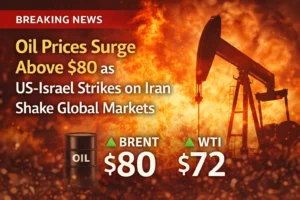
The primary catalyst for this market correction was heightened geopolitical tensions in the Middle East, particularly the escalating conflict involving Iran. This global instability rattled international financial markets, prompting investors to gravitate towards safer assets. Furthermore, persistent foreign capital outflows from Pakistan, combined with weakening earnings momentum and a cautious investor positioning, amplified the downward pressure on Pakistani equities. Key heavyweight constituents such as Fauji Fertilizer Company (FFC), United Bank Ltd. (UBL), Engro Holdings (ENGROH), Oil & Gas Development Company (OGDC), and Meezan Bank (MEBL) were significant contributors to the index’s erosion, reflecting a broad-based decline across major sectors, leading to the PSX trading suspended decision.
Sectoral Resilience and Vulnerability
The downturn broadly affected Commercial Banks, Fertilizer, Oil & Gas Exploration Companies, Cement, and Investment Banks and Securities Companies. Conversely, defensive sectors demonstrated minimal support. For instance, Leasing Companies, Close-End Mutual Funds, Synthetic & Rayon, Leather & Tanneries, and Textile Spinning posted only limited gains. This highlights the market’s generalized vulnerability, with few sectors providing significant offset to the overall slide. Precise sectorial analysis is critical for future strategic investments and understanding the full scope of why PSX trading suspended was necessary.
The “Forward Path”: A Structural Stabilization Move

This market suspension unequivocally represents a Stabilization Move. It is not a momentum shift indicative of progress, but rather a necessary recalibration to prevent further systemic shock. The activation of circuit breakers is a structural safeguard, demonstrating the PSX’s capacity for controlled response during periods of extreme volatility. Trading is expected to resume in phases, with a pre-open session scheduled for 10:22 a.m. and official reopening at 10:27 a.m. This structured resumption allows investors to reassess the external shocks and global risk aversion with a more calibrated perspective. Pakistan’s financial systems are demonstrating a disciplined approach to managing external economic pressures, which is a baseline requirement for long-term growth and preventing another situation where PSX trading suspended becomes a necessity.