

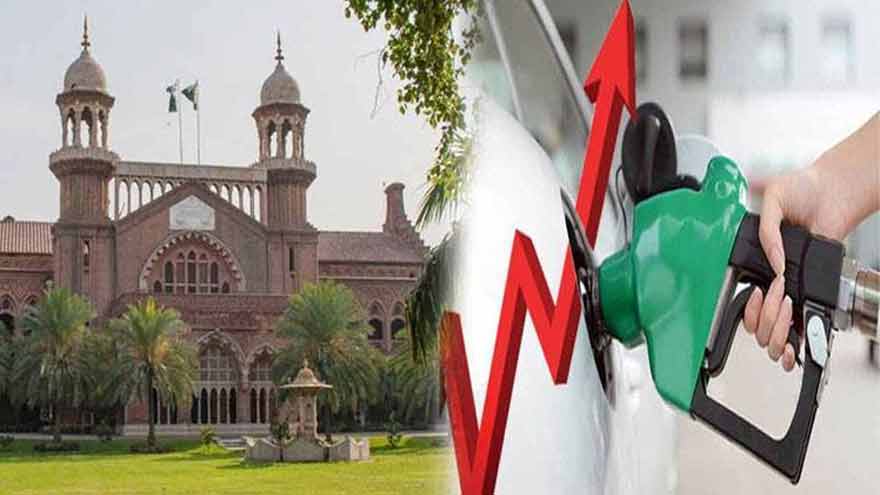
The strategic framework for national resource allocation faces critical examination as a significant legal challenge emerges in the Lahore High Court. A recent petition directly contests the government’s notification of increased petroleum prices, demanding its immediate suspension. This legal maneuver, centered on the petrol price challenge, argues that the substantial hike of Rs. 55 per liter for both petrol and high-speed diesel is both unlawful and detrimental to the public’s economic stability. Consequently, this action seeks judicial intervention to recalibrate fuel pricing mechanisms for broader national benefit.
The Translation: Decoding the Fuel Price Litigation
Azhar Siddique, representing the Judicial Activism Panel, has strategically filed this petition against the government’s recent fuel price adjustment. He asserts that the Rs. 55 per liter increase for both petrol, now at Rs. 321, and high-speed diesel, set at Rs. 336, constitutes an illicit burden on citizens. Furthermore, the petition highlights that oil marketing companies routinely maintain 15-day petroleum reserves. Raising prices despite these existing stocks, the filing contends, is fundamentally unjust and illegal, lacking a clear operational imperative. Therefore, the court has been requested to compel the Oil and Gas Regulatory Authority (OGRA) and the Ministry of Energy to disclose comprehensive details of these national reserves.
Challenging the Notification’s Structural Validity
The core of this legal argument aims to declare the government’s price hike notification null and void. The petitioner’s action underscores a structural concern regarding transparency and due process in significant economic decisions. This direct challenge seeks to prevent future arbitrary price adjustments, setting a precedent for more rigorous oversight. Consequently, it reflects a broader public desire for economic predictability and governmental accountability.
The Socio-Economic Impact: Calibrating Citizen Burden
How does this change the daily life of a Pakistani citizen? The immediate consequence of this legal challenge is a direct escalation in essential living costs. For urban professionals, increased transportation expenses erode disposable income, impacting daily commutes and household budgets. In contrast, rural households and farmers face amplified agricultural input costs, potentially leading to higher food prices across the nation. This cascading effect directly influences electricity tariffs, manufacturing overheads, and the overall inflation trajectory, placing calibrated pressure on every segment of society. Thus, the court’s decision will critically shape economic accessibility for students, professionals, and families alike.
Direct Effects on Households and Industries
- Transportation Costs: Commutes become more expensive, directly impacting daily travel for workers and students.
- Agricultural Expenses: Farmers bear higher operational costs for machinery and transporting produce, likely increasing food prices for consumers.
- Electricity Tariffs: Fuel is a primary input for power generation, meaning higher petrol prices can translate into elevated electricity bills for all sectors.
- Food Prices: The cumulative effect of increased transport and agricultural costs contributes directly to inflationary pressures on essential food items.

The Forward Path: A Momentum Shift or Stabilization Move?
This petrol price challenge represents a significant “Momentum Shift” towards greater public accountability and systemic transparency. It is not merely a stabilization move; rather, it is a proactive demand for governance that is responsive and data-driven. The act of challenging a government notification in the Lahore High Court signifies an evolving civic landscape where citizens are actively asserting their right to equitable economic policies. This legal action could serve as a powerful catalyst, urging state entities like OGRA and the Ministry of Energy to adopt more robust, transparent methodologies for pricing essential commodities. Consequently, this could lead to a more predictable and fair economic environment for all Pakistanis, fostering trust in institutional frameworks.









