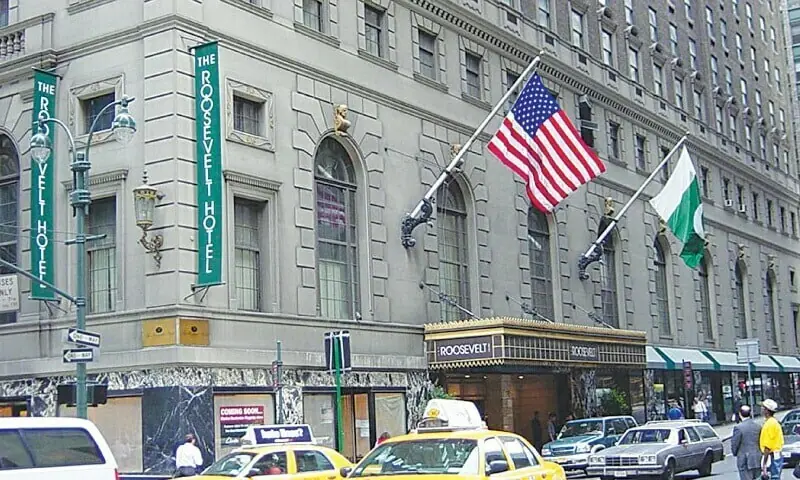
Pakistan and the United States have strategically initiated the Roosevelt Hotel Redevelopment in New York, formalizing a pivotal Memorandum of Understanding (MoU). This collaboration aims to optimize the hotel’s operation, maintenance, renovation, and potential strategic redevelopment. The agreement establishes a structured framework for joint technical, commercial, and economic assessment, ensuring transparency and mutually beneficial outcomes. Ultimately, this strengthens economic ties between both nations and unlocks significant asset value for Pakistan, aligning with its national privatization strategy.
Strategic Framework: Deconstructing the Roosevelt Hotel Redevelopment
The governments of Pakistan and the United States have precisely launched a strategic economic initiative. This collaboration focuses on enhancing cooperation for the Roosevelt Hotel in New York, spanning its operation, maintenance, renovation, and potential redevelopment. Furthermore, this engagement involves key collaboration with the US General Services Administration. Steve Witkoff, under the leadership of Donald J. Trump, meticulously negotiated and oversaw the initiative.
To formalize this critical partnership, both sides executed an MoU. Edward C. Forst represented the United States, while Muhammad Aurangzeb signed on behalf of Pakistan. Shehbaz Sharif and Special Envoy Steve Witkoff witnessed the ceremony, marking a significant step. Consequently, this MoU establishes a structured and time-bound framework designed for sustained cooperation. This framework mandates a joint assessment of the project’s technical, commercial, and economic dimensions, reflecting a shared commitment to discipline and advantageous results.

Socio-Economic Impact: How Roosevelt Hotel Redevelopment Empowers Pakistan
This initiative profoundly impacts the daily life of a Pakistani citizen through a calibrated approach to national asset management. Unlocking maximum value from the Roosevelt Hotel, a prime asset in Manhattan, directly supports Pakistan’s privatization strategy. This strategic move generates potential revenue, which can be channeled into vital national development projects. Consider the ripple effect: funds could bolster educational programs, improve healthcare infrastructure, or accelerate technological advancements, directly benefiting students and professionals across urban and rural Pakistan.
Moreover, strengthening economic ties with the United States is a catalyst for broader investment opportunities. This can lead to increased foreign direct investment within Pakistan, fostering job creation and enhancing living standards for households. Given New York’s complex zoning and municipal regulations, enhanced institutional coordination is crucial. This precision reduces execution risks, improves regulatory clarity, and maximizes transaction value, thereby safeguarding Pakistan’s investment and ensuring optimal returns for its citizens. Officials emphasize that such facilitative arrangements align with international best practices for complex cross-border real estate and infrastructure projects, setting a strong precedent.

The Forward Path: A Calibrated Momentum Shift for Pakistan’s Global Stature
This development undeniably represents a Momentum Shift for Pakistan. It transcends mere maintenance; instead, it is a proactive, strategic re-calibration of a key international asset for future growth and enhanced bilateral leverage. The explicit alignment with Pakistan’s privatization strategy underscores a disciplined, forward-thinking approach to national asset optimization and global economic integration. Furthermore, this initiative establishes a robust baseline for future cross-border real estate and infrastructure endeavors. It clearly demonstrates Pakistan’s commitment to strategically optimizing its international portfolio, driving sustained progress and reinforcing its position on the global economic landscape.