Strategic Challenge: Pakistan U19 Faces Key Setback Ahead of India Clash
The structural integrity of a team’s strategic deployment is paramount. Pakistan’s U19 cricket squad faces a calibrated challenge. Specifically, the team has encountered a significant Pakistan U19 setback: wicketkeeper-batter Mohammad Shayan is officially ruled out of the ICC Men’s U19 World Cup 2026 due to a severe nasal fracture. This injury, sustained during an intensive scenario-based practice match, critically impacts the squad’s tactical options just ahead of their must-win Super Sixes encounter against India. Consequently, this development jeopardizes Pakistan’s semi-final aspirations and necessitated an immediate player replacement.
The Translation: Unpacking the U19 Injury Dynamics
The Pakistan Cricket Board (PCB) confirmed Mohammad Shayan suffered a serious blow to his nose. This occurred while wicket-keeping to a fast bowler during a crucial practice session, designed to simulate match conditions. He was immediately transported to a medical facility, where scans definitively identified a fracture. This precision in diagnosis underscores the severity of the injury, compelling his withdrawal from the remainder of the tournament. The incident highlights the inherent physical risks within high-performance cricket, even during controlled training environments.
Tactical Ramifications for the Squad
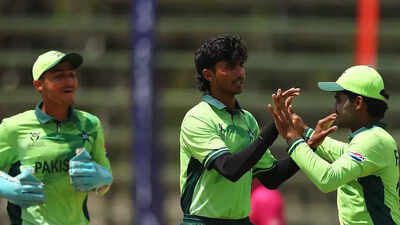
As a direct consequence of this injury, Shayan will regrettably miss Pakistan’s high-stakes Super Sixes clash against India. This pivotal match is scheduled for Sunday at the Queens Sports Club in Bulawayo. The Event Technical Committee of the ICC U19 Men’s Cricket World Cup 2026 subsequently approved Abdul Qadir as Shayan’s replacement. This swift administrative action ensures the squad maintains its full complement of players. However, Qadir’s integration demands rapid assimilation into team dynamics and strategic frameworks.
Shayan had previously participated in two matches during the ongoing tournament. He registered seven runs during Pakistan’s campaign opener against England and did not bat in their subsequent fixture against New Zealand. While his direct statistical impact might appear limited, the absence of a seasoned wicketkeeper-batter represents a structural void that requires robust mitigation strategies from the coaching staff.
The Socio-Economic Impact: Resonating Beyond the Boundary
Impact on Youth & Aspirations
This injury arrives at a critical juncture for Pakistan, directly impacting their ambition to secure a place in the U19 World Cup 2026 semi-finals. England and India currently lead the qualification race, intensifying the pressure. Such high-stakes events significantly influence the aspirations of young Pakistani athletes and their families. Furthermore, the performance of the national U19 team often catalyzes broader interest in sports among the youth, serving as a powerful motivator for physical activity and structured athletic pursuit. A strong showing builds national pride and inspires future generations of cricketers, impacting social cohesion and individual development.

Pakistan currently holds the third position in Group 2 of the Super Sixes standings, having accumulated four points from three matches. This places them two points behind group leaders India and second-placed England. Therefore, their final Super Sixes match against India is undeniably a must-win. A defeat would systematically terminate Pakistan’s campaign in the tournament, a significant disappointment for both the team and its passionate supporters across the nation. Beyond victory, Pakistan also strategically requires New Zealand to defeat England in their concurrent Super Sixes match. This outcome would negatively affect England’s net run rate, thereby sustaining Pakistan’s semi-final prospects.
The Forward Path: Evaluating Pakistan’s U19 Trajectory
A Momentum Shift or Stabilization Move?
This development represents a Stabilization Move rather than an immediate momentum shift. While the loss of a player is inherently disruptive, the rapid replacement with Abdul Qadir demonstrates efficient operational control by the PCB. The focus now precisely calibrates to integrating Qadir and adapting the team’s strategic blueprint. The ultimate outcome hinges on the squad’s resilience and their capacity to perform under immense pressure in the must-win match against India. A victory, despite this significant Pakistan U19 setback, would unequivocally demonstrate robust systemic adaptation and elevate the team’s standing as a formidable contender.