Optimizing National Records: NADRA’s Calibrated Approach to Date of Birth Updates
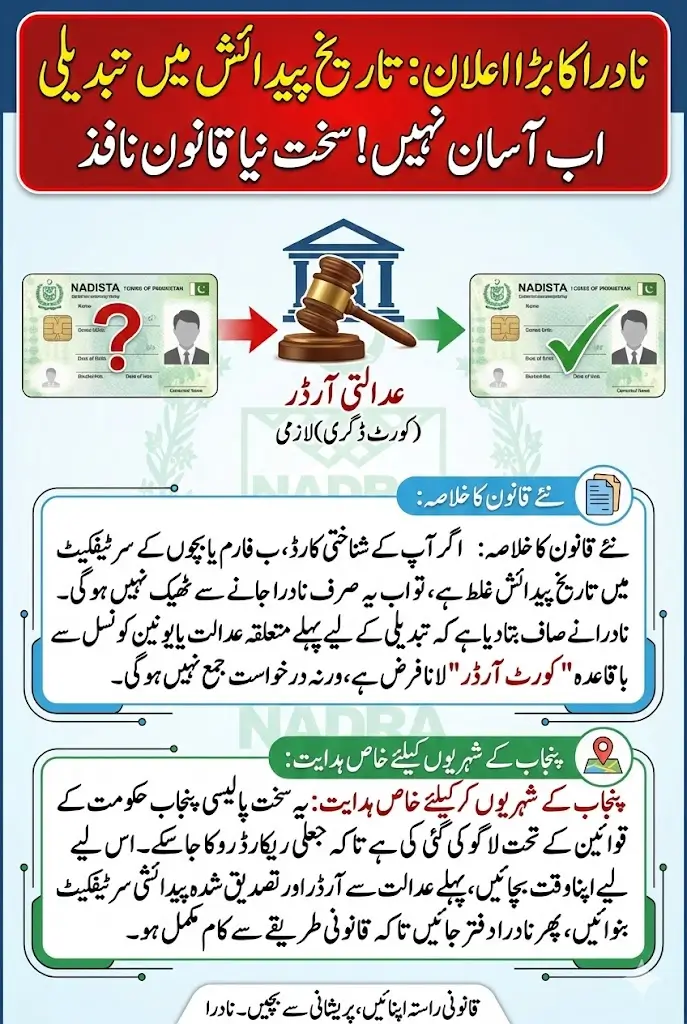
Ensuring the structural integrity of national identification documents is paramount for Pakistan’s digital future. Consequently, the National Database and Registration Authority (NADRA) has established stringent new guidelines for NADRA Date of Birth Change requests, aligning with precise legal frameworks. This decisive policy shift mandates judicial oversight for any alteration or correction to an individual’s recorded birth date, thereby reinforcing the authenticity and reliability of personal records across the nation.
The Translation: Judicial Mandate for Record Accuracy
Previously, processes for correcting personal data could vary. Now, under directives from the Government of Punjab, any proposed modification to a birth certificate’s date of birth requires a formal court order. Furthermore, this judicial decree must originate from a competent court overseeing the applicant’s respective Union Council, Cantonment Board, or Municipal Corporation. This structural requirement ensures that all changes are legally validated and systematically documented.

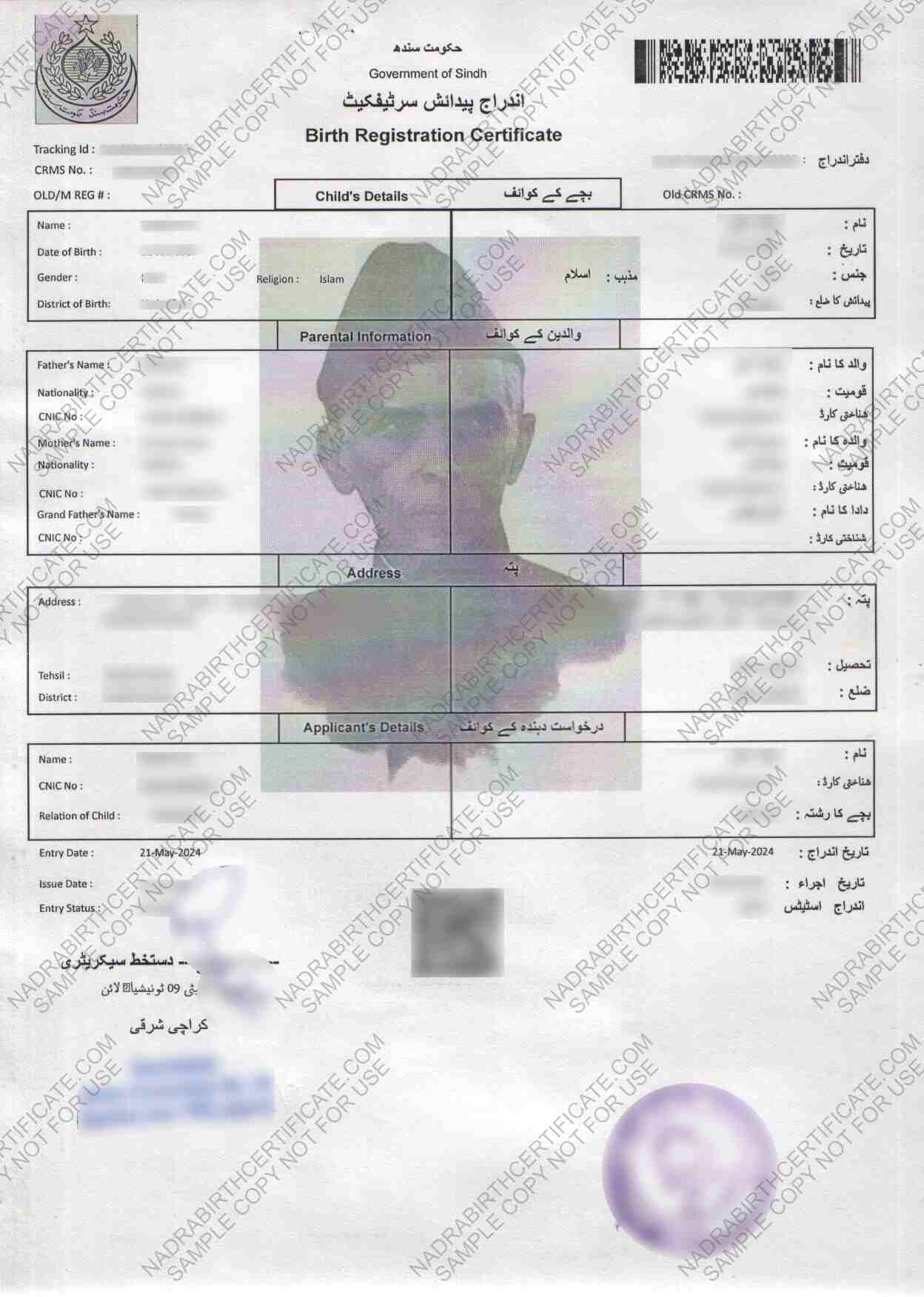
Specifically, NADRA will only process requests for a NADRA Date of Birth Change on documents such as the Computerized National Identity Card (CNIC), NICOP, Child Registration Certificate (CRC), or Juvenile Card upon submission of two critical components: a verified computerized birth registration certificate and a formal court order. This dual requirement provides a robust verification mechanism, preventing unauthorized alterations and maintaining the precision of national data.
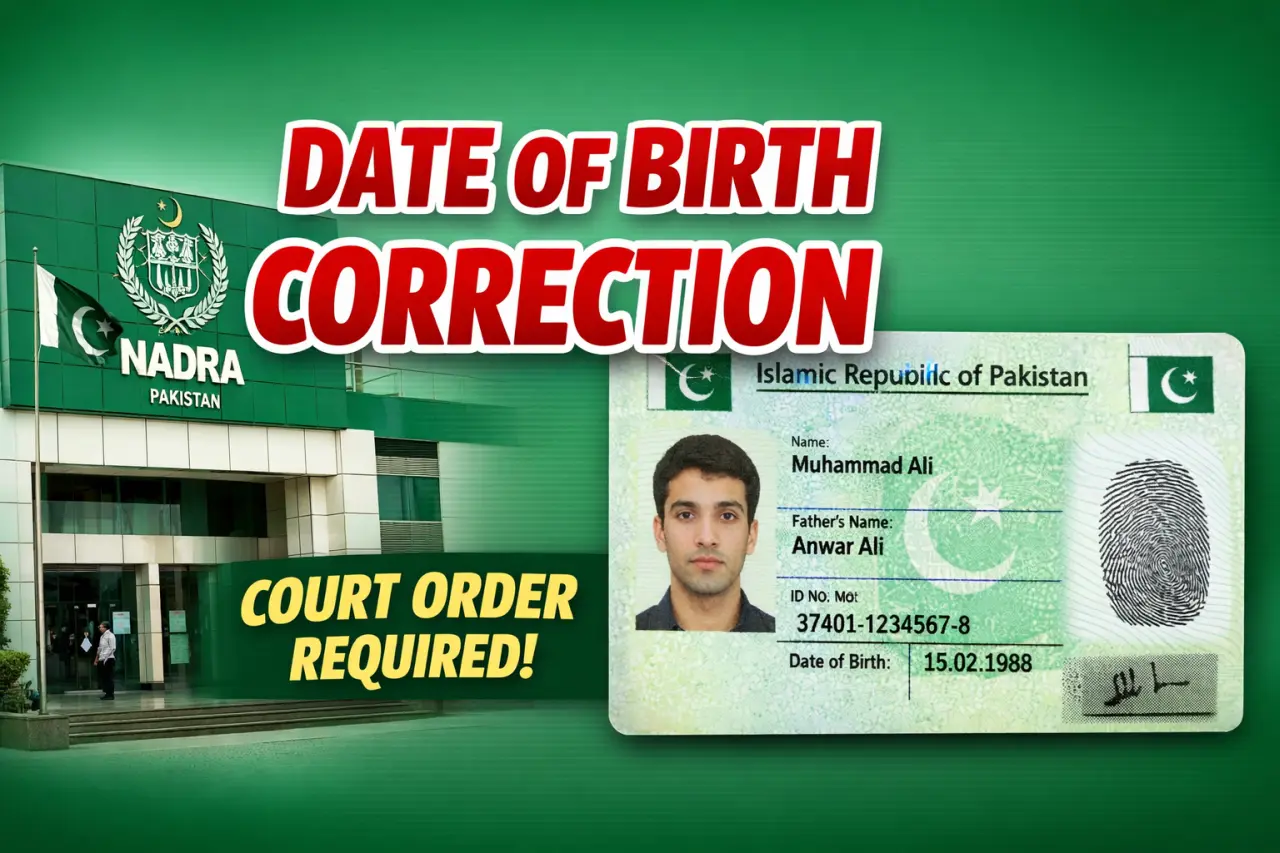
NADRA explicitly states that this court order prerequisite is enshrined in applicable laws. The authority remains committed to guiding citizens through this refined legal procedure, ensuring compliance and facilitating smooth transitions for those needing legitimate corrections. This policy specifically targets cases where a correction or NADRA Date of Birth Change is sought based on computerized birth registration certificates issued within Punjab.
The Socio-Economic Impact: Precision for Pakistani Citizens
This policy change directly impacts the daily lives of Pakistani citizens by enhancing the security and integrity of their primary identification documents. For students, accurate birth dates are crucial for academic admissions and career progressions. Consequently, professionals rely on precise records for employment verification and pension benefits. Households across urban and rural Pakistan will experience greater confidence in the foundational data held by the state, reducing vulnerabilities to identity fraud and administrative inconsistencies.
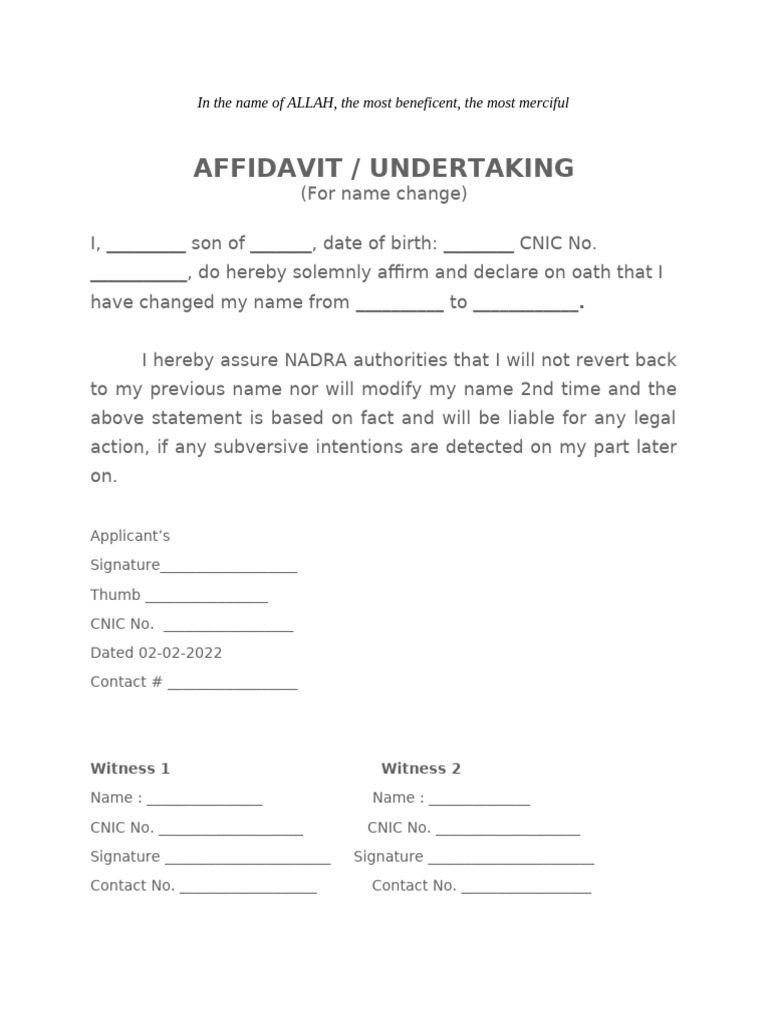
Furthermore, the calibrated process for NADRA Date of Birth Change ensures that critical life events, from matriculation to retirement, are anchored to verifiable and legally sanctioned data. This systematic approach bolsters trust in government services and provides a clearer, more predictable pathway for citizens seeking legitimate record adjustments. The transparency in this procedure protects individuals from potential bureaucratic hurdles caused by inaccurate or easily altered personal data.
The “Forward Path”: A Stabilization Move for Data Integrity
This development represents a Stabilization Move rather than a radical momentum shift. Structurally, it reinforces existing legal frameworks and elevates the baseline for data integrity within NADRA’s operations. By mandating court orders, the system gains an additional layer of verification, ensuring that fundamental personal data, such as an individual’s birth date, remains resistant to arbitrary changes. This precision-focused approach is critical for building a robust digital identity infrastructure for Pakistan.
To further enhance system efficiency, NADRA could explore digitizing the court order submission process. Integrating court systems directly with NADRA’s database would streamline approvals, reduce processing times, and minimize administrative burdens on citizens. This strategic integration would solidify Pakistan’s position in advanced digital governance. For inquiries, citizens can contact 1777 or email csd@nadra.gov.pk, ensuring direct access to support.