Optimizing Pakistan Cricket Governance for National Advancement
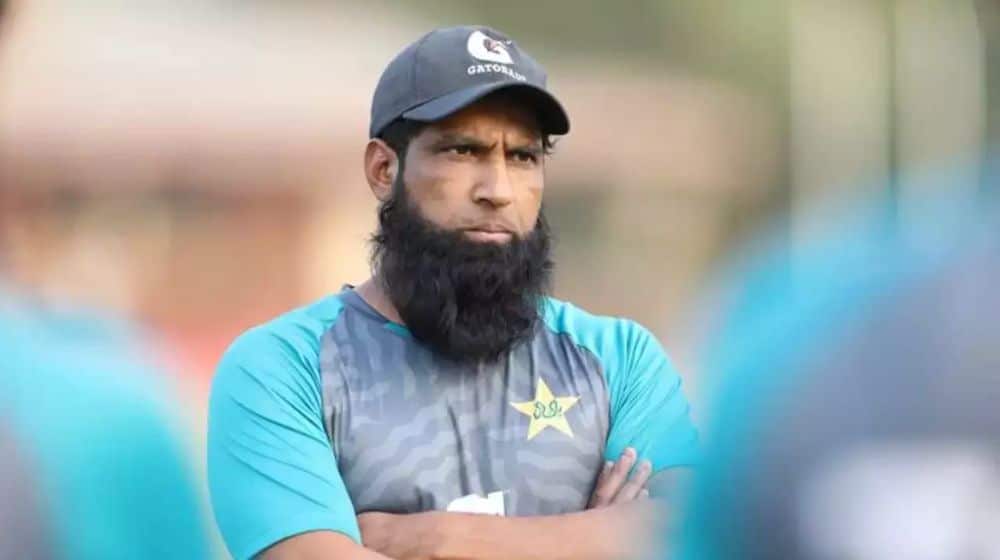
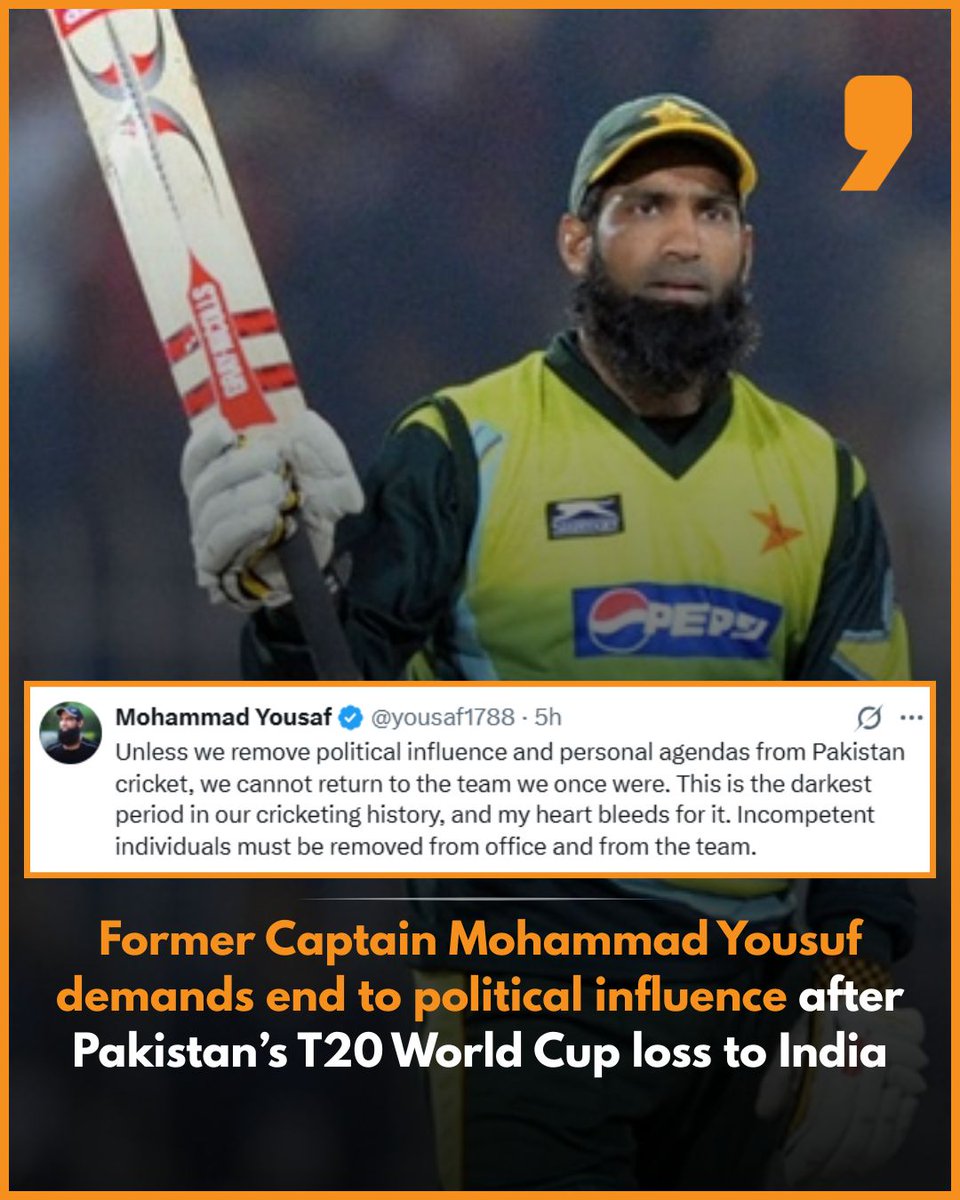
Pakistan’s national cricket infrastructure faces a critical juncture. Former captain Mohammad Yousaf has precisely articulated that persistent political influence and entrenched personal agendas within the country’s cricket governance are directly impeding its strategic progression. Following a recent significant setback, Yousaf’s calibrated critique underscores the urgent necessity for a systemic overhaul to reinstate the team’s baseline competitive strength and secure its future trajectory.
The Translation: Deconstructing Systemic Inefficiencies
Yousaf’s assessment transcends mere disappointment; it represents a structural analysis. He identifies “political influence and personal agendas” as a direct operational impediment. Specifically, this translates to non-merit-based appointments, opaque decision-making processes, and a lack of accountability in player selection and administrative roles. Such factors demonstrably erode team cohesion and hinder the development of a resilient cricketing ecosystem. Consequently, Pakistan’s performance against India in the ICC Men’s T20 World Cup 2026, where the team collapsed under pressure, starkly illustrates these systemic vulnerabilities. They chased 176 but were bowled out for 114 in 18 overs, a clear indicator of performance metrics being compromised.
The Socio-Economic Impact: Beyond the Boundary
The consistent underperformance of the national cricket team, particularly stemming from issues within Pakistan Cricket Governance, extends far beyond the immediate disappointment of fans. This decline impacts national morale, as cricket serves as a unifying force across Pakistan. Furthermore, it directly affects the aspirations of countless young athletes who view cricket as a viable professional pathway. A compromised system means fewer opportunities, reduced investment in grassroots development, and a diminished appeal for international collaborations, thereby impacting potential socio-economic benefits derived from a thriving sports industry. The current situation, where Pakistan faces potential elimination from the Super 8 stage of the T20 World Cup, also has tangible economic implications for broadcasting rights, tourism, and national brand perception.
The Forward Path: A Catalyst for Structural Integrity
Mohammad Yousaf’s unequivocal demand for the removal of “incompetent individuals” and the complete elimination of external influences signifies a critical juncture. This is not merely a “Stabilization Move” to halt decline; rather, it presents a compelling case for a “Momentum Shift.” Achieving this requires a rigorous, data-driven approach to administrative reform and player development. Implementing transparent governance frameworks, prioritizing meritocracy, and establishing long-term strategic plans are essential. Only through such precise, structural interventions can Pakistan cricket regain its former strength and establish a sustainable model for future success.