
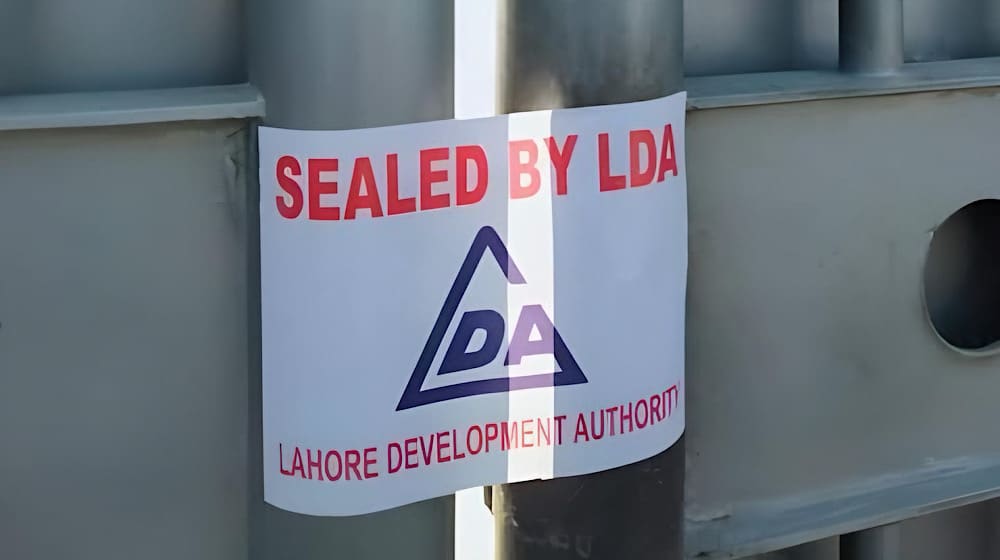
Pakistan’s trajectory towards disciplined urban development received a significant reinforcement this week. The Lahore Development Authority (LDA) executed a strategic LDA property crackdown, sealing 102 illegal commercial properties across Lahore due to persistent non-payment of commercialization fees and various structural violations. Simultaneously, the district administration intensified its calibrated monitoring of essential commodity prices, aiming to secure economic stability for citizens. This dual governmental action underscores a systemic commitment to both regulatory compliance and public welfare, directly impacting urban planning and household budgets.
The Translation: Upholding Urban Development Standards
The recent enforcement action by the Lahore Development Authority represents a clear operational pivot towards establishing a baseline of regulatory adherence in urban planning. This initiative is not merely punitive; it is a structural intervention designed to ensure equitable commercialization and responsible urban expansion. By targeting properties operating outside established legal frameworks, the LDA aims to prevent unapproved developments and secure due revenue that can be reinvested into public infrastructure.
Calibrated Scope of Enforcement
During this focused LDA property crackdown, enforcement teams executed operations across key areas within Lahore. Specifically, 21 properties were sealed in Faisal Town and New Garden Town, with an additional 11 in Gulshan Ravi and Samanabad. Furthermore, a substantial 55 properties were targeted within the Lahore Avenue Scheme along Pine Avenue, complemented by 15 properties on New Defense Road. This broad-spectrum action confirms a methodical approach to addressing long-standing compliance deficits.
The sealed establishments encompass a diverse commercial landscape. These include private schools and colleges, academies, clinics, pharmacies, grocery stores, restaurants, property offices, food outlets, beauty salons, and auto workshops. This comprehensive scope demonstrates the authority’s commitment to uniform application of regulatory standards across all commercial sectors, ensuring no entity operates beyond legal parameters.

The Socio-Economic Impact: Stabilizing Lives and Markets
These governmental initiatives exert a direct and measurable impact on the daily lives of Pakistani citizens. This regulatory action, for instance, introduces a critical element of fairness and order into the urban landscape. It ensures that businesses operate on a level playing field, preventing unfair advantages for non-compliant entities. This move is a catalyst for organized urban growth, reducing congestion and promoting planned development, which ultimately enhances the living environment for urban and rural households.
Economic Resiliency Through Price Monitoring
Concurrently, the rigorous market monitoring conducted by the district administration directly alleviates financial pressures on families. By actively controlling prices of essential commodities, the administration ensures that staples remain affordable, particularly impacting students and professionals navigating economic challenges. This strategic intervention minimizes the burden of inflation, allowing households to allocate resources more effectively, thereby fostering greater economic stability.
Precision in Market Regulation: Tangible Benefits
The Lahore Deputy Commissioner Office demonstrates a proactive approach to economic governance. Recent visits to the Harbanspura Ramazan Sahulat Bazaar and Singhpura Vegetable Market provided a granular understanding of demand, supply, and pricing trends. The Deputy Commissioner personally audited the bidding process at the vegetable market, meticulously inspecting the quality of essential items available at stalls within the Ramazan Bazaar.
Consequently, official briefings from the Market Committee affirmed the efficacy of these administrative measures. Compared to last year, local garlic prices registered a reduction of Rs. 380 per kilogram, onions by Rs. 30 per kilogram, and potatoes by a significant Rs. 35 per kilogram. Furthermore, 10-kg flour bags were consistently available at Rs. 850, with sugar priced at Rs. 140 per kilogram in Ramazan Bazaars, supported by ample stock and zero reported shortages.
The “Forward Path”: Momentum Shift Towards Structured Governance
This integrated approach to governance, combining stringent regulatory enforcement with proactive economic management, signifies a clear momentum shift for Pakistan. The district administration’s reaffirmation to deploy all resources against price manipulation, coupled with the LDA’s firm stance on compliance, indicates a strategic commitment. These actions are pivotal in cultivating an environment of predictable legal frameworks and stable economic conditions, both indispensable for national advancement and systemic efficiency.








