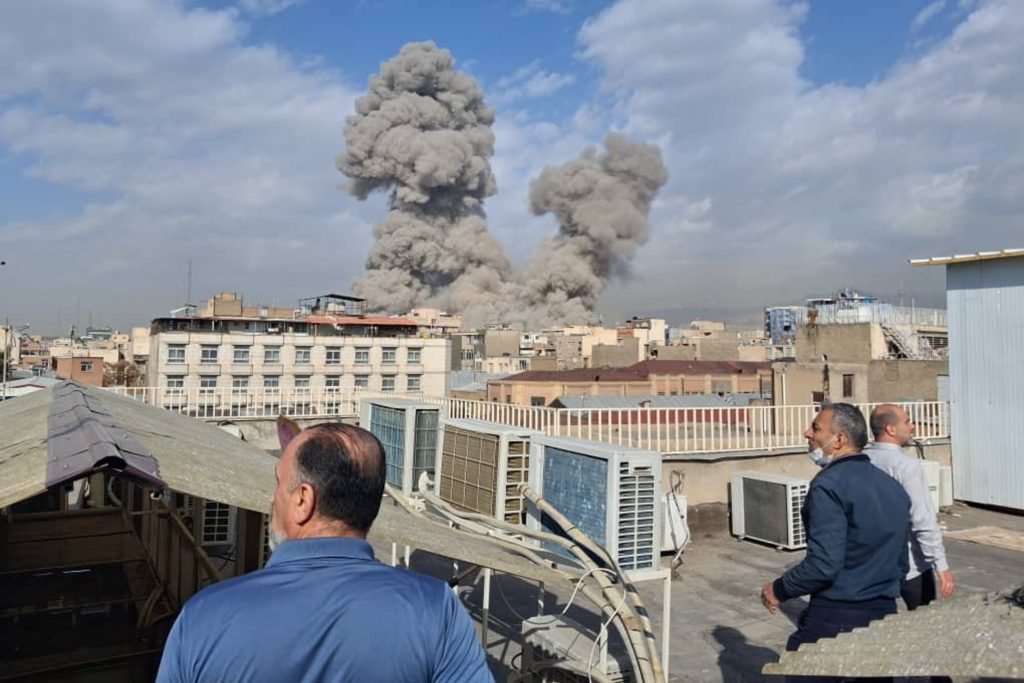
The Ministry of Foreign Affairs in Kuwait has issued a robust condemnation of recent territorial infringements, specifically citing actions by Iran as a significant “flagrant violation” of both Kuwaiti airspace and established international law. This decisive Kuwait Iran response signals a firm commitment to national sovereignty. Consequently, Kuwait reserves the right to implement a proportionate response, aligning with the gravity and specific nature of these incursions.
The Kuwait Iran Response: Calibrating Regional Defense
Kuwait’s Ministry emphasized that any further military escalation poses an existential threat to regional stability. Furthermore, these statements follow similar declarations from the United Arab Emirates (UAE) and Qatar, both asserting their sovereign right to respond to Iran’s missile activities. Consequently, a unified Gulf stance emerges, prioritizing adherence to international legal frameworks.

The Translation: Clarifying Sovereignty and International Protocol
In geopolitical terms, Kuwait’s communication clarifies its position: territorial integrity is non-negotiable. This is not merely a verbal protest; it is a structural reaffirmation of state sovereignty under international law. The logic behind such a firm declaration is to establish a clear baseline for permissible conduct, thereby preventing future aggressions and safeguarding critical national assets and infrastructure.
The Socio-Economic Impact: Daily Life and Future Prospects
For the average Pakistani citizen, particularly those working or residing in the Gulf region, escalating tensions translate directly into uncertainty. Professionals may face disruptions to travel and trade routes, impacting logistics and supply chains. Students could experience anxiety regarding regional stability, potentially affecting educational pursuits or future career prospects in the Middle East. Households, whether urban or rural, depend on stable oil prices and uninterrupted remittance flows, both of which are jeopardized by military activity. This situation underscores the importance of a clear and consistent diplomatic stance in maintaining broader systemic efficiency.

The ‘Forward Path’: A Stabilization Move
This development represents a Stabilization Move. Kuwait’s measured yet firm declaration aims to re-establish a critical baseline of deterrence and adherence to international protocols, rather than initiating an immediate momentum shift towards conflict. It is a strategic effort to contain escalation and reinforce the imperative of a predictable, rules-based regional security architecture. Such precision in diplomatic signaling is vital for systemic resilience.