Optimizing Urban Mobility: Strategic Adjustments for Ataturk Avenue Closure
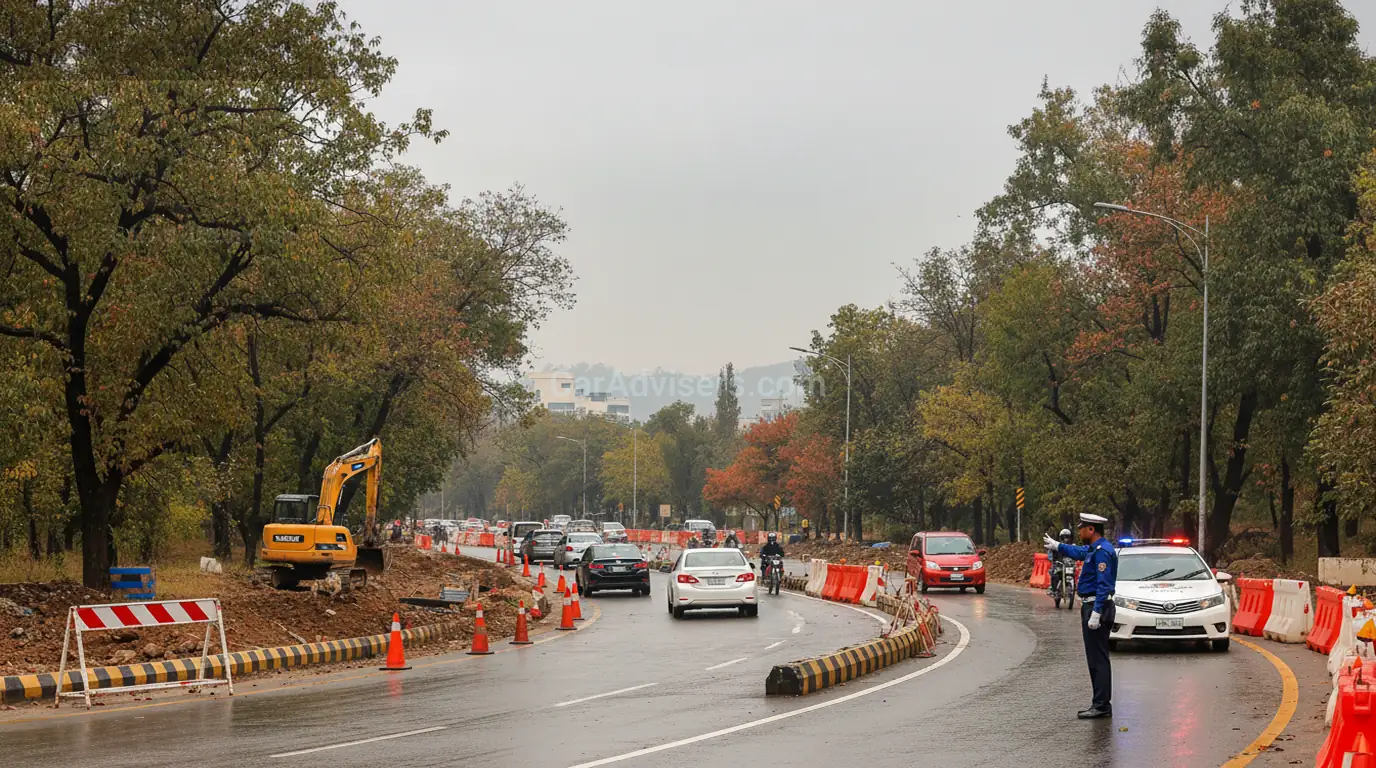
Islamabad’s urban infrastructure is undergoing a calibrated enhancement, necessitating the strategic Ataturk Avenue closure from Express Chowk to Ayub Chowk (Aga Khan Road) until project completion, commencing March 31, 2026. The Islamabad Traffic Police (ITP) has meticulously designed an advanced traffic advisory, redirecting commuter flow to ensure system efficiency and minimize disruption. Consequently, this measure is a proactive step towards a more robust and sustainable federal capital infrastructure, reflecting a commitment to future-proof urban planning.
The Translation: Decoding Islamabad’s Traffic Rerouting
Understanding the immediate operational shifts is paramount for all commuters. Specifically, the ITP’s directive outlines precise alternative routes to manage the Ataturk Avenue closure effectively. For instance, drivers originating from Jinnah Avenue, heading towards the Marriott Hotel, must now navigate through China Chowk, then proceed via Press Club Road, Super Market, and finally Aga Khan Road. This revised pathway strategically manages vehicle density in critical zones.
Furthermore, traffic from Khayaban-e-Suhrawardy and Embassy Road, also destined for the Marriott Hotel, will be routed through Shaheed-e-Millat Road, utilizing the China Chowk underpass before joining Press Club Road and Aga Khan Road. Moreover, motorists traveling from Srinagar Highway towards the Secretariat will access Serena Chowk, Globe Chowk, and Secretariat Chowk as established alternate corridors. These calibrated diversions are designed to maintain a consistent traffic velocity.
Residents of Sector F-6 and those using Seventh Avenue seeking Secretariat access are advised to employ Margalla Road and Shahrah-e-Dastoor. In contrast, those from Seventh Avenue can reach the Secretariat via Margalla Road. The ITP emphatically urges citizens to pre-plan their journeys, ensuring seamless integration with the revised traffic schema. Cooperation with traffic personnel is crucial for upholding optimal flow during this essential construction phase.
Socio-Economic Impact: Daily Life Adjustments in the Capital
This structural adjustment on Ataturk Avenue directly influences the daily commute for thousands of Pakistani citizens, particularly students, professionals, and households within urban Islamabad. The strategic rerouting mitigates potential congestion, thereby reducing travel times in certain corridors and, conversely, increasing them in others. Professionals might need to adjust their departure timings to maintain punctuality, especially those reliant on personal vehicles or public transport operating on these routes. For students, understanding these changes is vital for timely arrival at educational institutions, particularly along the new diversion paths.
Furthermore, local businesses situated along the closed section of Ataturk Avenue might experience temporary fluctuations in foot traffic. Conversely, businesses on the designated diversion routes could see an increase. Households in both urban and rural areas utilizing these roads for essential services or leisure will need to recalibrate their travel plans. Ultimately, this temporary inconvenience is a calculated investment in the city’s future, promising enhanced connectivity and reduced long-term travel burdens for all residents. The ITP’s clear communication baseline helps citizens adapt efficiently.
The Forward Path: A Stabilization Move for Islamabad’s Infrastructure
This development represents a Stabilization Move rather than a “Momentum Shift.” The Ataturk Avenue closure is a necessary structural intervention for ongoing construction, ensuring the foundational integrity and future capacity of Islamabad’s roadways. While it introduces temporary adjustments, it is a crucial maintenance activity designed to optimize existing systems and prevent future bottlenecks. This precise, short-term disruption serves as a catalyst for long-term operational efficiency, ensuring Islamabad’s infrastructure remains robust and capable of supporting national advancement. The objective is to solidify current gains and prepare for anticipated growth.