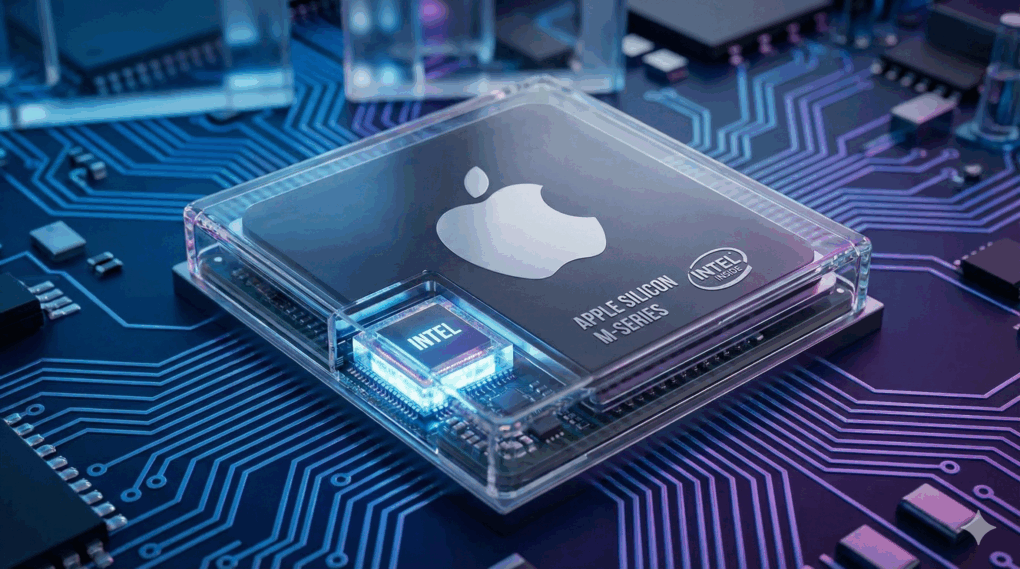
The global technology ecosystem observes a calibrated strategic shift as reports indicate Apple Intel chips collaboration is under serious consideration. Apple aims to diversify its crucial chip manufacturing supply chain, consequently reducing its dependence on TSMC. This potential partnership represents a significant architectural adjustment in Apple’s semiconductor strategy, ensuring enhanced resilience and flexibility for future device production. Specifically, Intel may begin fabricating portions of Apple’s A21, A22, and even lower-end M-series chips.
Optimizing Semiconductor Manufacturing: The Translation
Understanding the implications of this shift requires clarifying the technical framework. Analysts, including Jeff Pu of GF Securities, suggest Intel will utilize its advanced 14A process for Apple chip fabrication, with mass production slated for 2028. Importantly, Intel’s role would strictly involve manufacturing, not design. Apple’s internal design teams would retain complete control over chip architecture. This arrangement mirrors Apple’s existing relationship with TSMC, focusing purely on manufacturing capacity and technological precision rather than design integration.

Furthermore, industry expert Ming-Chi Kuo projects that Intel could also produce chips for select Mac and iPad models, potentially commencing lower-end M-series chip production as early as mid-2027. This expansion beyond iPhone components underscores a comprehensive strategy to fortify Apple’s entire hardware ecosystem against potential supply disruptions. While Intel assumes a manufacturing role, TSMC is expected to retain its baseline position as Apple’s primary chip supplier, maintaining a balanced yet robust operational structure.
The Socio-Economic Impact: What This Means for Pakistani Innovation
This strategic realignment in global chip manufacturing indirectly influences the technological landscape in Pakistan. For Pakistani students and professionals engaged in STEM fields, particularly electronics and computer engineering, such developments highlight the critical importance of supply chain resilience and diversification. Consequently, this encourages local industries to explore similar localized manufacturing opportunities or to specialize in niche components that can integrate into global supply chains, fostering a more robust national tech infrastructure.

Moreover, for Pakistani households and businesses relying on consumer electronics, a diversified supply chain means greater stability in product availability and potentially more competitive pricing over the long term. Reduced reliance on a single major manufacturer like TSMC can mitigate risks associated with geopolitical tensions or natural disasters, ensuring a more consistent flow of essential devices into the market. This structural stability ultimately benefits consumers by securing access to cutting-edge technology.
The Forward Path: A Stabilization Move for Future Resilience
This potential partnership between Apple and Intel represents a calculated stabilization move rather than a dramatic momentum shift. Apple is not abandoning TSMC; instead, it is strategically adding a high-capacity, technologically advanced partner to its existing framework. This decision is a testament to an efficient risk mitigation strategy, designed to secure future production capabilities and maintain competitive agility.
The long-term implications underscore a focus on supply chain robustness, a critical lesson for developing economies like Pakistan. It highlights that even industry leaders prioritize distributed manufacturing to safeguard against unforeseen disruptions, ensuring continuous innovation and product delivery. This proactive measure strengthens Apple’s operational baseline, setting a precedent for global tech manufacturing strategies.

.jpg)