
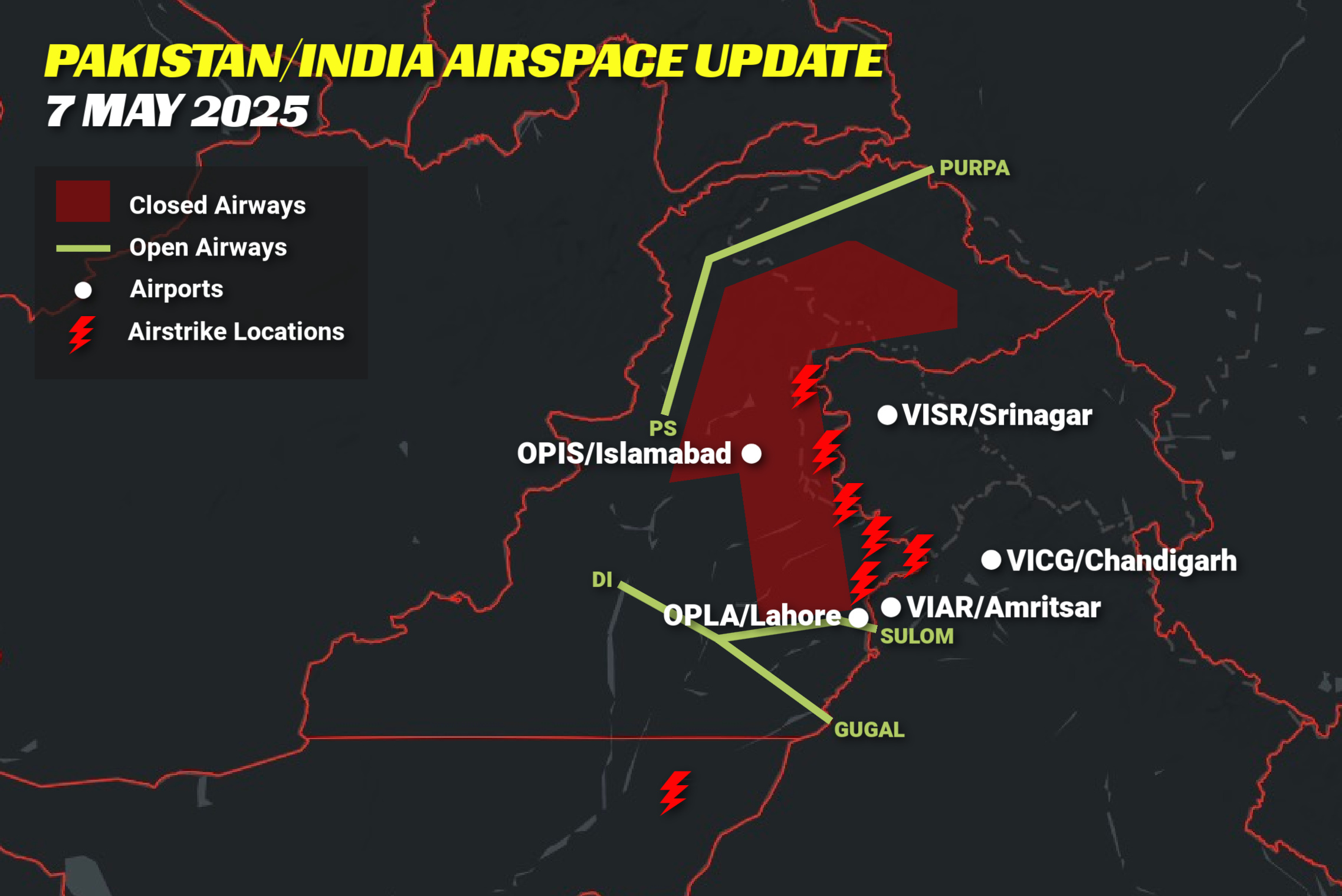
Pakistan’s aviation sector has implemented a calibrated extension of its airspace ban on Indian-registered aircraft until April 24, 2026. This structural directive from the Pakistan Airports Authority (PAA) strategically manages air traffic within both Karachi and Lahore Flight Information Regions, underscoring a precise operational decision with significant implications for regional aviation efficiency and national security parameters. This move prevents all Indian-owned, leased, or military aircraft from traversing Pakistani skies, directly influencing flight routes and operational costs for carriers.
Understanding the Calibrated Directive: The Pakistan Airspace Ban
The Pakistan Airports Authority (PAA) has issued a Notice to Airmen (Notam), extending restrictions on Indian aircraft utilization of Pakistani airspace until April 24, 2026. This directive specifically prohibits all aircraft registered in India, alongside those operated, owned, or leased by Indian airlines or military entities, from entering Pakistani flight information regions (FIRs) of Karachi (OPKR) and Lahore (OPLR). Consequently, this maintains a consistent policy baseline established prior to the previous restriction’s expiration on March 23, 2026. This strategic extension is a direct response to prevailing regional dynamics, ensuring operational clarity and safety protocols within Pakistan’s sovereign air management system.
Operational Precedents: Background of the Airspace Dispute
The initial Pakistan airspace ban emerged from escalating tensions between Pakistan and India in April 2025. Following an attack in Pahalgam, Indian-administered Kashmir, which resulted in 26 fatalities, New Delhi accused Islamabad of involvement. However, Pakistan firmly denied these allegations, proposing a neutral investigation to ascertain facts. Furthermore, the situation intensified in May 2025, leading to reports of the largest aerial confrontation between the two nations in years, where Pakistan asserted it had successfully downed seven Indian fighter jets. Subsequently, both countries have maintained restrictions on each other’s airlines, structurally disrupting numerous regional flight corridors.


Socio-Economic Impact: Precision in Regional Flight Dynamics
This protracted Pakistan airspace ban fundamentally alters daily life for Pakistani citizens, particularly those involved in international travel or logistics. For professionals and students, it means longer flight durations and potentially higher ticket costs for routes that previously traversed Indian airspace. Airlines operating out of Pakistan must recalibrate their flight plans, leading to increased fuel consumption and operational overheads. This directly translates to an impact on household budgets and the efficiency of trade logistics, affecting both urban centers like Karachi and rural communities reliant on timely cargo. In contrast, this strategic navigation prioritizes national security over immediate travel conveniences, a calibrated trade-off for systemic stability.
The Forward Path: A Stabilization Move for National Security
This extended airspace restriction represents a Stabilization Move rather than a Momentum Shift. Pakistan’s consistent application of this policy signals a commitment to maintaining a robust national security posture and sovereign control over its air traffic infrastructure. While presenting immediate logistical challenges for regional aviation, it underscores a strategic baseline designed to manage geopolitical sensitivities. The precise continuation of this ban demonstrates a disciplined approach to national defense and air traffic management, ensuring systemic integrity in a complex regional environment. This decision, therefore, focuses on maintaining calibrated stability in a volatile security landscape.
Pakistan airspace will remain closed to Indian-registered aircraft and those operated, owned, or leased by Indian airlines/operators, including military flights, until early hours of 24 April 2026. #PAA
— Pakistan Airports Authority (@Pk_PAA_Official) March 18, 2026








