Driving National Advancement: Strategic IFC Pakistan Investment
The International Finance Corporation (IFC) has strategically committed approximately $2.7 billion for Pakistan this year, a critical financial injection designed to catalyze significant private sector development, expand infrastructure, and foster robust job creation. This substantial IFC Pakistan commitment underscores a deliberate move towards strengthening the nation’s economic framework, ensuring calibrated growth and enhanced systemic efficiency across vital sectors.
The Translation: Decoding Strategic Financial Influx
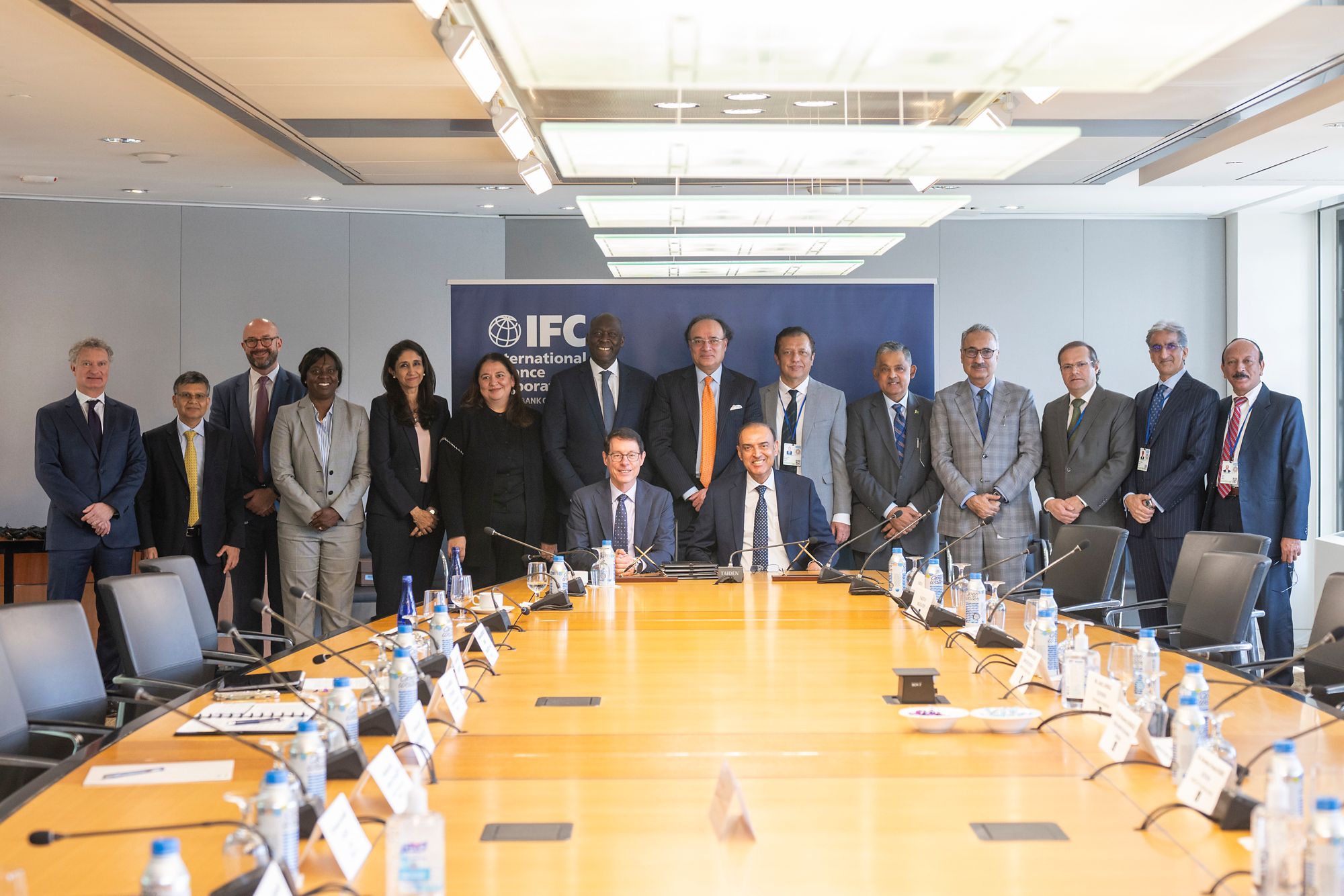
Federal Minister for Finance and Revenue, Muhammad Aurangzeb, recently engaged with key officials from the IFC. During this pivotal meeting, Simon Andrews, Divisional Director for Pakistan, Afghanistan, and Central Asia, articulated the IFC’s expanding portfolio in Pakistan, which now consistently exceeds $2 billion annually. The specific allocation of $2.7 billion for the current fiscal year represents a precision-targeted increase, reflecting an amplified commitment to Pakistan’s economic resilience and progress. The Finance Minister acknowledged IFC’s heightened engagement in areas such as direct investment, trade finance facilitation, and expert advisory support, recognizing their structural impact.
This financial commitment is channeled into several high-impact initiatives:
- Financial Sector Support: Through innovative risk-sharing and guarantee facilities, the IFC is actively promoting trade and enhancing financing access for Small and Medium Enterprises (SMEs). This mechanism significantly de-risks private lending, acting as a direct catalyst for business expansion.
- Local Currency Financing Expansion: A strategic focus is placed on increasing local currency financing options. Consequently, this initiative aims to mitigate foreign exchange risks, thereby providing greater stability for local businesses and fostering predictable economic planning.
- Upcoming Initiatives: Future endeavors include a diversified payment rights facility and a landmark green bond issuance in collaboration with a prominent local bank. These forward-looking projects are structured to introduce advanced financial instruments and promote sustainable development.
The Socio-Economic Impact: Calibrating Daily Life for Pakistanis
This significant financial commitment directly influences the daily lives of Pakistani citizens across various strata. For students, expanded infrastructure and a thriving private sector translate into greater post-graduation employment opportunities and a more dynamic job market. Professionals will benefit from an increase in specialized roles and business growth, particularly in sectors targeted for development like energy, transport, logistics, and agribusiness. Furthermore, households in both urban and rural Pakistan can anticipate improved access to essential services and more stable economic conditions as financial institutions are strengthened and trade mechanisms become more efficient. The focus on green bonds, for instance, implies a structural shift towards environmental sustainability, potentially leading to better public health outcomes and resource management for all.
Discussions also highlighted the imperative of scaling up private sector involvement, especially in critical infrastructure projects and public-private partnerships. While commendable progress has been observed in urban water management and distribution efficiency, both the IFC and Pakistani officials emphasized the necessity of cultivating a robust pipeline of bankable projects. These projects span key sectors including energy, transport, logistics, and agribusiness, ensuring diversified economic advancement.
The Forward Path: A Momentum Shift for Strategic Growth
This development undeniably represents a Momentum Shift for Pakistan. The precision-targeted commitment of $2.7 billion by the IFC, coupled with a focus on structural reforms and private sector empowerment, is not merely maintenance; it is a strategic acceleration. The emphasis on strengthening the venture capital ecosystem and integrating private sector perspectives into policy formulation indicates a deliberate architectural shift towards innovation and sustainable economic expansion. Consequently, this collective effort is poised to significantly enhance Pakistan’s long-term growth trajectory, fostering a resilient and dynamic economy.
Beyond domestic initiatives, broader discussions underscored the importance of regional economic connectivity, particularly with Central Asian countries. These dialogues explored emerging opportunities in trade linkages and cross-border infrastructure, aiming to position Pakistan as a pivotal economic hub. The Finance Minister also detailed the government’s calibrated efforts to sustain macroeconomic stability amidst global volatilities, addressing critical areas such as energy supply chain management, stringent fiscal discipline, and precisely targeted subsidy frameworks. Both parties reaffirmed their commitment to deepening this collaboration, actively accelerating initiatives that support Pakistan’s comprehensive reform agenda, foster robust private sector development, and ultimately drive sustainable economic growth.