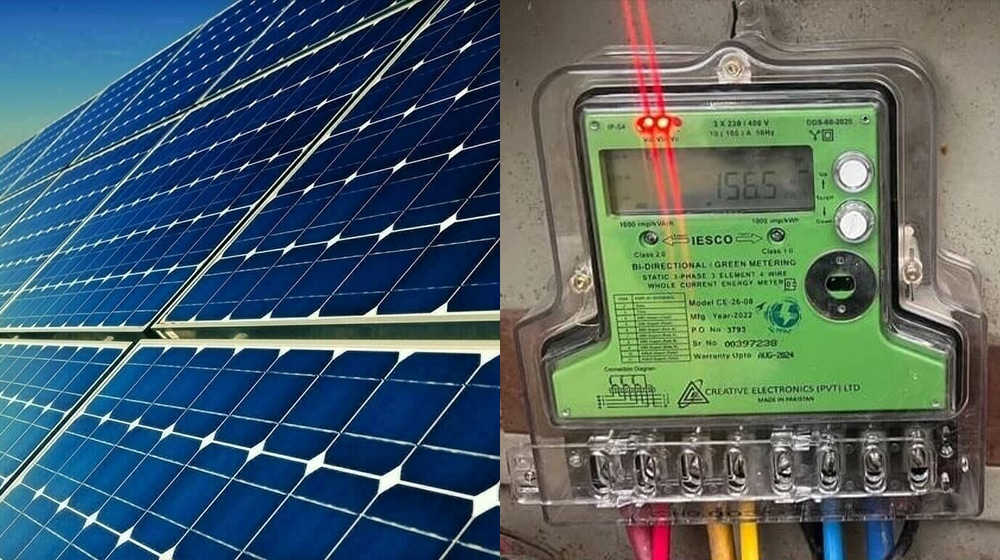
In a strategic recalibration, the federal government has ceased the implementation of its recent decision to transition consumers from net metering to net billing. This Pakistan’s solar policy reversal follows significant political and public pressure, prompting an immediate appeal against the regulatory authority. This decisive action underscores a commitment to reviewing energy policies and ensuring alignment with national advancement goals, while addressing citizen concerns regarding sustainable energy access.
Deconstructing the Decision: Pakistan’s Solar Policy Reversal
Understanding Net Metering and Net Billing
The core issue revolves around two distinct energy remuneration models: net metering and net billing. Under net metering, consumers with solar panels can export excess electricity to the national grid and receive credits equivalent to the retail electricity rate. Conversely, net billing compensates consumers at a lower, wholesale rate for their surplus power. The government’s recent decision, now halted, aimed to shift towards net billing. Consequently, this change would have fundamentally altered the financial calculus for approximately 700,000 existing net metering consumers, alongside prospective solar adopters. The federal government’s appeal against the regulator’s decision signals an intent to re-evaluate the structural implications of this shift on the broader energy framework. Furthermore, the government asserts its inherent right to challenge regulatory decisions, emphasizing a constitutional prerogative in policy formulation.


Strategic Context: Power Sector Reforms and Circular Debt
Federal Minister Awais Leghari emphasized that the Pakistan’s solar policy reversal must be viewed within the larger context of comprehensive power sector reforms. His calibrated statements in the National Assembly highlighted significant achievements, including a substantial reduction in circular debt by Rs. 780 billion. Furthermore, renegotiated agreements with independent power producers (IPPs) have yielded an impressive relief of Rs. 3,400 billion. These structural adjustments are designed to stabilize the power sector’s financial baseline. The government has also proactively secured cuts from high-cost projects, including a Rs. 100 billion reduction from a venture linked to the Prime Minister’s relative, demonstrating a commitment to fiscal discipline. To stimulate industrial growth, electricity tariffs for industrial consumers have been precisely reduced, providing a direct catalyst for economic activity. Notably, ongoing negotiations with more IPPs promise further cost efficiencies, structurally optimizing the nation’s energy procurement mechanisms.

Calibrating Impact: How Policy Shifts Affect Pakistani Citizens
Direct Impact on Households and Businesses
The potential transition from net metering to net billing carried profound implications for everyday Pakistani citizens. Households and small businesses that invested in solar energy systems, anticipating long-term savings through net metering, faced significant uncertainty. A shift to net billing would diminish their returns on investment, thereby increasing the effective cost of solar power. In contrast, this dynamic directly impacts the financial stability of families and the operational viability of small and medium enterprises across both urban and rural Pakistan. The government’s decision to pause this policy, therefore, provides immediate relief and an opportunity for stakeholders to re-evaluate the economic models supporting renewable energy adoption. This Pakistan’s solar policy reversal underscores the sensitivity of energy policies to public sentiment and economic stability.
Energy Access and Load Shedding Realities
The broader power sector context reveals significant disparities in energy access. Data indicates that out of 12,665 feeders nationwide, 2,223 feeders endure over 10 hours of load shedding daily. This severely impacts daily life, educational continuity for students, and productivity for professionals. Particularly, areas served by Quetta Electric Supply Company (QESCO), Sukkur Electric Power Company (SEPCO), and Peshawar Electric Supply Company (PESCO) face the most protracted outages. Conversely, regions under Lahore, Islamabad, Gujranwala, and Faisalabad Electric Supply Companies report no feeders with such extensive load shedding. This structural imbalance underscores the urgent need for equitable energy distribution and efficient grid management to uplift all segments of society.

Financial Burden and System Efficiency
Citizens currently bear a substantial annual burden, contributing Rs. 310 billion to service circular debt. This financial overhead directly translates into higher electricity tariffs, affecting every household and business. Furthermore, cumulative transmission losses exceeded Rs. 600 billion over two fiscal years (FY24: Rs. 322 billion; FY25: Rs. 284 billion). These losses represent system inefficiencies that directly impact consumer bills and hinder national energy security. By meticulously reducing circular debt and cancelling high-cost electricity projects totaling 7,967 megawatts, the government aims to establish a more efficient and economically viable energy framework. Consequently, this strategic focus endeavors to alleviate the financial strain on consumers and enhance overall system stability.

The Forward Path: Momentum Shift or Stabilization Move?
This government decision represents a Stabilization Move. The abrupt halt of the net billing policy, driven by public and political pressure, indicates a tactical retreat rather than a proactive advancement in sustainable energy policy. While the intent to reduce circular debt and renegotiate IPP agreements signifies structural maintenance, the reversal on net metering suggests a pause to address immediate system friction. A true Momentum Shift would involve a precisely articulated, long-term national energy strategy that transparently integrates renewable energy growth with grid stability and equitable consumer benefits. This current action, while necessary for short-term political calibration, postpones a more visionary and comprehensive energy frontier for Pakistan. Consequently, the challenge remains to convert this stabilization into a strategic springboard for future energy autonomy.