Calibrating Energy Costs: OGRA’s March 2026 RLNG Price Adjustment for Pakistan
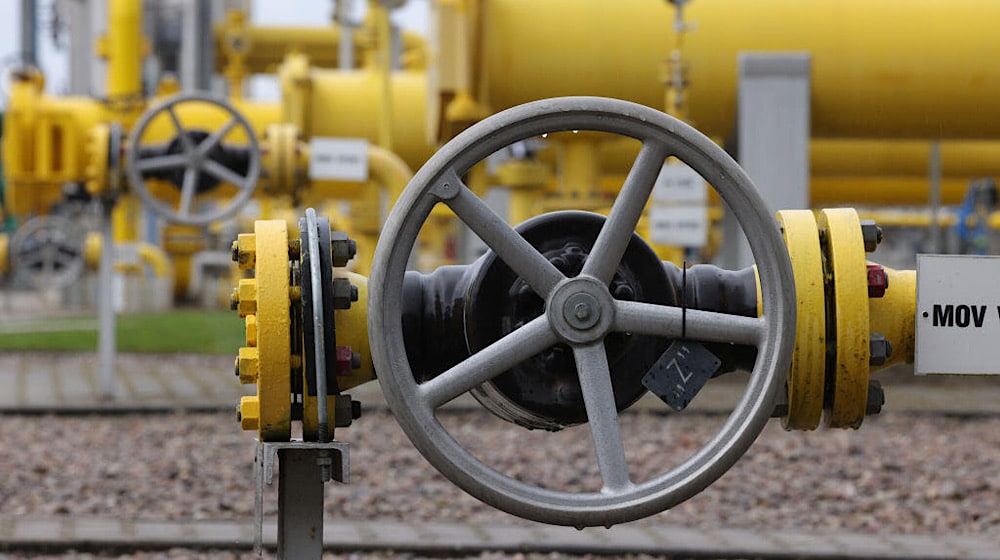
The Oil and Gas Regulatory Authority (OGRA) has precisely recalibrated Re-gasified Liquefied Natural Gas (RLNG) prices for March 2026, signaling a structural increase compared to the preceding month. This critical adjustment, effective March 1, 2026, directly impacts energy costs across the nation. Specifically, these revised RLNG prices Pakistan reflect the strategic directives of the federal government, establishing a new operational baseline for gas tariffs. This proactive measure addresses the evolving dynamics of the global energy market, ensuring the national energy infrastructure remains solvent and operational.
The Translation: Decoding the Tariff Mechanism
Understanding these new tariffs requires a clear translation of the underlying economic factors. OGRA’s latest notification outlines distinct price increments for both transmission and distribution. For instance, consumers serviced by Sui Northern Gas Pipelines Limited (SNGPL) will observe transmission costs rise to $12.4913 per MMBtu. Distribution charges will reach $13.5516 per MMBtu. Consequently, these figures represent a notable elevation from February’s rates. Those stood at $10.4686 per MMBtu for transmission and $11.3345 per MMBtu for distribution.
Similarly, Sui Southern Gas Company Limited (SSGCL) customers will experience transmission rates set at $11.0169 per MMBtu. Distribution will be $12.5354 per MMBtu. These are up from $9.0301 and $10.2704 respectively in the previous month. The primary catalyst for these adjustments stems from augmented Delivered Ex-Ship (DES) prices. This is coupled with escalating import-related expenditures and terminal operational fees. Therefore, these increases are not arbitrary but rather a direct response to international market forces and operational exigencies.
The Socio-Economic Impact: Daily Life Adjustments
These revised RLNG prices Pakistan will inevitably resonate across various sectors of Pakistani society, prompting households and industries to adapt. For the average Pakistani citizen, particularly in urban centers, higher gas tariffs translate to increased utility bills, directly influencing monthly household budgets. Students, especially those living in rented accommodations, may face elevated living costs. Furthermore, businesses, ranging from small enterprises to large industrial complexes, will experience amplified operational expenditures, potentially affecting production costs and consumer prices. This necessitates a strategic recalibration of energy consumption patterns and a renewed focus on efficiency. In rural areas where RLNG penetration might be lower, the indirect impact could still be felt through inflation on goods and services whose production relies on this energy source. Ultimately, this adjustment mandates a collective effort towards optimized energy utilization.

The Forward Path: A Stabilization Move for Energy Security
From an architectural perspective, this development represents a Stabilization Move rather than an immediate momentum shift towards aggressive progress. While an increase in energy prices is rarely welcomed, it is a pragmatic response to safeguard Pakistan’s energy supply chain amidst global fluctuations. This decision ensures the continued availability of RLNG by aligning domestic tariffs with international procurement costs. Consequently, it prevents supply disruptions that could cripple industries and households. The structural integrity of our energy grid depends on such calibrated adjustments. Moving forward, the emphasis must shift towards diversifying energy sources and enhancing indigenous production capabilities to mitigate future reliance on volatile international markets. This proactive management of energy economics is paramount for national advancement and systemic efficiency.