
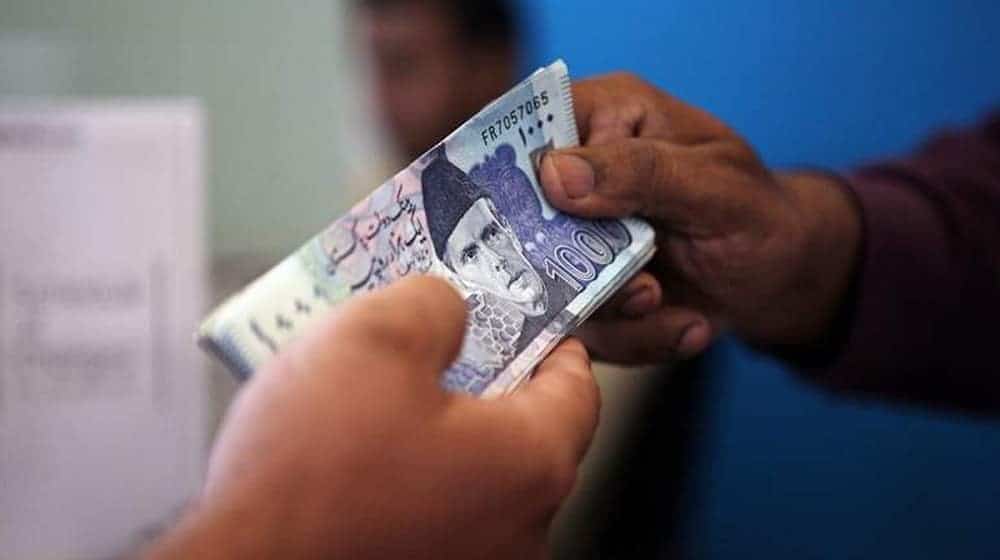
The federal government is set to provide significant salaried class tax relief and support for registered businesses in the upcoming federal budget. Furthermore, officials are confident that Pakistan’s economic growth will exceed international forecasts this year. Khurram Shahzad, Adviser to the Finance Minister, confirmed these plans. This initiative directly addresses economic pressures on citizens.
In a recent news channel interview, Shahzad stated that targeted measures are actively being prepared. These initiatives aim to ease the financial burden on salaried individuals and compliant businesses across the nation. This commitment underscores a proactive approach to fiscal policy.
Targeted Tax Relief for Salaried Class & Businesses
Work is also underway to reduce energy tariffs and rationalize existing tax rates. Consequently, the government is shifting its focus towards providing tangible relief to taxpayers. These taxpayers are already integral to Pakistan’s documented economy, ensuring fairness and transparency. Therefore, this targeted salaried class tax relief is a priority.
Regarding national economic performance, the adviser expressed optimism. He noted that Pakistan’s growth rate is expected to surpass projections made by global institutions, including the International Monetary Fund (IMF). This positive outlook signals a robust economic trajectory.

Shahzad projected a Gross Domestic Product (GDP) growth of up to 4 percent for the current fiscal year. He anticipates this will rise to approximately 5 percent next year. Additionally, remittances are forecast to exceed $41 billion, offering substantial support to the country’s external accounts. Consequently, this strengthens Pakistan’s financial stability.
Strategic Engagement with the IMF and Privatization
Discussions with the IMF are progressing, with preparatory work ongoing for the next economic review. Shahzad acknowledged Pakistan’s historical reliance on the IMF due to structural weaknesses. However, he emphasized that the current government is pursuing a cautious and sustainable economic policy. This strategy aims to prevent recurring balance-of-payments crises.

Furthermore, Shahzad announced the privatization of 24 state-owned enterprises (SOEs). These SOEs currently impose a heavy burden on public finances. This move aligns with structural benchmarks previously agreed upon with the IMF. Hence, it represents a crucial step towards fiscal reform and long-term economic health.
Easing Inflation and Boosting Earning Capacity
Inflation has significantly eased, falling from an initial range of 25-30 percent to around 5 percent. This substantial reduction provides much-needed relief to households. Shahzad highlighted the government’s broader objective: to increase the earning capacity of its citizens. Ultimately, greater stability is expected to boost exports and foster long-term growth across all sectors. These positive developments complement the planned salaried class tax relief efforts.

Addressing Provincial Tax Collection Weaknesses
Separately, in a post on X, the finance adviser shed light on weaknesses within the tax collection system. He particularly noted inefficiencies at the provincial level. Last year, the federation collected Rs13 trillion in taxes and levies, bringing the federal tax-to-GDP ratio to 11.3 percent. This figure, however, trails global benchmarks.
In contrast, the global benchmark for tax-to-GDP ratio is approximately 18 percent. Pakistan aims to elevate its federal ratio to 15 percent by June 2028. This ambitious target requires concerted efforts from all levels of government. Yet, the provincial contribution remains a concern.
Provinces collected merely Rs979 billion in taxes last year. This equates to just 0.85 percent of GDP. Despite expectations for provinces to contribute at least 3 percent, this target remains unmet. Consequently, significant reforms are necessary to enhance provincial revenue generation. This also ensures a more equitable distribution of the tax burden.
To meet the 3 percent target, Shahzad emphasized that provincial tax revenues must triple by 2028. He clarified that the real challenge lies not in the size of the tax base, but rather in the weak revenue generation from it. Therefore, optimizing collection mechanisms is paramount for overall fiscal strength. These reforms are crucial, even with the promised salaried class tax relief.








