

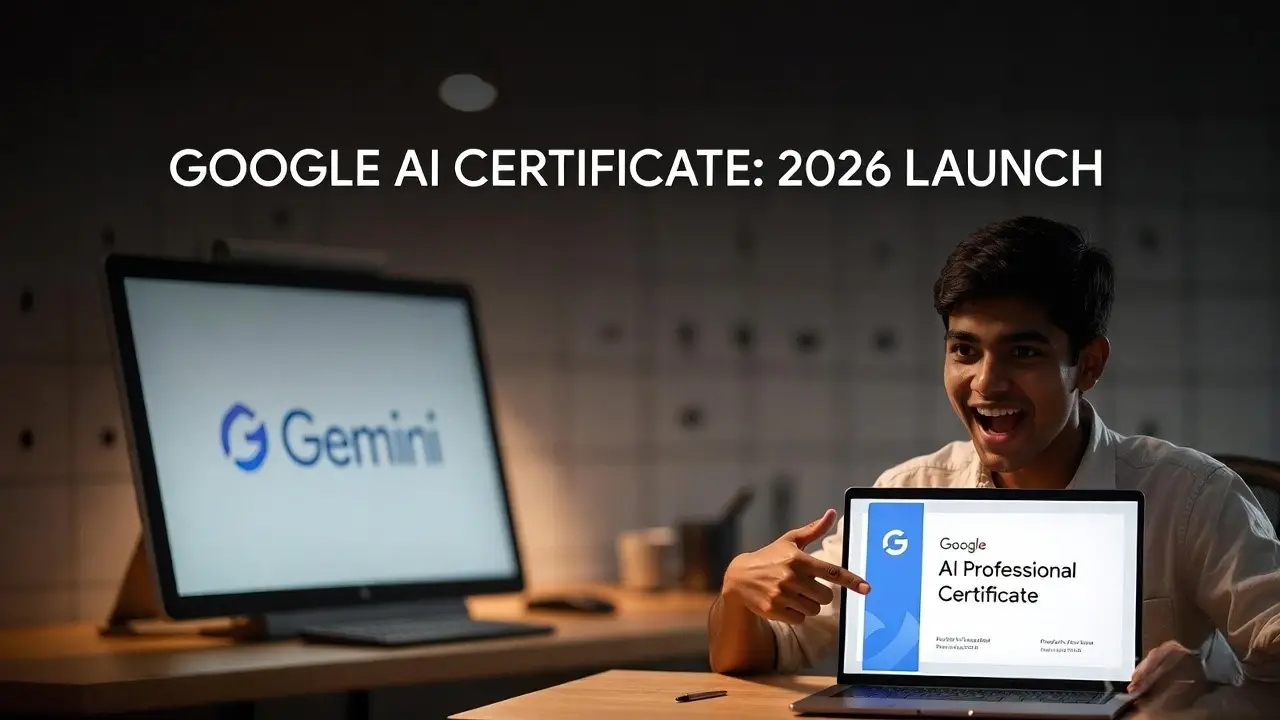
Google has strategically launched the Google AI Certificate, an industry-validated professional credential now accessible in Pakistan. This pivotal initiative precisely addresses the critical global and national artificial intelligence skills gap, equipping professionals with practical AI fluency. Consequently, this training is crucial for integrating advanced algorithms into daily workflows and propelling national digital advancement. The program specifically targets a significant training deficit, as current data indicates that while 70 percent of managers acknowledge the necessity of an AI-trained workforce, merely 14 percent of employees have received such development opportunities.
The Translation: Calibrating AI Fluency for Pakistan’s Workforce
This newly introduced Google AI Certificate moves beyond conventional theoretical frameworks, establishing a baseline for practical application. The program is meticulously designed to immerse participants in hands-on AI skills development. Furthermore, it empowers workers to seamlessly integrate artificial intelligence methodologies into their routine professional operations. The global economic landscape is undergoing a significant transformation due to AI’s pervasive influence, creating an escalating demand for a workforce proficient in AI knowledge. Therefore, this certification serves as a structural solution to empower individuals with directly applicable AI competencies.

The program’s availability on Coursera ensures broad accessibility. In contrast to generic educational offerings, this certification focuses on real-world utility. It effectively bridges the identified training gap by providing a structured pathway for professionals to acquire and validate essential AI skills. This strategic deployment aims to cultivate a robust and adaptable workforce ready for the challenges of the digital future.
The Socio-Economic Impact: Elevating Daily Life Through Strategic Skill Development
For the average Pakistani citizen, the availability of the Google AI Certificate represents a tangible catalyst for improved socio-economic mobility. Specifically, students gain a clear academic pathway to highly sought-after digital careers, enhancing their employability in a competitive global market. Professionals, whether in urban tech hubs or rural agricultural sectors seeking innovation, can leverage these skills to optimize processes, develop novel solutions, and increase their earning potential. This direct access to world-class AI training democratizes opportunity, enabling individuals to contribute more effectively to their households and the broader national economy. Consequently, this initiative fosters a culture of innovation that permeates various industries, from healthcare analytics to smart agriculture, directly impacting the quality of life and economic stability.
Driving Digital Literacy and Opportunity Across Pakistan
- Empowerment for Youth: Provides a standardized, globally recognized credential for new graduates.
- Professional Advancement: Offers existing workers a mechanism to reskill and upskill, safeguarding career longevity.
- Economic Diversification: Supports the growth of AI-driven industries, reducing reliance on traditional sectors.
- Innovation Capacity: Cultivates a national talent pool capable of developing and deploying advanced AI solutions locally.

The “Forward Path”: A Decisive Momentum Shift
This launch unequivocally represents a “Momentum Shift” for Pakistan’s digital economy, rather than merely a stabilization move. Google’s direct investment in localized, high-quality AI training acts as a powerful catalyst for innovation and accelerated development. It provides the structural integrity required to transform our workforce into a globally competitive asset. Consequently, this strategic educational infrastructure will underpin future advancements, driving both national productivity and individual prosperity. This is a foundational step towards cultivating a truly AI-fluent society, positioning Pakistan at the forefront of the next technological era.








