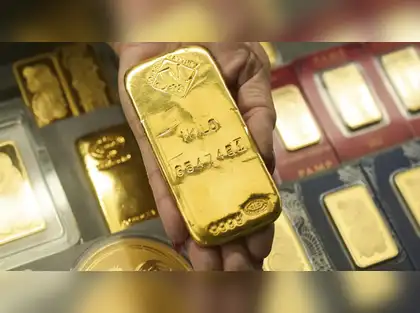
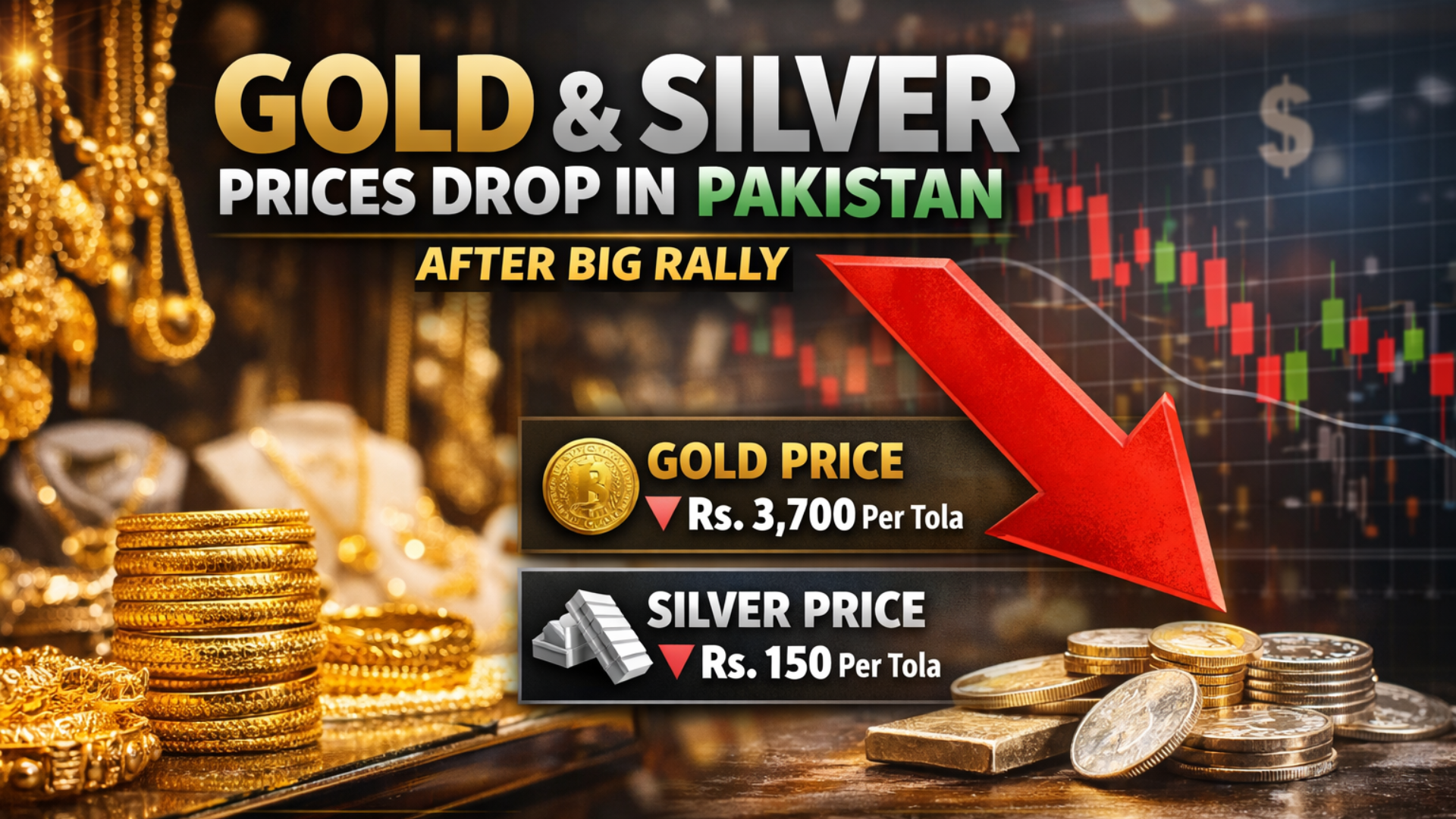
A significant recalibration in the precious metals market has resulted in a substantial gold price decline Pakistan, registering a notable drop of Rs. 3,200 per tola on Monday. Consequently, the local market price for one tola of gold now stands at Rs. 523,762. Furthermore, 10-gram gold experienced a proportionate decrease of Rs. 2,743, settling at Rs. 449,041. This strategic adjustment directly reflects shifts in international rates, as reported by the All-Pakistan Gems and Jewellers Sarafa Association (APGJSA).
The Translation: Decoding Market Dynamics
This recent market movement is a direct consequence of a significant downward trend in international gold valuations. Globally, gold prices decreased by $32, establishing a new baseline of $5,010 per ounce, which includes a standard $20 premium. This international shift invariably dictates local market performance, creating a synchronized pricing adjustment. Therefore, the decrease observed in Pakistan is not an isolated event but a calibrated response to broader global economic indicators impacting precious metal commodities.
Simultaneously, the silver market also experienced a corresponding adjustment. Specifically, silver prices in the local market declined by Rs. 55, stabilizing at Rs. 8,164 per tola. This parallel movement underscores the interconnected nature of precious metal markets, where a systemic change in one often precipitates a similar response in the other.
The Socio-Economic Impact: Calibrating Household Budgets
For the average Pakistani citizen, this gold price decline Pakistan translates into tangible shifts in purchasing power and investment strategies. Students considering gold as a stable investment, professionals looking to diversify their portfolios, and households planning for significant life events like weddings, will find these lower prices more accessible. Furthermore, it could potentially stimulate demand within the local jewelry market, which has historically been sensitive to price fluctuations. This provides a window of opportunity for calibrated investment or acquisition.
Opportunities for Strategic Acquisition
The reduction in per-tola rates means that acquiring gold, whether for personal use or as a long-term asset, becomes momentarily more viable. This could encourage small-scale investors to enter the market. Conversely, existing holders of gold might see a temporary dip in their asset’s notional value. However, the inherent stability of gold as a safeguard against inflation suggests this current adjustment represents a short-term market correction rather than a fundamental erosion of value.
The “Forward Path”: A Stabilization Move
This current market adjustment represents a Stabilization Move. It is not a dramatic momentum shift but rather a necessary recalibration to align local valuations with global economic baselines. Such adjustments are vital for maintaining market equilibrium and fostering predictable trade environments. The data indicates a systematic response to external pressures, ensuring the Pakistani market remains structurally sound and integrated with international financial systems. Consequently, this provides a more stable foundation for future economic planning.
Anticipating Future Market Trends
Looking ahead, stakeholders should monitor international indicators closely. While immediate changes reflect stabilization, long-term trends will depend on global economic performance and geopolitical stability. Strategic foresight suggests that these periods of adjustment can precede phases of renewed growth or further consolidation. Therefore, a data-driven approach is essential for navigating the evolving landscape of precious metals markets in Pakistan.