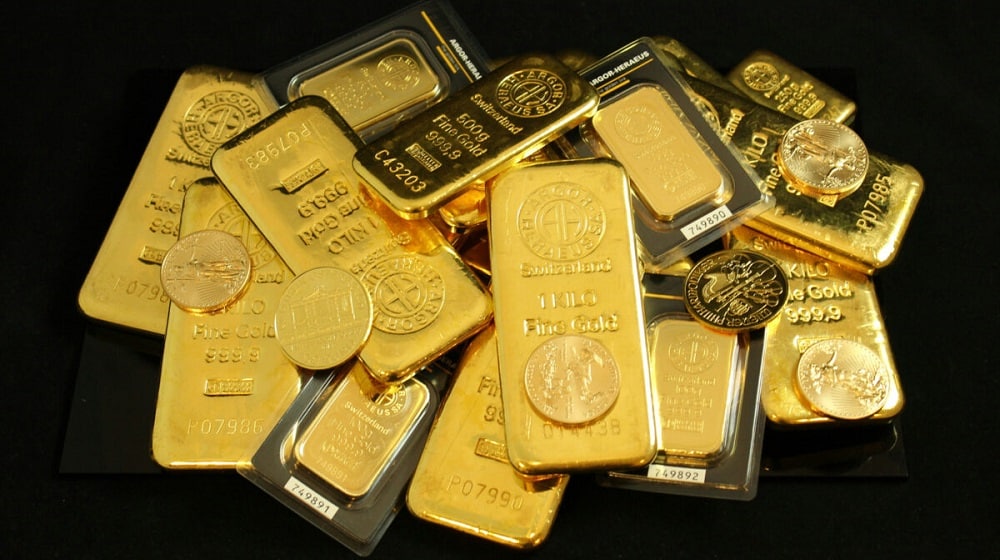
In a calibrated response to global market dynamics, Pakistan’s gold prices have registered a significant ascent, influencing national economic indicators. This structural adjustment observed on Monday, saw the price per tola reach Rs. 524,762, marking a Rs. 5,300 increase. This precise movement in Pakistan Gold Prices reflects broader international trends, impacting both investment strategies and household financial planning across the nation.
Deconstructing the Market Shift: The Translation
Understanding the Gold Price Increment
The recent surge in gold prices within Pakistan directly correlates with upward shifts in the international gold market. Specifically, the All-Pakistan Gems and Jewellers Sarafa Association (APGJSA) reported a per-tola increase of Rs. 5,300, elevating the cost to Rs. 524,762. Furthermore, a 10-gram increment was documented at Rs. 4,544, settling at Rs. 449,898. This follows a preceding rise on Saturday, where the per-tola price gained Rs. 11,700, reaching Rs. 519,462. Concurrently, the international gold rate climbed by $53, stabilizing at $5,020 per ounce, inclusive of a $20 premium.
Silver Market Dynamics
While gold dominated headlines, silver prices also experienced an upward adjustment. Locally, silver saw an increase of Rs. 346, positioning its per-tola value at Rs. 8,615. Consequently, this indicates a parallel but less pronounced appreciation in the broader precious metals sector within the Pakistani market.

Socio-Economic Impact: Calibrating Daily Life
Impact on Pakistani Households and Investors
For the average Pakistani household, rising gold prices carry dual implications. Firstly, it elevates the cost of traditional assets, impacting savings and investment strategies. Many families rely on gold as a secure store of value, particularly during economic volatility. Secondly, it influences the affordability of celebratory purchases, such as wedding jewelry, which is culturally significant. Professionals and small businesses dealing in precious metals, however, may see increased inventory value, though this also introduces greater capital requirements.

Economic Stability and Future Projections
The consistent rise in Pakistan Gold Prices can signal various underlying economic factors, including inflation and currency depreciation. A flight to gold often occurs during periods of economic uncertainty, as investors seek safe-haven assets. Consequently, understanding these movements is crucial for national financial stability. Government and banking institutions monitor these trends to calibrate monetary policies and forecast economic trajectories. This data provides a baseline for future fiscal planning.
The Forward Path: Momentum Shift or Stabilization Move?
This current trend represents a Stabilization Move rather than a fundamental Momentum Shift. While the increase is significant, it appears primarily reactive to global market pressures rather than indicative of unique, internal economic catalysts. Pakistan’s gold market is intricately linked to international fluctuations, signifying a dependency that requires strategic long-term planning. To achieve a true Momentum Shift, Pakistan must develop more diversified and robust domestic economic engines that can withstand and even influence global commodity trends. This precise recalibration reinforces the necessity for advanced financial engineering and strategic resource management to ensure sustained national advancement.