Strategic Economic Recalibration: Understanding the Gold Price Drops
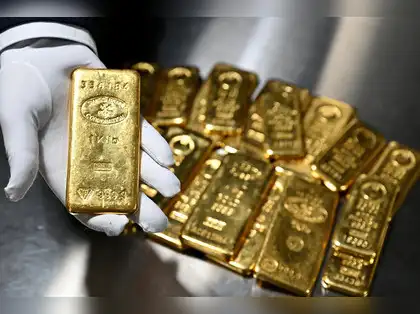
The recent recalibration in global precious metal valuations has initiated a significant gold price drops in Pakistan’s market, impacting investment strategies and consumer purchasing power. Specifically, Thursday marked a sharp decline, with one tola of gold falling by an unprecedented Rs. 24,300, settling at Rs. 499,462. This strategic adjustment positions gold below the 5-lakh threshold, signaling a notable shift in the commodity’s valuation baseline and aligning with a broader slump observed across international markets.
The Translation: Deconstructing Precious Metal Dynamics
Understanding these market fluctuations requires a clear perspective on global and local influences. A “tola” is a traditional South Asian unit of mass, approximately 11.66 grams, commonly used for measuring gold. The All-Pakistan Gems and Jewellers Sarafa Association (APGJSA) meticulously tracks these daily valuations. Yesterday, gold maintained a steady baseline at Rs. 523,762 per tola. Consequently, the observed decline reflects a direct response to a significant international market contraction, where gold prices dropped by $243 to $4,767 per ounce, even with a persistent $20 premium. Furthermore, silver similarly experienced a downward trend, with a calibrated slip of Rs. 760, bringing its per tola rate to Rs. 7,734.
Socio-Economic Impact: Calibrating Household Budgets and National Investment
This substantial gold price drops directly influences the daily financial landscape for Pakistani citizens. For households, particularly those planning weddings or looking to secure assets, a lower gold price can translate into more accessible purchasing power, potentially stimulating local economic activity in related sectors. Professionals considering portfolio diversification may find this a strategic entry point for long-term investments in precious metals. In contrast, existing gold holders might observe a temporary reduction in asset value. Across both urban and rural Pakistan, this market adjustment necessitates a reassessment of personal financial planning and investment horizons, highlighting the interconnectedness of global trends with local economic stability.
The Forward Path: A Stabilization Move for Market Health
This current market behavior represents a Stabilization Move rather than an immediate Momentum Shift. While significant, such price corrections are often a natural component of a healthy, dynamic market, preventing unsustainable bubbles. It provides a baseline recalibration, offering a more realistic valuation reflective of broader economic indicators. For Pakistan, this can foster more predictable investment environments and consumer confidence. Consequently, stakeholders should view this as an opportunity for strategic planning and informed decision-making, ensuring the long-term resilience and stability of the national economic framework.