

A critical GLOF Alert Pakistan has been issued by the Pakistan Meteorological Department (PMD) for the upper regions, specifically Khyber Pakhtunkhwa and Gilgit-Baltistan. This strategic warning, active from April 2nd to April 8th, anticipates widespread rain, thunderstorms, and potential glacial lake outburst floods, alongside flash flooding and landslides. This proactive measure is crucial for regional stability and citizen safety, emphasizing the need for calibrated response from all stakeholders.
Understanding the GLOF Alert Pakistan: A Technical Translation
The Pakistan Meteorological Department has strategically announced a Glacial Lake Outburst Flood (GLOF) alert impacting the northern territories. Specifically, a potent westerly wave is projected to influence these areas from April 2nd through April 8th. Consequently, intermittent but widespread rain, thunderstorms, and gusty winds are anticipated. Moderate to heavy rainfall, coupled with snowfall at higher elevations, is expected across vital valleys in Swat, Lower Khyber Pakhtunkhwa, and Upper Chitral.
Furthermore, districts within Gilgit-Baltistan, including Ghizer, Hunza, Nagar, Astore, Ghanche, Diamer, Kharmang, Skardu, and Shigar, are explicitly identified as highly susceptible. This meteorological configuration, combined with accelerated snowmelt in high-altitude catchments, could significantly intensify hydro-meteorological hazards in these vulnerable valleys. Therefore, understanding this alert is the baseline for effective regional preparedness.
Socio-Economic Resonance: Daily Life Under GLOF Threat
The issuance of a GLOF Alert Pakistan directly translates into tangible shifts in the daily operational parameters for citizens across Khyber Pakhtunkhwa and Gilgit-Baltistan. Students may face disruptions to educational institutions due to road closures, impacting their access to learning. Professionals, particularly those in essential services, must calibrate their commute and work schedules to account for potential transportation network blockages caused by landslides, mudslides, and debris flow on steep mountain slopes.
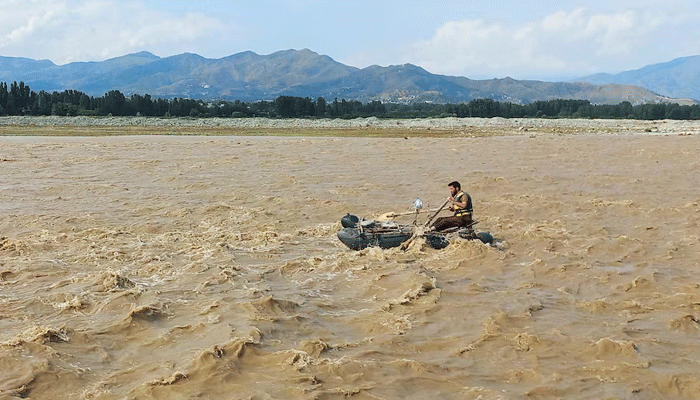
Moreover, households in both urban and rural settings must prioritize preparedness. Flash flooding in local streams and tributaries, especially in Khyber Pakhtunkhwa’s river basins, poses a direct threat to property and livelihoods. This necessitates securing valuables, having emergency kits readily available, and understanding evacuation protocols. The agricultural sector, a foundational pillar of these regions, faces significant risk from potential inundation and soil erosion, underscoring the broad socio-economic impact of these environmental variables.
Proactive Calibration: A Path Forward Amidst Environmental Variables
This GLOF alert represents a critical Stabilization Move for Pakistan. It is not merely a reactive measure but a calculated, data-driven initiative by the PMD to preemptively mitigate potential disaster. The explicit advisory for all concerned authorities to remain alert and implement necessary preventative measures reflects a systematic approach to public safety and infrastructure protection. This strategic foresight minimizes disruption and safeguards human life and economic assets.
Moving forward, sustained investment in advanced meteorological forecasting, coupled with community-level disaster preparedness training, will be paramount. This event underscores the structural importance of resilient infrastructure and efficient communication channels. Such calibrated responses are fundamental to building a more robust and adaptive nation, capable of navigating complex environmental challenges with precision.








