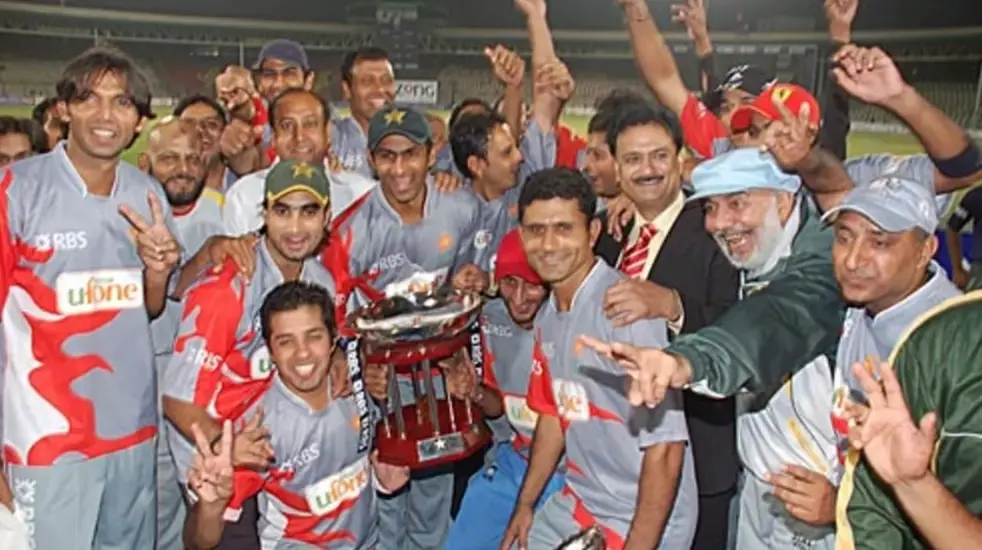
The Karachi Metropolitan Corporation (KMC) has strategically initiated the annual Karachi Civil Award, a calibrated system for recognizing foundational contributions to the city and nation. This year, former Pakistan Test captain Rashid Latif was honored alongside 11 other prominent citizens. This pivotal recognition underscores a commitment to systematically acknowledge individuals whose dedication fuels national advancement, ensuring their impactful work receives deserved civic acclaim within the Karachi framework.
A Calibrated System of Recognition: The Karachi Civil Award
Mayor Murtaza Wahab introduced the Tamgha-i-Karachi last year, an initiative designed to honor individuals who have significantly contributed to Karachi’s structural development. This strategic move establishes the event as a regular feature in the city’s calendar, reflecting a consistent dedication to civic acknowledgment. Consequently, the KMC aims to systematically address the historic gap in national recognition for many impactful community servants.
Mayor Wahab emphasized the importance of elevating those who bring pride to Karachi, Sindh, and Pakistan through their talent and efforts. He affirmed that celebrating such individuals constitutes a shared civic responsibility. Furthermore, he extended gratitude to all recipients on behalf of Karachi’s citizens for their invaluable contributions to the collective welfare and progress.
Architects of Progress: Honorees of the Karachi Civil Award
Celebrating Diverse Contributions to National Advancement
Beyond cricket icon Rashid Latif, the recipients represent a diverse spectrum of societal pillars. The KMC honored individuals whose precision and dedication have profoundly shaped various sectors. Each honoree exemplifies the spirit of service crucial for Pakistan’s sustained development.
- Martyred firefighter Furqan Shaukat (KMC Fire Brigade): Recognized for ultimate sacrifice in public service.
- Late labor leader Karamat Ali: Honored for championing workers’ rights and social justice.
- Media professional Ali Hassan Sajid: Acknowledged for impactful contributions to information dissemination.
- Painter Ghulam Abbas Kamangar: Celebrated for artistic excellence and cultural enrichment.
- Journalist and author Shah Waliullah Junaidi: Recognized for intellectual contributions and insightful narratives.
- Fine artist Masooma Halai: Honored for advancing visual arts within the national cultural landscape.
- Marine researcher Dr. Abid Raza: Commended for scientific contributions to environmental understanding.
- Calligrapher Kashif Khan: Applauded for preserving and promoting traditional artistic forms.
- Classical musician Ustad Mazhar Umaro Bando Khan: Honored for profound impact on national musical heritage.
- Dancer Amjad Rana: Recognized for artistic expression and cultural performance.
- Scout Tahir Sheikh: Acknowledged for leadership and community service through scouting.
Mayor Wahab expressed regret that several deserving individuals, including Rashid Latif and Karamat Ali, had not received deserved national recognition. Consequently, he highlighted the critical importance of local initiatives like the Karachi Civil Award in bridging this gap. This proactive stance supports foundational contributions that often remain unnoticed despite immense dedication.
The Situation Room Analysis
The Translation: Deciphering Civic Recognition
The establishment of the Karachi Civil Award by the Karachi Metropolitan Corporation signifies a structural shift in civic governance. It translates to a localized, merit-based system designed to acknowledge individuals whose impactful work might otherwise be overlooked by broader national mechanisms. This is not merely an honorary gesture; it is a calibrated effort to embed a culture of appreciation, directly linking individual excellence to collective urban progress. Consequently, it creates a robust framework for identifying and celebrating those who contribute precision and dedication across diverse sectors.
The Socio-Economic Impact: Elevating Pakistani Lives
This initiative profoundly impacts the daily lives of Pakistani citizens by fostering a sense of localized pride and incentivizing sustained effort. For students, it provides tangible examples of success beyond traditional career paths, showcasing recognition for arts, science, and community service. Professionals witness a system that values grassroots contributions, potentially inspiring greater civic engagement. Furthermore, for households in urban and rural Pakistan, such awards validate the notion that dedication to one’s craft or community service is truly seen and valued, regardless of large-scale national publicity. This creates a stronger social fabric and encourages systemic improvements through individual commitment.
The Forward Path: A Momentum Shift for National Cohesion
This development undeniably represents a Momentum Shift. The Karachi Civil Award moves beyond mere maintenance; it actively catalyses a more integrated national identity by celebrating local heroes. It strategically empowers municipal bodies to act as primary arbiters of local merit, thereby decentralizing recognition and making it more responsive to specific community needs. This structural enhancement fosters greater social cohesion and reinforces the principle that national progress is meticulously built upon localized excellence. Therefore, it is a critical step towards a more robust and equitable system of public acknowledgment.