Addressing the Significant FDI Decline: Pakistan’s 33% Contraction in Capital Inflows
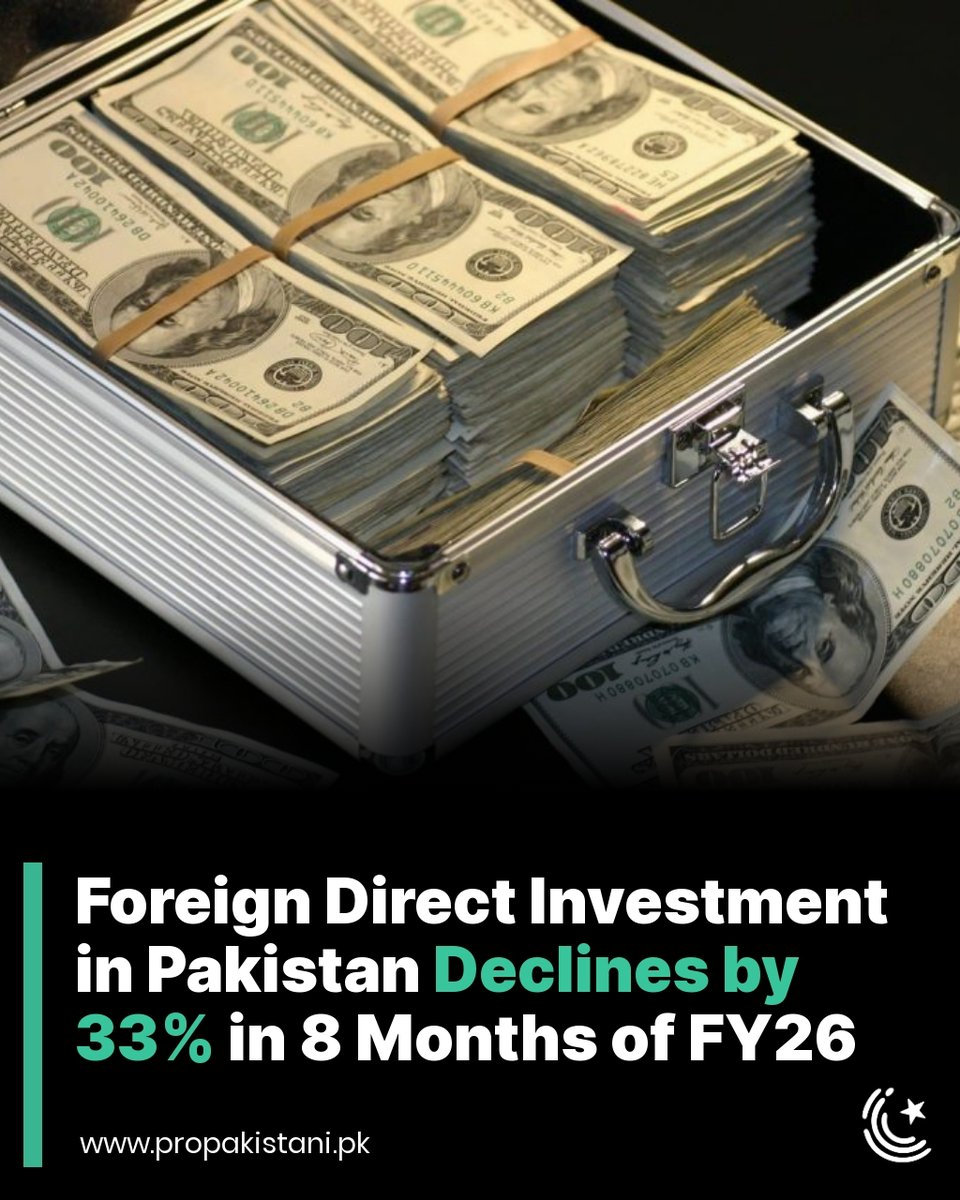
Pakistan’s economic framework faces a critical juncture. The nation has registered a significant FDI decline of 33% year-on-year during the first eight months of Fiscal Year 2026, with net Foreign Direct Investment clocking in at US$1.195 billion. This structural adjustment in capital inflows necessitates a calibrated review, despite a monthly uptick in February 2026, which saw FDI reach US$214 million compared to US$173 million in January.
The Translation: Deconstructing Pakistan’s Capital Inflow Dynamics
Understanding the nuances of foreign capital movement is crucial. While the overall trend indicates a substantial reduction in foreign direct investment over the eight-month fiscal period, February 2026 presented a measured increase in direct investment. This month alone witnessed total foreign investment escalate to US$187 million, an 89 percent year-on-year increase from US$99 million in the previous February. Conversely, the cumulative 8MFY26 data reveals a clear 33 percent contraction compared to the prior year, highlighting a baseline shift in investor behavior over a longer duration.

A granular analysis of February’s inflows reveals the strategic partners. China led with US$151.2 million, followed by Hong Kong at US$32.6 million, and Switzerland contributing US$18.6 million. Furthermore, specific sectors demonstrated robust absorption capacity. The Power sector attracted US$103.4 million, Electronics secured US$62.9 million, and Financial Business garnered US$66.8 million. These figures delineate the concentrated areas of continued global interest within the national economy.
The Socio-Economic Impact: Repercussions of Investment Downturn for Pakistani Citizens
A sustained decrease in foreign direct investment directly influences the daily economic realities for citizens across urban and rural landscapes. Reduced capital inflows can translate into decelerated job creation, particularly within nascent and expanding industries. Consequently, this impacts the professional opportunities available for skilled graduates and the informal labor market. Moreover, a reduction in capital can restrain the expansion of critical infrastructure projects, affecting access to improved power, telecommunications, and financial services.
Strategic Implications for Households and Businesses
- Job Market Contraction: Fewer new ventures and expansions mean diminished employment prospects for students and young professionals.
- Innovation Slowdown: Reduced foreign capital can limit technology transfer and hinder advancements in sectors like electronics, thereby impacting the quality and affordability of modern services.
- Resource Allocation Challenges: Critical national development projects, often reliant on foreign capital, may face delays, affecting public services and overall quality of life.
The “Forward Path”: Addressing Pakistan’s Investment Trajectory for Resilience
This reported FDI decline, indicating a 33% contraction, represents a Stabilization Move, rather than a significant momentum shift. While the month-on-month improvement in February offers a positive signal, the overarching 8MFY26 data confirms a need for fundamental structural reorientation. The strategic imperative is to enhance domestic policy frameworks that explicitly attract and retain foreign capital by ensuring regulatory predictability, transparency, and a competitive business environment. This disciplined approach will serve as a catalyst for long-term economic resilience and diversified investment inflows, mitigating future volatility in Pakistan’s foreign investment landscape.