
Urgent Muzaffargarh Flood Relief: A Call to Action
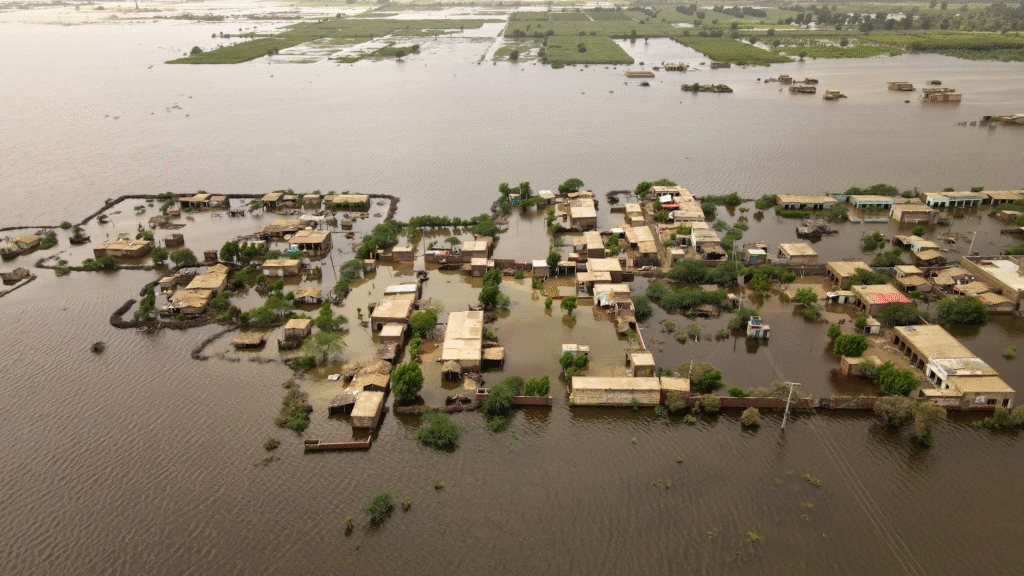
Disasters truly test humanity. In 2025, devastating floods engulfed southern Punjab, with Muzaffargarh, specifically the Alipur tehsil, suffering immense damage. Entire families faced displacement; homes disappeared overnight, and livelihoods drowned under muddy waters. Consequently, the need for immediate Muzaffargarh flood relief became critical.
Broken infrastructure, stagnant water, and limited aid left communities vulnerable to poverty, hunger, and disease. Our team at Next Generation Pakistan, collaborating with NGOs, institutions, and dedicated volunteers, responded promptly. We observed not only widespread devastation but also remarkable resilience, profound despair, and a vital demand for systemic change.
From Flourishing to Flood-Ravaged: Muzaffargarh’s Transformation
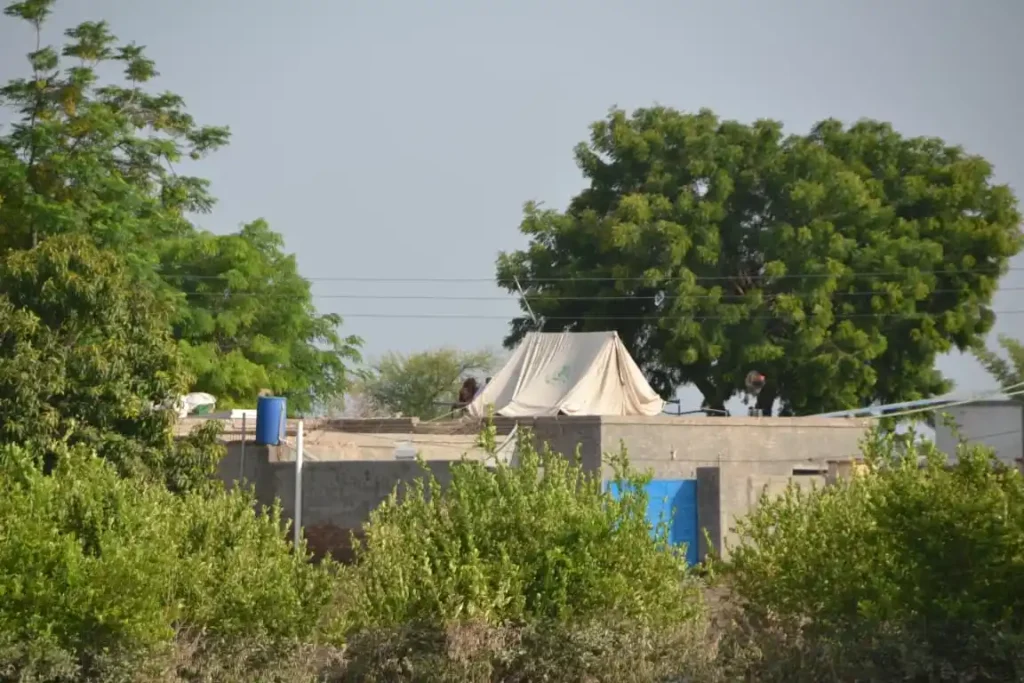
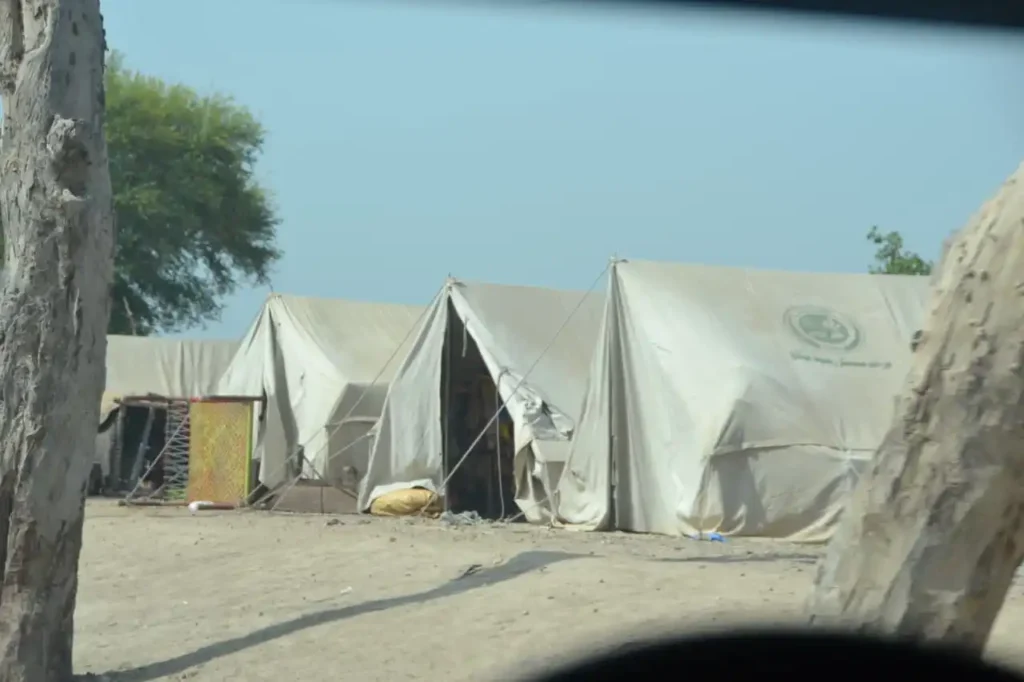
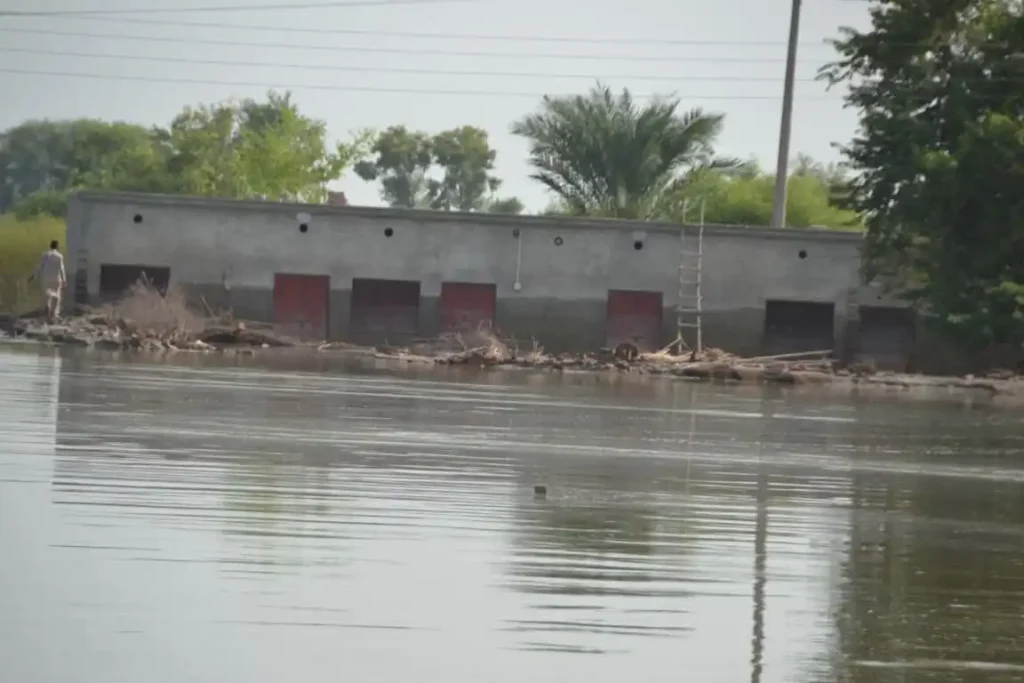
Upon entering the flood-stricken zones, the initial sights were truly haunting. Villages, once bustling with life and laughter, lay submerged. Homes had completely collapsed. Schools and mosques stood broken, their structures severely compromised. Furthermore, vibrant fields of wheat and cotton, which once thrived, had transformed into desolate swamps.
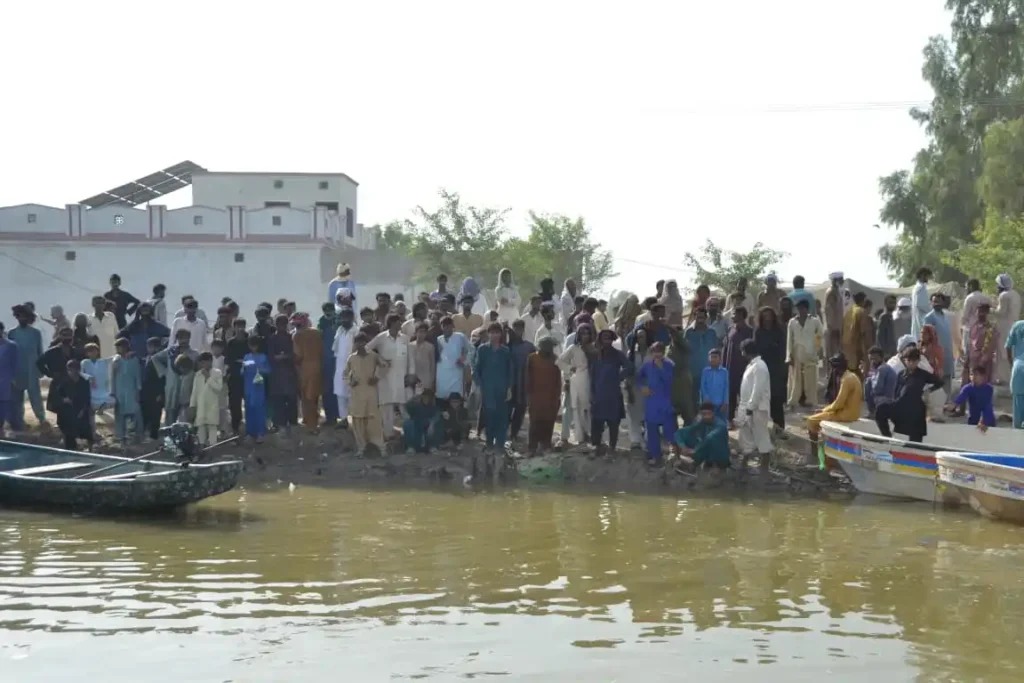
Deeper into the villages, children ran barefoot; some desperately searched for food, while others played in contaminated water. Meanwhile, the elderly sat silently in makeshift tents. Their eyes reflected profound trauma and irreplaceable loss. Moreover, fishermen with boats, lacking safety nets, ferried goods just to survive another day.
The Human Cost of Muzaffargarh Floods: Devastating Statistics
Local estimates, verified by NGOs and district authorities, reveal the tragic scope of the disaster:
- Approximately 80% of villages in low-lying Alipur experienced submergence.
- Thousands of acres of crucial crops, including cotton, sugarcane, and wheat, were entirely wiped out.
- Hundreds of fishing families lost both their homes and their essential livelihoods.
- Thousands of children are currently out of school, with many facing an uncertain return.
- Diseases such as malaria, diarrhea, and widespread skin infections are spreading at an alarming rate.
These figures represent more than mere statistics. They depict families torn apart, futures tragically erased, and countless dreams utterly drowned by the relentless floodwaters. Therefore, addressing these impacts is crucial for effective Muzaffargarh flood relief.
Voices from the Devastation: Real Stories of Muzaffargarh Flood Victims
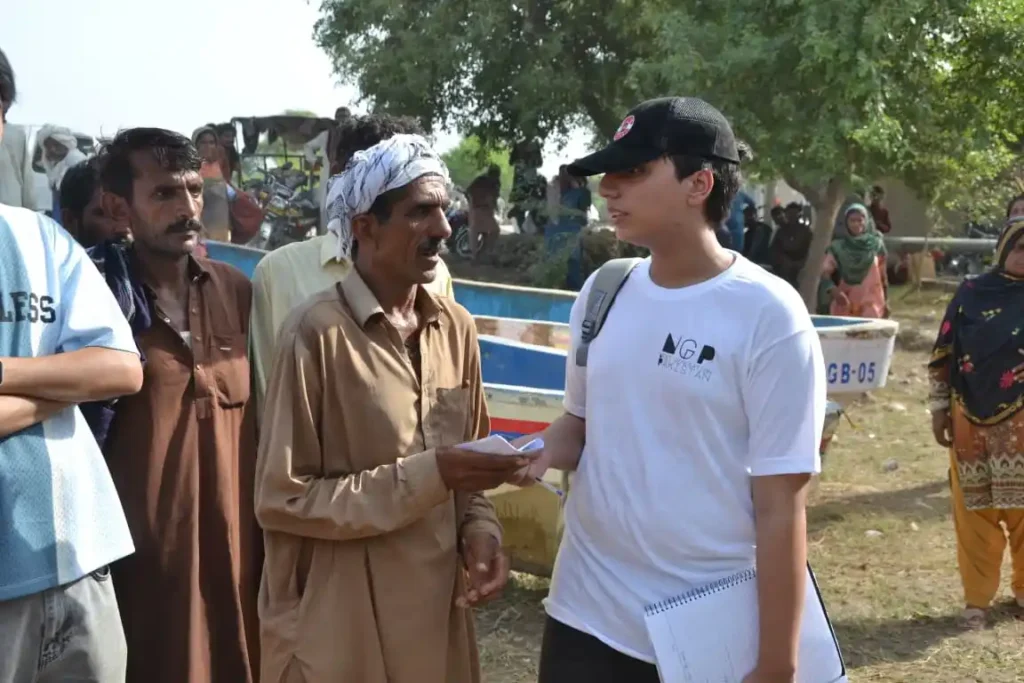
Moving beyond raw statistics, individual human voices clearly illustrate the flood’s profound impact. A fisherman courageously shared his story, expressing deep frustration.
“The government promised relief for our boats, but nothing arrived. We risk our lives to rescue others while our own children suffer from hunger.”
Furthermore, an elderly villager, gesturing towards our ration truck, quietly articulated a painful truth. He highlighted the desperation fueling the scramble for aid.
“People jumped onto your truck not as thieves, but because they were hungry. Poverty erodes dignity before anything else.”
These powerful testimonies expose a cycle of mistrust, betrayal, and abandonment. No amount of data can truly capture such profound human suffering in the aftermath of the Muzaffargarh floods.
Discrepancy in Aid: Government Promises and Muzaffargarh’s Reality
While some officers undoubtedly performed their duties sincerely, local residents reported deeply troubling practices during the relief efforts:
- Bribes were reportedly demanded for flood relief registration.
- Boats and tractors were seized without any promise of repayment or compensation.
- Rations were allegedly distributed selectively, favoring those with influence.
- NGO relief goods were reportedly diverted before reaching the most vulnerable victims.
Consequently, these accounts clearly demonstrate how corruption transforms much-needed aid into an additional burden for the impoverished communities affected by the Muzaffargarh floods.
Our Comprehensive Muzaffargarh Flood Relief Operations
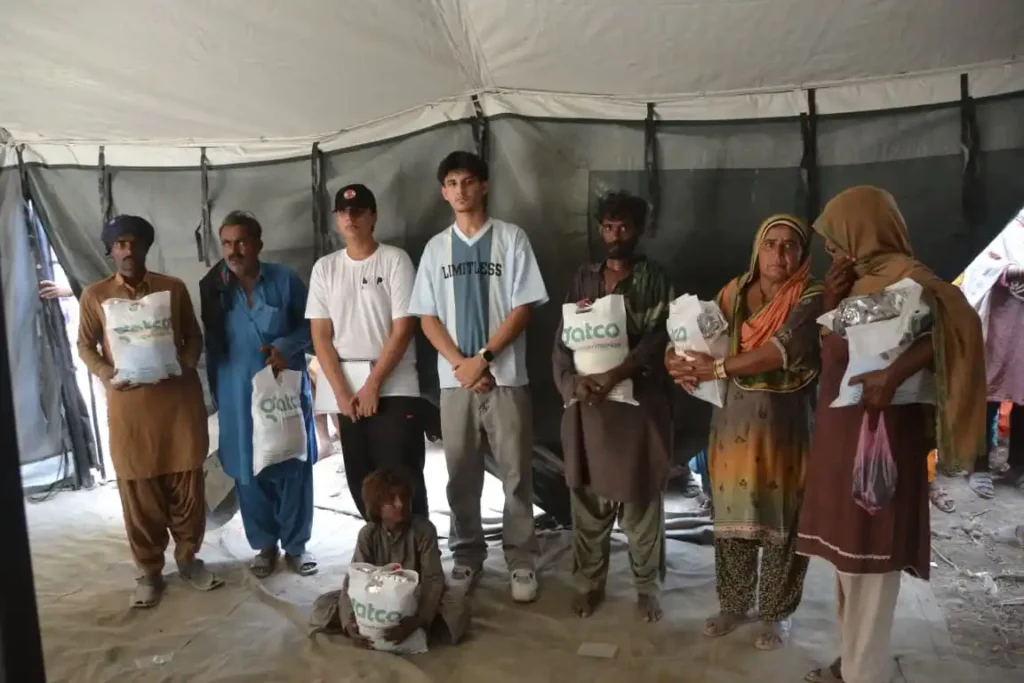
Despite the significant challenges, our dedicated team relentlessly delivered crucial support to those affected. We implemented a multi-faceted approach to Muzaffargarh flood relief:
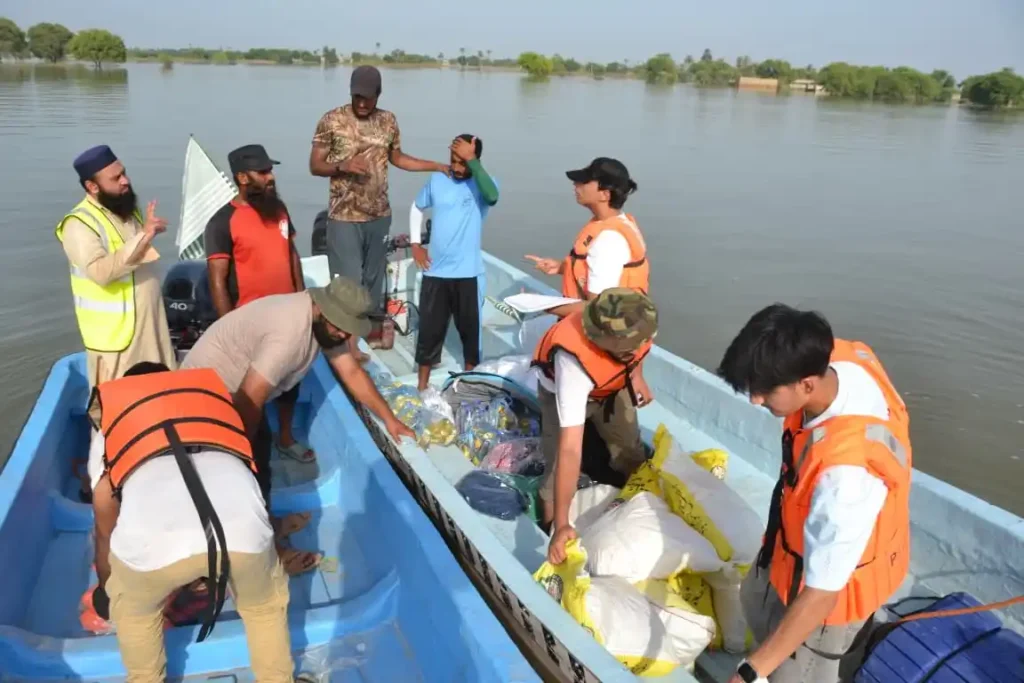
- Food Distribution: We provided essential rations, including biscuits, snacks, and vital cash assistance.
- Fresh Water: Tankers and bottled water were supplied to prevent the spread of waterborne diseases.
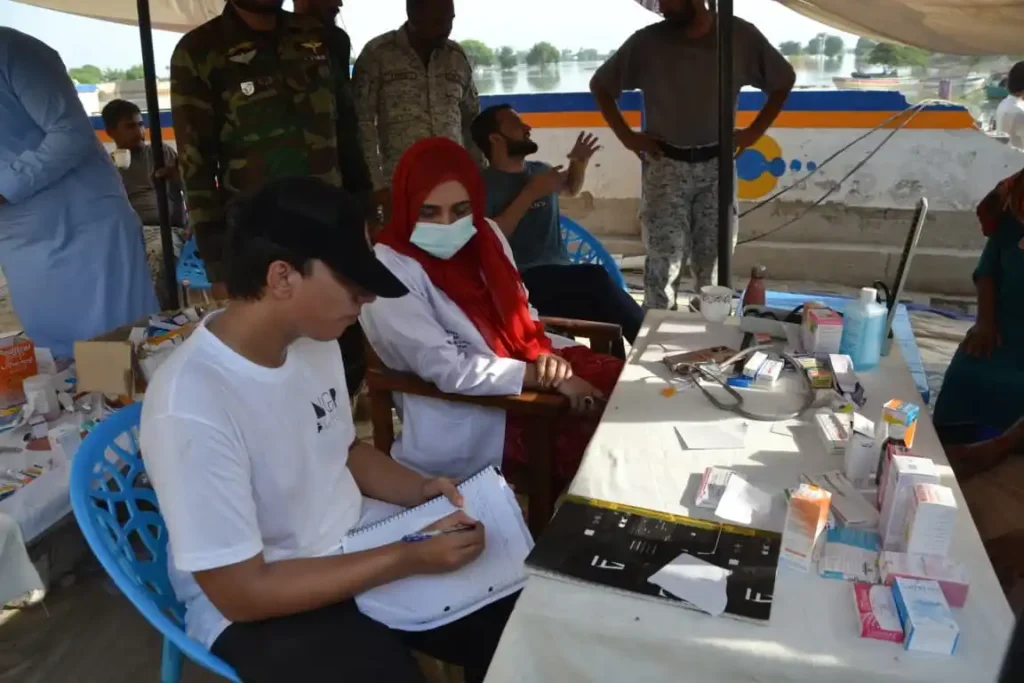
- Medical Camps: In collaboration with partner NGOs, we organized medical check-ups, dispensed medicines, and distributed mosquito nets.
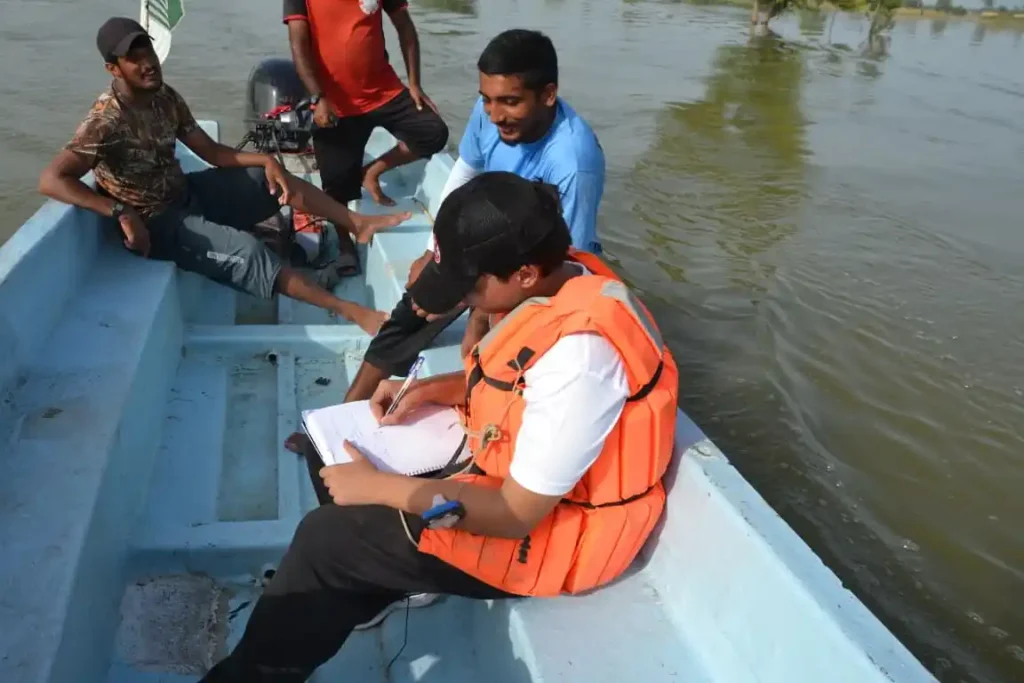
- Rescue Work: Our team partnered with local volunteers and skilled fishermen to reach and rescue stranded families.
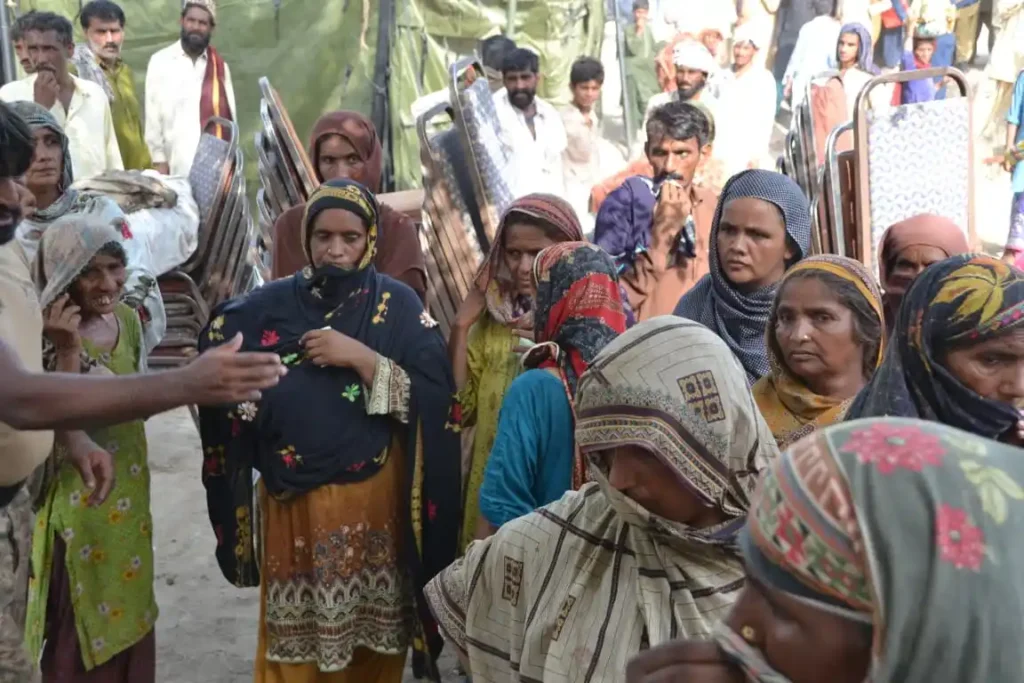
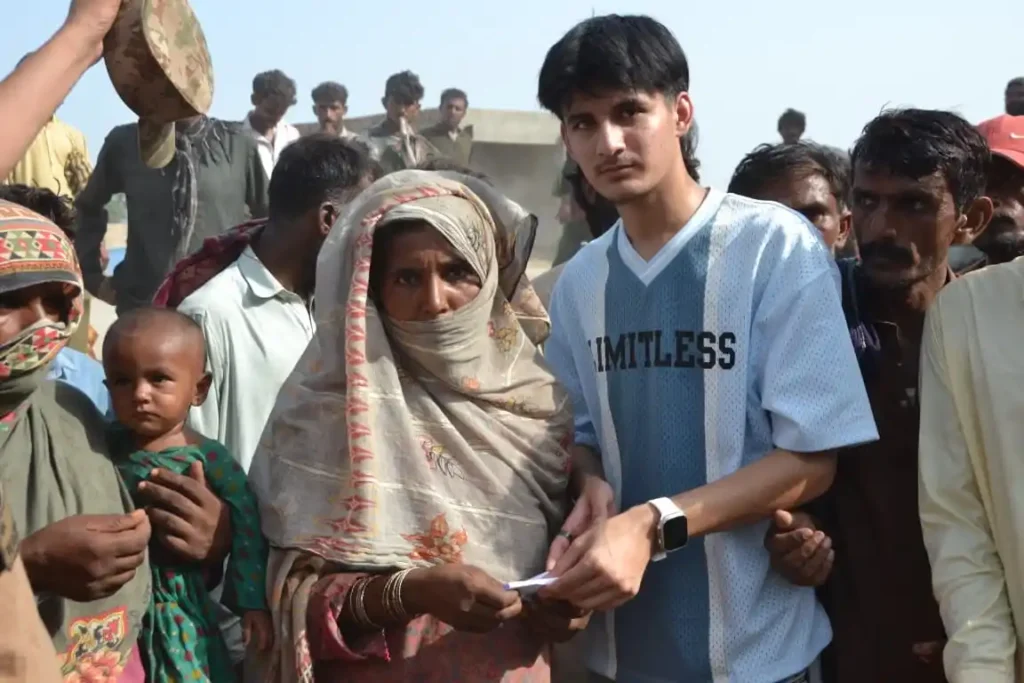
Nevertheless, each distribution of rations clearly revealed the sheer desperation among the people. When our trucks arrived, individuals rushed forward, pushing, climbing, and even inadvertently damaging supplies. This scramble was not chaos; rather, it represented a primal instinct for survival in the face of immense hardship.
Beyond Emergency Aid: Addressing Systemic Issues in Muzaffargarh
The floods did more than cause destruction; they exposed a troubling cycle of persistent poverty and unfulfilled promises. Fishermen risked everything, yet compensation never materialized. Farmers tragically lost their crops, but vital insurance coverage was absent. Furthermore, children were promised tents and essential books, but these crucial items never arrived.
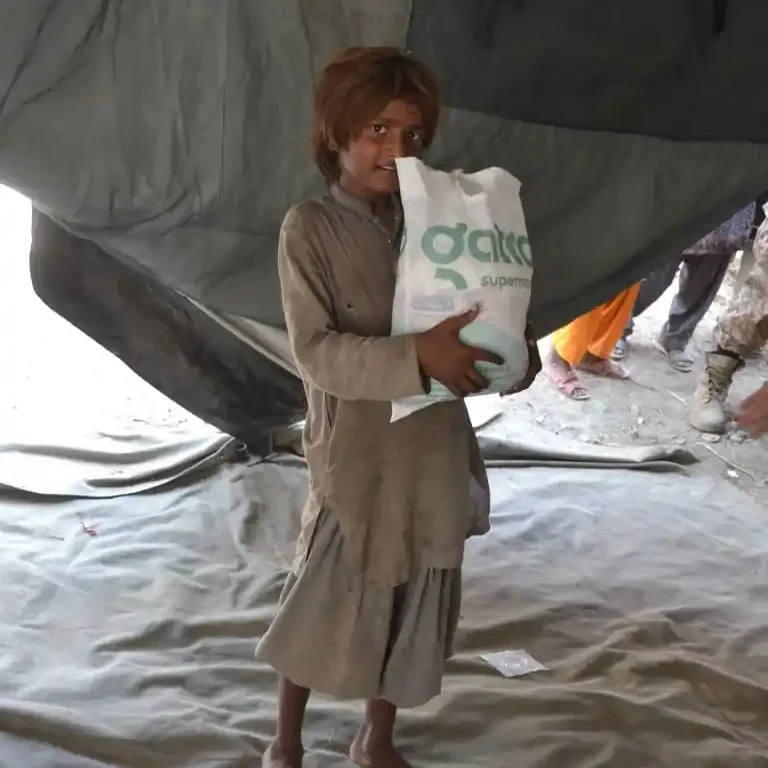
We witnessed moments where basic survival instincts understandably overshadowed order. This occurred not out of greed, but because profound hunger offered no other choice. Ultimately, genuine Muzaffargarh flood relief requires addressing these underlying systemic issues.
Strategic Path Forward: Ensuring Effective Muzaffargarh Flood Relief
This critical mission clearly taught us that relief efforts must extend beyond short-term assistance. To genuinely rebuild and foster lasting recovery, we must actively ensure several key elements:
- Transparency in Aid: Every ration and every rupee must be fully traceable to its intended recipients.
- Empowering Local Volunteers: Communities inherently understand their own needs best, so empowering local volunteers is essential.
- Sustainable Rehabilitation: We must prioritize restoring livelihoods, not merely rebuilding damaged houses.
- Government Accountability: All promises from authorities require vigilant monitoring and complete fulfillment.
- Youth Involvement: The next generation must step forward and lead with a profound sense of responsibility.
Conclusion: Enduring Scars and Future Resilience in Muzaffargarh
While floodwaters eventually recede, the emotional and physical scars often linger. We stood firmly with Muzaffargarh’s communities, not as external observers, but as integral brothers and sisters. Their tears fueled our efforts, and their remarkable resilience guided every action. Our unwavering commitment remains to long-term Muzaffargarh flood relief and sustainable development.
This mission extended beyond mere food distribution; it encompassed restoring both dignity and profound hope. However, hope alone proves insufficient. Unless governance, critical infrastructure, and disaster management capabilities significantly improve, such heartbreaking tragedies will inevitably recur.
Next Generation Pakistan remains steadfastly committed to supporting those who need us most, working towards a more resilient future.


Young, passionate, and impactful -you are a shining example of community service. Keep it up!
The efforts are more appreciated. However, the calamity is so big that without combining the efforts of all walk of society and government departments it seems impossible to bring affected people back on their own foots.
This country needs young leaders like you. Serving humanity is great cause.
When we share burden of others, part of us is overgrown and maturity hits us earlier but I hope your experiences give you a light so bright that you can continue rays of shine everywhere you go.