

Driving Economic Momentum: Pakistan’s Strategic Stance on Foreign Investment
In a strategic move towards national advancement, Finance Minister Senator Muhammad Aurangzeb has unequivocally reaffirmed Pakistan’s commitment to facilitating foreign investment. This pivotal declaration, made during a recent engagement with the U.S. business community, including the U.S. Chamber of Commerce and the American Business Council, underscores a disciplined approach to economic growth. Furthermore, the minister emphasized consistent dialogue with American counterparts, signaling a calibrated strategy for fostering robust bilateral economic cooperation and ensuring a stable investment climate.
The Translation: Clarifying Pakistan’s Economic Trajectory and Facilitating Foreign Investment
On Wednesday, U.S. Deputy Assistant Secretary for South and Central Asian Affairs John Mark Pommersheim, accompanied by U.S. Chargé d’Affaires Natalie A. Baker, met with Finance Minister Aurangzeb. This high-level interaction centered on Pakistan’s evolving economic outlook and its comprehensive reform agenda. Consequently, the minister provided an in-depth briefing on significant progress in macroeconomic stabilization. Key indicators include a notable decline in the fiscal deficit and an improved current account position, primarily driven by strong remittances and robust growth in IT exports. Furthermore, credit ratings have demonstrated positive movement, reflecting enhanced investor confidence.
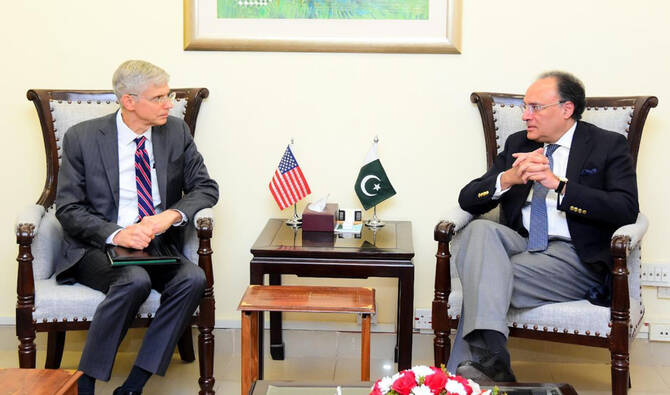
The government remains dedicated to fiscal discipline, external stability, and structural reforms designed for long-term growth. Specifically, initiatives such as accelerating reforms in state-owned enterprises (SOEs) and right-sizing the public sector are underway. These structural adjustments aim to enhance efficiency and systematically reduce fiscal risks, creating a more streamlined economic framework. Subsequently, the minister highlighted rising investor confidence, evidenced by recent indigenous investment projects and increased private sector participation across vital economic sectors. This deliberate policy framework is crucial for facilitating foreign investment and ensuring sustained economic vitality.
The Socio-Economic Impact: A New Baseline for Pakistani Citizens
This commitment to facilitating foreign investment and implementing structural reforms directly impacts the daily lives of Pakistani citizens. For professionals and students, a stable economy signifies expanded opportunities in a growing job market, particularly within export-led sectors like IT. Increased foreign direct investment often translates to better infrastructure, enhanced public services, and improved access to advanced technologies. Households, both urban and rural, stand to benefit from reduced fiscal pressures, which can lead to more predictable economic conditions and potentially lower inflation rates. Ultimately, these strategic economic policies aim to elevate living standards and foster a more prosperous environment for every Pakistani.
The Forward Path: A Momentum Shift Towards Sustained Progress
This development represents a Momentum Shift, moving beyond mere stabilization. U.S. Deputy Assistant Secretary Pommersheim’s acknowledgment of Pakistan’s macroeconomic progress validates current reform efforts. He affirmed that strengthening the investment climate is a shared strategic priority, emphasizing that U.S. businesses closely observe policy consistency. Consequently, Pakistan’s proactive plans to re-enter international capital markets, notably through a potential Panda Bond issuance, diversify financing sources. These actions, coupled with planned privatizations in banking, power distribution, and airport outsourcing, structurally position Pakistan for sustained economic acceleration. This calibrated trajectory indicates a disciplined drive towards long-term, self-reliant growth.









