In a strategic move to optimize national resources and mitigate economic strain, the federal government has formally implemented a significant federal work-from-home policy for its employees. This calibrated decision, announced by Prime Minister Muhammad Shehbaz Sharif, forms a core component of a broader austerity drive. Its primary objective is to substantially reduce fuel consumption across both public and private sectors, thereby cushioning the economic impacts linked to global geopolitical shifts.
The Translation: Deconstructing the Austerity Framework

Prime Minister Sharif, following a pivotal meeting on austerity measures, articulated a multi-faceted approach. A structural directive mandates that 50% of staff in public and private institutions will now operate remotely. Crucially, essential services remain exempt from this arrangement, ensuring critical infrastructure functions without interruption. Furthermore, a shift to a four-day work week has been announced, although this specific measure excludes critical sectors such as banking, industry, and agriculture to preserve their operational continuity.
Consequently, the government is also enforcing a complete prohibition on official iftar parties and dinners, channeling resources away from non-essential expenditures. Institutions are now directed to prioritize digital communication channels, utilizing online meetings and video-link technologies to maintain operational efficiency while minimizing travel and associated costs. This represents a significant shift towards streamlined digital processes.

In a further tightening of fiscal controls, fuel quotas for public sector institutions have been reduced by 50% for the next two months. This reduction specifically excludes ambulances and public-use buses, underscoring a commitment to public welfare. Additionally, 60% of transport assets used by government offices will be decommissioned for the same two-month period. This precise reduction in vehicle usage directly targets one of the largest contributors to fuel consumption.
All government institutions are now required to implement a 20% cut in their overall spending, a mandate that specifically excludes salaries to protect employee welfare. The procurement of new transport, air conditioners, and other non-essential items has been unequivocally banned. Finally, the government has imposed a strict moratorium on unnecessary official foreign tours for federal cabinet members, provincial chief ministers, and governors, permitting only trips deemed absolutely unavoidable for the national interest. This comprehensive package aims for maximum efficiency and fiscal prudence.
The Socio-Economic Impact: Reconfiguring Daily Life in Pakistan
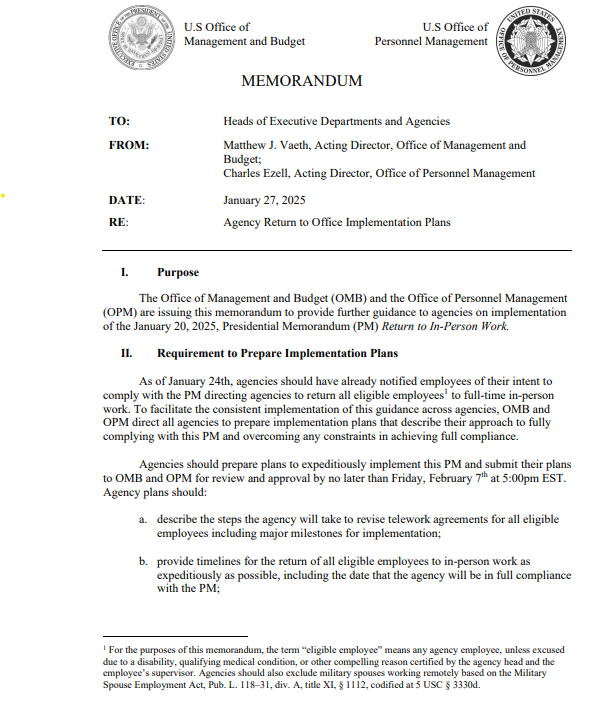
This policy pivot directly recalibrates the daily lives of countless Pakistani citizens, impacting students, professionals, and households across urban and rural landscapes. For professionals in the affected sectors, the transition to federal work-from-home arrangements and a four-day week offers a tangible reduction in daily commuting expenses and time. Consequently, this could lead to improved work-life balance and a potential decrease in traffic congestion within major cities, an often-overlooked benefit.
However, this shift also presents challenges. Households might experience increased utility bills due to prolonged home occupancy. Furthermore, the accessibility of reliable internet infrastructure, particularly in rural areas, becomes a more critical factor for maintaining productivity. Students whose parents are now working from home might experience changes in their home environment and study routines. This highlights the need for robust digital infrastructure development.
The broader austerity measures, encompassing fuel quota reductions and spending cuts, directly influence the national economy. These actions are designed to stabilize the rupee and manage inflation, which in turn can positively affect the purchasing power of average Pakistani families. Reduced government expenditure on non-essentials frees up capital that can be strategically reallocated towards critical development projects or social welfare programs, though specific reallocations are not yet detailed.
Anticipated Household and Sectoral Adjustments from Federal Work-From-Home Policies:
- Reduced Commute Costs: Direct savings for many employees.
- Potential Utility Increase: Higher electricity/gas consumption at home.
- Digital Infrastructure Demand: Increased reliance on stable internet access.
- Economic Stabilization: Government efforts to curb inflation may benefit household budgets.
- Resource Reallocation: Potential for redirecting funds to essential services.
The Forward Path: Momentum Shift or Stabilization Move?

This comprehensive package of austerity and remote work policies represents a decisive Stabilization Move. The directives are fundamentally designed to absorb existing economic shocks and establish a more robust fiscal baseline for the nation. While elements like the federal work-from-home policy can catalyze future efficiencies and digital transformation, their immediate purpose is to provide economic cushioning rather than initiating a radical growth trajectory.
Strategically, this approach aims to conserve vital resources and manage external pressures, laying a foundational structure for potential future growth. It emphasizes fiscal discipline and operational recalibration, which are essential for long-term national resilience. Therefore, these measures are not primarily a “Momentum Shift” propelling Pakistan into a new phase of rapid development, but rather a prudent and necessary recalibration to ensure systemic stability amidst ongoing challenges. The effectiveness will depend on rigorous implementation and continuous monitoring of both economic indicators and societal impacts.