Dubai’s Strategic Leap into Autonomous Mobility
Dubai has initiated a significant advancement in urban transport by launching its fully autonomous RT6 taxis, developed in collaboration with Baidu Apollo Go. This strategic move aligns with the emirate’s smart mobility vision. The innovative service is slated for public rollout in the first quarter of 2026, marking a pivotal moment in the evolution of urban transit systems. Consequently, this development sets a new global benchmark for integrating AI into daily public services.
The Translation: Redefining Urban Transit Efficiency
This initiative fundamentally shifts how citizens will interact with public transport. The introduction of driverless taxis in Dubai means enhanced operational efficiency and a calibrated approach to urban planning. Furthermore, it signifies a move towards a transportation network that prioritizes technological precision and passenger safety above traditional models. For instance, the system reduces human error, potentially leading to fewer accidents and smoother traffic flow across the city.
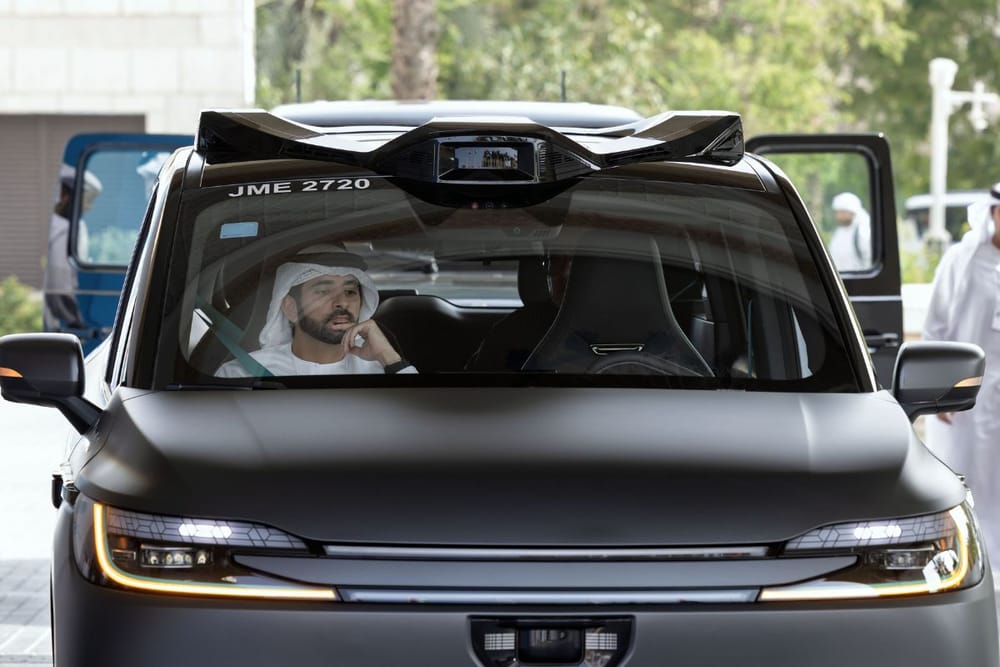
Crown Prince Sheikh Hamdan bin Mohammed bin Rashid Al Maktoum formally inaugurated the service, demonstrating its operational readiness by traveling in a driverless taxi to the World Governments Summit. This high-profile endorsement underscores Dubai’s commitment to rapidly integrating future transport technologies. The demonstration effectively showcased the system’s reliability and its readiness for future expansion.
Under the Hood: Precision Engineering for Driverless Operation
The RT6 autonomous vehicle integrates advanced artificial intelligence with high-precision LiDAR, sophisticated radars, and an array of advanced cameras. These core components enable the vehicle to navigate complex city roads with unparalleled safety and to respond dynamically to real-time traffic conditions. Consequently, the system processes vast amounts of environmental data to make informed decisions.
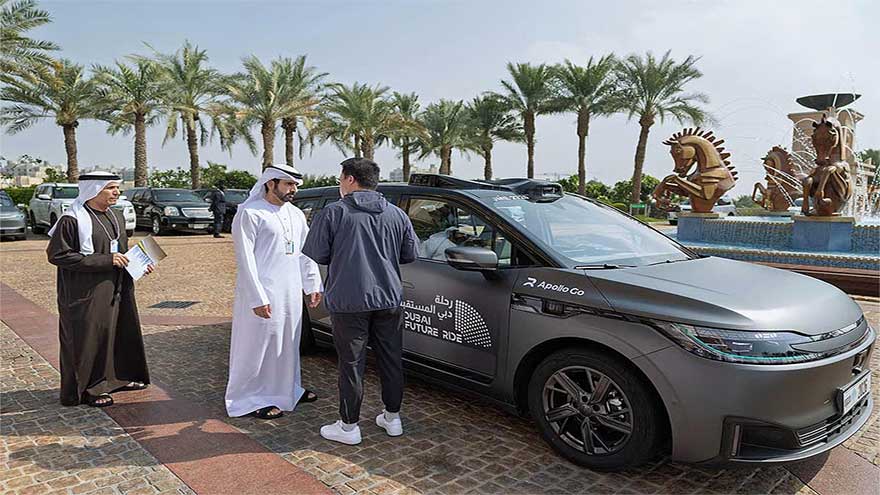
The operational framework of the RT6 is structurally robust, integrating real-time data feeds, high-definition digital maps, and deep-learning algorithms. This comprehensive integration ensures the vehicles consistently comply with all traffic laws while safely interacting with pedestrians and other vehicles. Therefore, it establishes a baseline for secure and efficient autonomous operation within a dense urban environment.
The Socio-Economic Impact: A Catalyst for Pakistani Professionals and Households
While implemented in Dubai, this technological leap holds significant implications for Pakistani citizens, especially professionals and students eyeing career opportunities in advanced technological sectors. The successful deployment of Dubai autonomous taxis signals a growing demand for expertise in AI, robotics, and smart infrastructure. Consequently, this creates a blueprint for similar initiatives that could eventually foster economic growth and skilled job creation in Pakistan.

For Pakistani households, the long-term impact could involve observing and adapting to smart city concepts that enhance daily convenience and reduce commuting stress. As these technologies mature, they offer scalable solutions for urban transport challenges, which could inform future infrastructural development within Pakistan. Furthermore, the experience gained by Pakistani expatriates in Dubai could directly contribute to technological transfer and innovation back home.
Strategic Alliances and Operational Baselines
The project represents a successful collaboration between Dubai’s Roads and Transport Authority (RTA) and Baidu Apollo Go. Planning and operational trials were strategically completed within a mere ten months following initial discussions at the 2025 World Government Summit. This rapid execution demonstrates a streamlined project management approach and a shared vision for future mobility solutions.
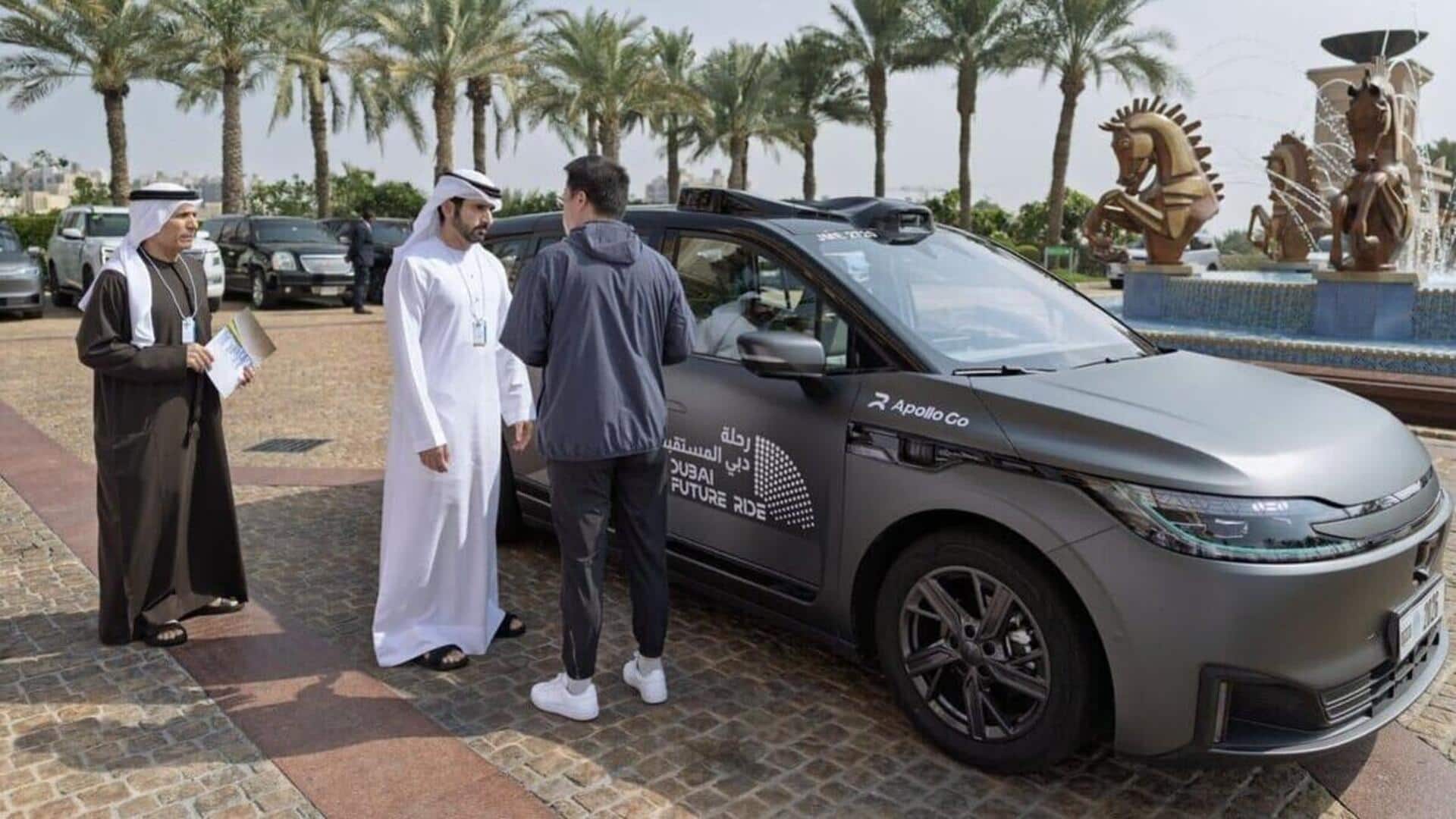
Baidu Apollo Go has further solidified its global presence by establishing its first operations and control centre outside China, located at Dubai Science Park. This facility serves as a critical hub for monitoring fleet performance, conducting rigorous safety testing, and managing essential maintenance and software updates. It ensures the sustained reliability and efficiency of the autonomous fleet.
The Forward Path: A Momentum Shift for Urban Innovation
This development unequivocally represents a “Momentum Shift” for urban innovation. Authorities plan to strategically expand the autonomous fleet to over 1,000 vehicles in the coming years. This ambitious scaling will significantly strengthen Dubai’s calibrated position as a global leader in AI-driven and sustainable urban transport. It provides a tangible model for other nations, including Pakistan, to consider in their own smart city initiatives.