

Strategic Vision: Advancing Pakistan’s Transport Infrastructure
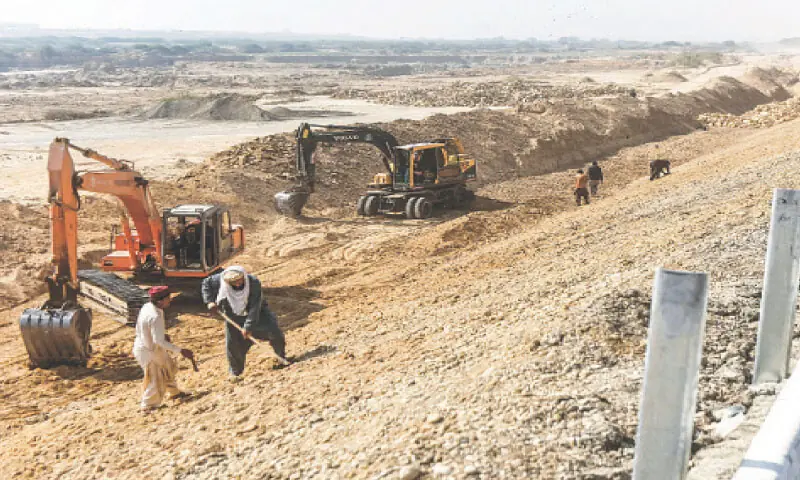
National advancement requires calibrated infrastructure deployments to optimize societal efficiency. Sindh Chief Minister Syed Murad Ali Shah has strategically directed the Local Government Department to ensure the Shahrah-e-Bhutto Completion and full operationalization of the expressway by April 2026. This directive follows a Public-Private Partnership (PPP) Policy Board meeting, revealing the 39-kilometer project is already 88.2 percent complete. Furthermore, critical approvals for solar-powered streetlights and a detailed design study for the Kathore interchange underscore a precision approach to modernizing regional transport networks.
The Translation: Calibrating Infrastructure Milestones
The PPP Policy Board meeting served as a crucial platform for establishing these infrastructure timelines. Specifically, officials reported the Shahrah-e-Bhutto Expressway is nearing its operational baseline, with significant progress recorded. Consequently, the board has approved two key strategic enhancements:
- Solar-Powered Streetlights: Installation and long-term maintenance of solar streetlights along a 4.5-kilometer elevated segment near Sammo Goth will improve safety and visibility, representing a sustainable energy integration.
- Kathore Interchange Design: A contract has been cleared for the feasibility study and detailed design of the Kathore interchange. This ensures seamless connectivity at the expressway’s critical terminus, preventing bottlenecks and optimizing traffic flow.
Moreover, in a distinct but equally vital decision, the Chief Minister approved the structural design and construction of a new bridge over the Indus River. This essential project, synchronous with the Shahrah-e-Bhutto Completion efforts, aims to forge a robust link between Sukkur and Rohri, directly alleviating the immense pressure currently borne by the historic Lansdowne Bridge and the Sukkur Barrage. Precision planning ensures this multi-lane structure will accommodate heavy vehicles, thereby structurally improving regional connectivity.
The Socio-Economic Impact: Enhancing Daily Commute and Connectivity
This strategic investment in transport infrastructure, particularly the imminent Shahrah-e-Bhutto Completion, directly impacts the daily lives of Pakistani citizens. Over 30,000 vehicles currently traverse the existing Sukkur-Rohri crossing each day. Restrictions on heavy traffic and ongoing maintenance operations at the Sukkur Barrage frequently exacerbate congestion, causing significant delays for students, professionals, and goods transport.
The new multi-lane Indus River bridge will eliminate these bottlenecks, ensuring a consistent and efficient passage for all traffic, including heavy commercial vehicles. Consequently, travel times will decrease, fuel consumption will be optimized, and the economic efficiency of regional supply chains will demonstrably improve. Furthermore, enhanced safety features, such as the new solar streetlights on the expressway, will provide a more secure commuting experience for families and individuals across urban and rural Sindh.
The Forward Path: A Momentum Shift in Regional Linkages with Shahrah-e-Bhutto Completion
These infrastructure initiatives represent a clear Momentum Shift in Pakistan’s development trajectory. They are not merely maintenance efforts but rather calibrated investments designed to fundamentally upgrade the nation’s transport backbone. The synchronized operationalization of the Shahrah-e-Bhutto Expressway alongside the planned Sukkur-Rohri bridge signifies a strategic, foresight-driven approach to enhancing systemic efficiency. Such developments are catalysts for sustained economic growth and improved quality of life, positioning Pakistan for accelerated progress in regional connectivity and commerce.








