

Optimizing Urban Infrastructure: The Raja Bazaar Uplift Blueprint
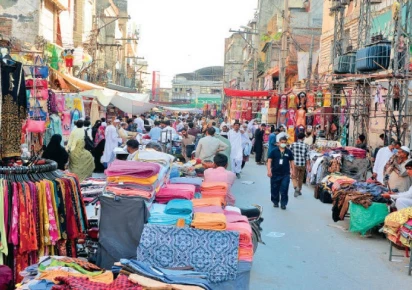
Pakistan’s strategic urban development advances as the Rawalpindi Division Commissioner, Aamir Khattak, sets a firm May 30 deadline for the Raja Bazaar Uplift project. This initiative critically aims to transform a historical commercial hub into a safe, organized, and aesthetically improved center, integrating modern urban standards with cultural preservation. Furthermore, the project emphasizes meticulous monitoring, high-quality material deployment, and minimal public disruption, showcasing a calibrated approach to infrastructure enhancement.
Commissioner Khattak conducted a site review, rigorously assessing the project’s pace, quality, and safety protocols. He stressed the imperative for consistent progress to meet the established timeline, ensuring the project’s structural integrity. Consequently, regular site visits are scheduled to maintain continuous oversight and validate adherence to stringent quality benchmarks.
The Translation: Decoding Raja Bazaar’s Transformation Logic
The Raja Bazaar Uplift project is more than cosmetic enhancement; it is a structural reimagining of a vital economic artery. The Commissioner’s directive to merge modern urban planning with the area’s rich historical and commercial identity signifies a dual objective: boosting functionality and preserving heritage. This precise balance ensures that while the bazaar gains contemporary infrastructure, its cultural essence remains intact. Specifically, the project integrates advanced safety measures and high-quality construction materials, thereby establishing new baselines for urban refurbishment.

Precision in Utility Relocation and Progress Metrics
A significant component involves the underground relocation of critical utility lines, including IESCO, WASA, Sui Gas, and PTCL. This strategic move aims to eliminate overhead cable clutter, enhance aesthetic appeal, and improve service reliability. Current progress metrics indicate substantial advancements:
- Civil beautification work: 29 percent completion.
- IESCO line shifting: 92 percent completion.
- Sui Gas line shifting: 97 percent completion.
- PTCL line shifting: 95 percent completion.
- WASA line shifting: 95 percent completion.
These figures demonstrate a calibrated execution strategy, with utility infrastructure nearing full relocation. Furthermore, the project scope includes the installation of arch walls, modern building facades, tuff tiles, benches, and both streetlights and Victorian lights, alongside dustbins, planters, and decorative entrance features. This comprehensive approach is designed to elevate both utility and visual coherence.
The Socio-Economic Impact: Elevating Daily Life in Rawalpindi
This initiative directly recalibrates the daily experience for Rawalpindi’s citizens, shopkeepers, and visitors. For pedestrians, designated alternative pathways during construction minimize inconvenience, ensuring uninterrupted mobility. Business operations are strategically protected from significant disruption, safeguarding livelihoods within the bazaar. Consequently, the completion promises a safer, more organized, and visually appealing commercial environment.
Students and professionals will benefit from improved urban aesthetics and enhanced public safety, fostering a more conducive environment for commerce and recreation. For households, particularly in urban and rural areas connected to Rawalpindi, the project signifies a baseline improvement in city infrastructure, potentially increasing local pride and economic activity. Moreover, the focus on worker safety, mandating helmets and jackets, alongside proper lighting and barriers, establishes a higher standard for construction practices, protecting human capital.
The Forward Path: A Momentum Shift for Urban Revitalization
This Raja Bazaar Uplift project unequivocally represents a Momentum Shift for Rawalpindi’s urban landscape. The detailed planning, emphasis on structural quality, and integration of both modern utility solutions and historical preservation elements indicate a forward-thinking approach to city development. The May 30 deadline itself acts as a catalyst for expedited, high-standard execution. While progress metrics show varied completion rates, the near-total relocation of underground utilities is a critical foundational achievement. This project serves as a model for future urban revitalization efforts across Pakistan, demonstrating how strategic intervention can transform traditional spaces into efficient, safe, and visually engaging commercial centers.








