

Optimizing Urban Mobility: Kutchery Chowk’s Strategic Remodelling
The Kutchery Chowk remodelling project has initiated construction on critical pedestrian bridges, marking a significant advancement in Rawalpindi’s urban infrastructure. This multi-billion rupee initiative, anticipated for completion within a month, is meticulously designed to optimize traffic flow for over 250,000 vehicles daily and ensure enhanced safety for pedestrians. Consequently, this strategic upgrade aims to transform one of the city’s busiest intersections into a model of efficiency and connectivity, significantly impacting daily commutes and urban living.
The Translation: Structural Logic for Seamless Connectivity
The Kutchery Chowk remodelling project represents a calibrated effort to enhance urban infrastructure, with key components now entering their final phases. Superintendent Engineer Ashfaq Sulheri confirms the construction of interconnected pedestrian bridges. These vital pathways will link Rashid Minhas Road to Jhelum Road and Fatima Jinnah University to the Adiala Road bus stand, ensuring dedicated pedestrian movement across the complex intersection, which houses critical administrative and legal offices.
- Pedestrian Bridges: Construction for interconnected pedestrian bridges near FBR building, District Courts, Fatima Jinnah University, and Adiala Road bus stand, set for completion within one month.
- Project Completion Baseline: The extensive Rs. 19 billion Kutchery Chowk remodelling project is over 74 percent complete, including finalized structures for two flyovers and three underpasses.
- Traffic Flow Optimization: Over 50 percent of road work is finished, with the Jinnah Park flyover’s completion imminent. This aims to allow over 250,000 vehicles to pass signal-free daily, dramatically enhancing vehicular flow.
- Integrated Drainage System: Drainage work is near completion, designed to collect rainwater in sump wells for discharge into nullahs, which will also irrigate green belts, aligning with environmental stewardship.
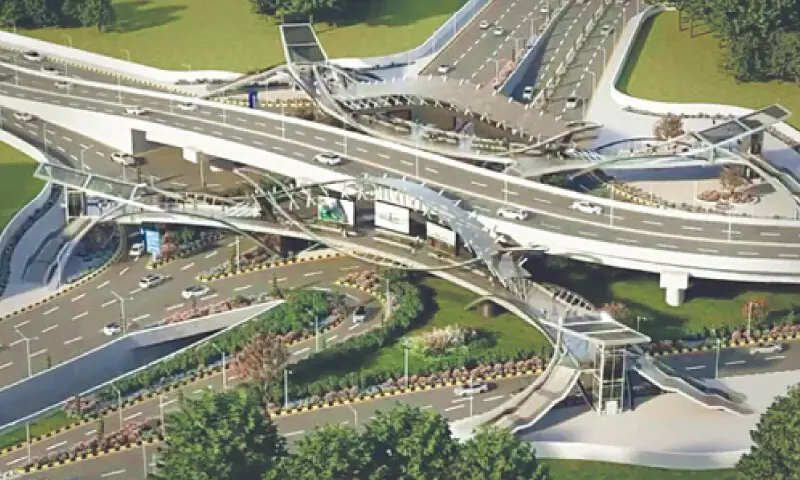
Authorities have provided precise directives to complete the entire Kutchery Chowk remodelling project within the stipulated timeframe, by the end of next month. This focus on adherence to timelines underscores the commitment to delivering system efficiency and a modernized urban core for Rawalpindi.
Socio-Economic Impact: Elevating Daily Life in Rawalpindi
The strategic enhancements at Kutchery Chowk are set to fundamentally recalibrate the daily experiences of Rawalpindi’s citizens. This infrastructure upgrade will deliver tangible benefits across various segments of society.
- Enhanced Commuter Efficiency: For professionals and daily commuters, the introduction of signal-free intersections will significantly reduce travel times and fuel consumption, translating into increased productivity and reduced urban stress.
- Prioritized Pedestrian Safety: Students from Fatima Jinnah University and individuals accessing the district courts will benefit from secure, dedicated pedestrian bridges, eliminating hazardous road crossings and fostering safer urban mobility.
- Sustainable Urban Environment: The integrated drainage system, repurposed for irrigating green belts, contributes to a healthier and more visually appealing city. This fosters an improved quality of life and supports local ecological balance.
Households throughout Rawalpindi, whether urban or rural, will experience a ripple effect of efficiency from improved traffic flow, decreasing delays and enhancing overall access to key areas. The structural changes are engineered to foster a more predictable and less congested urban landscape for all residents.
The Forward Path: A Calibrated Momentum Shift
This development represents a definitive Momentum Shift for Rawalpindi’s urban landscape. The Kutchery Chowk remodelling transcends mere infrastructure maintenance; it embodies a strategic overhaul designed for future scalability and citizen-centric efficiency. By implementing dedicated pedestrian infrastructure and optimizing vehicular flow, the project establishes a robust baseline for urban planning. This proactive approach ensures that Rawalpindi is not merely growing, but evolving with calibrated precision, setting a precedent for national advancement in urban development.








