

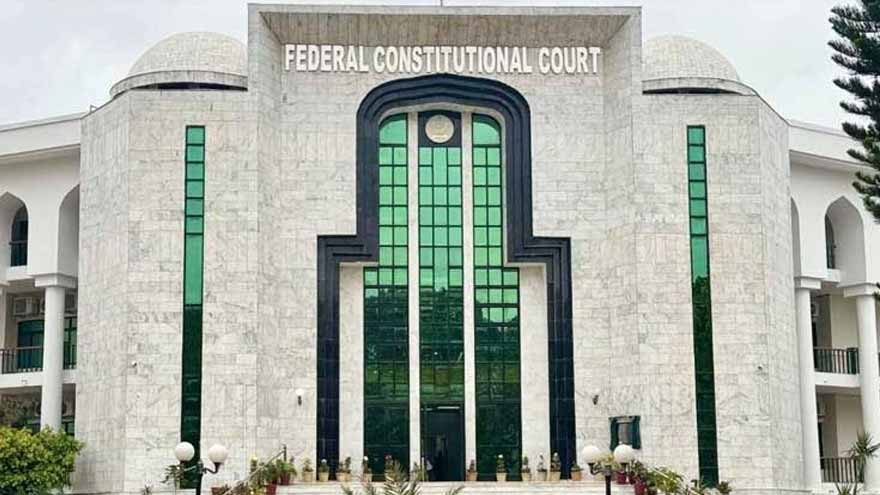
The Federal Constitutional Court of Pakistan has issued a structural clarification regarding child marriage Pakistan, ruling that while underage marriages incur criminal liability under the Child Marriage Act, 1929, these unions are not inherently void. This precision in legal interpretation impacts the operational framework for family law, distinguishing between penal consequences and the marital status itself. Consequently, this judgment provides a calibrated understanding for future legal proceedings and reinforces the baseline for judicial consistency regarding child marriage Pakistan.
Understanding Child Marriage Pakistan: Penalties vs. Validity
This ruling from Pakistan’s highest court translates a complex legal nuance into clear operational guidelines. Essentially, the court has delineated that existing statutes, specifically the Child Marriage Act of 1929, impose punishments for those involved in underage marriages, such as fines or imprisonment. However, the Act does not possess explicit provisions to invalidate or render such marriages void from the outset. Therefore, while legal action can be taken against those who facilitate or contract child marriages, the marital union itself maintains legal recognition, a critical distinction for legal clarity concerning child marriage Pakistan.
The judgment, meticulously authored by Justice Syed Hasan Azhar Rizvi, underscores the judiciary’s commitment to a precise application of existing legislation. Furthermore, it highlights the need for a comprehensive legislative review to address any perceived gaps between societal objectives and current legal instruments. This analytical approach seeks to ensure that legal frameworks are consistently applied.
Case Study: Maria Bibi’s Conversion and Marriage Validation
A pivotal element of this ruling stemmed from a case involving Maria Bibi, a Lahore resident. She converted to Islam and subsequently married Shehryar. The court meticulously examined the evidence, declaring both her conversion and marriage legally valid. Specifically, Maria had formally embraced Islam prior to her nikah (marriage contract) and submitted a declaration confirming this conversion. This procedural adherence was critical.

The court also reinforced a foundational principle of Islamic law: a Muslim man possesses the legal right to marry women from the “People of the Book,” encompassing Christians and Jews. This aspect of the judgment further solidified the legality of the union within the established religious and legal framework.
Judicial Precision: Scope of Habeas Corpus Proceedings
The ruling also brought structural clarity to the limits of habeas corpus proceedings. The court explicitly stated that during such proceedings, questions concerning an individual’s age or the authenticity of religious documents issued by institutions like a Darul Ifta cannot be subjected to detailed examination. Instead, habeas corpus proceedings are specifically calibrated to ascertain whether an individual is being unlawfully detained, thereby streamlining judicial efficiency.
Fact-Checking: Contradictions in Age Claims and Volitional Consent
Addressing the factual intricacies of the case, the court meticulously highlighted contradictions in the father’s assertions regarding his daughter’s age. Initially, the First Information Report (FIR) stated Maria’s age as 13 to 14 years. However, this claim later shifted to 12 years and nine months, creating inconsistencies.
Further, the court questioned the documentary evidence provided, noting that National Database and Registration Authority (NADRA) records showed an age difference of less than eight months between Maria and her younger sister. This discrepancy raised significant doubts about the accuracy of the submitted documents. Crucially, Maria herself appeared before a magistrate, unequivocally affirming her voluntary marriage and denying any coercion. Her prior testimony in a dismissed kidnapping case similarly confirmed her free choice, demonstrating consistent volitional consent throughout the legal process.
Socio-Economic Impact: Navigating the Legal Landscape for Pakistani Families on Child Marriage Pakistan
This ruling regarding child marriage Pakistan carries significant implications for Pakistani citizens, particularly in rural and urban households. For families, especially those in vulnerable socio-economic strata, understanding that a child marriage, while punishable, is not automatically void, presents a complex reality. This means that while individuals facilitating such marriages face criminal charges, the legal bond of the marriage itself remains intact, potentially leading to prolonged legal battles over annulment or divorce rather than outright invalidation.
For students and young professionals, this judgment underscores the critical need for comprehensive legal literacy regarding family laws. It emphasizes that legal consequences extend beyond simply performing a marriage ceremony; they encompass the legal recognition and status of the union. Consequently, this necessitates more robust educational outreach on the legal age of marriage and its societal implications. The ruling acts as a catalyst for a more informed citizenry, empowering individuals to navigate these legal complexities with greater clarity.
The Forward Path: A Stabilization Move for Legal Coherence on Child Marriage Pakistan
From an architectural perspective, this ruling represents a Stabilization Move
rather than a Momentum Shift
in Pakistan’s legal framework concerning child marriage Pakistan. The court’s decision is a precise application of existing legislation, clarifying ambiguities without fundamentally altering the legal status of such marriages. It meticulously defines the operational boundaries of the Child Marriage Act, ensuring that penal consequences are enforced while acknowledging the law’s limitations in voiding unions.
This structural clarity provides a robust baseline for legal professionals and streamlines judicial processes. However, for a true “Momentum Shift” towards eradicating child marriage Pakistan, a comprehensive legislative reform is strategically imperative. Such reform would need to explicitly empower courts to declare underage marriages void ab initio, aligning legal frameworks more closely with international human rights standards and the nation’s developmental aspirations. This precision in legal interpretation lays the groundwork for future, more proactive legislative interventions.








