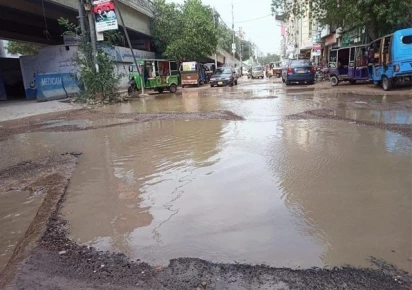
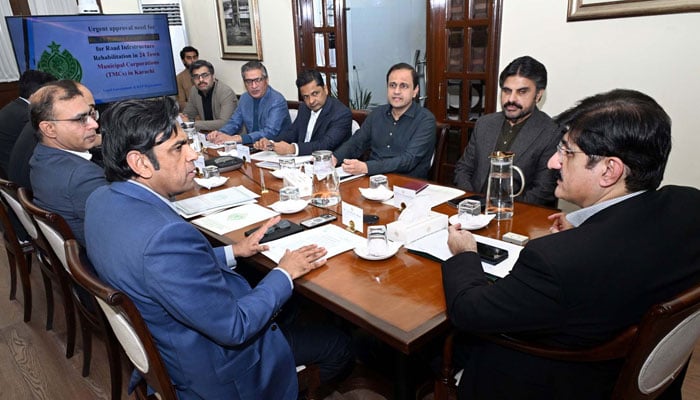
A strategic investment is underway to significantly enhance Karachi’s urban infrastructure. Sindh Chief Minister Murad Ali Shah has authorized a substantial Rs. 21.53 billion package, including a critical Rs. 13 billion grant, specifically targeting extensive Karachi road repairs. This calibrated initiative will rehabilitate and improve 409 vital road segments managed by Town Municipal Corporations (TMCs) across the city’s seven districts, aiming to optimize urban mobility.
The Translation: Calibrating Karachi’s Road Network
This significant financial allocation directly addresses a critical systemic challenge. Previously, 24 Town Municipal Corporations reported severe financial constraints. Consequently, they were unable to execute essential road maintenance. The Chief Minister’s office identified 409 damaged roads across seven districts. Therefore, this package serves as a direct intervention, ensuring vital infrastructure does not further deteriorate.
The rehabilitation plan is meticulously detailed. Specifically, 400 roads will receive essential patchwork repairs. Meanwhile, nine roads, facing extensive damage, will undergo full reconstruction. The total estimated cost for road rehabilitation stands at Rs. 10.93 billion. Furthermore, an additional Rs. 1.64 billion has been strategically allocated for related water and sewerage works. This integrated approach brings the total road component cost to Rs. 12.57 billion, reflecting a comprehensive infrastructure strategy.

The Socio-Economic Impact: Enhanced Mobility for Citizens
This infrastructure upgrade directly impacts the daily lives of Pakistani citizens. For students, professionals, and households, improved roads translate into significantly reduced commute times. Moreover, the enhanced road quality will minimize vehicle wear and tear, yielding substantial economic benefits for private citizens and public transport operators alike. Urban and rural areas will experience better access to essential services and markets, fostering economic activity.
The district-wise data precisely illustrates the distribution of need and investment:
- Malir: 98 damaged roads, highest number identified.
- West: 81 damaged roads, significant allocation.
- Central: 53 damaged roads.
- South: 50 damaged roads.
- East: 49 damaged roads.
- Korangi: 39 damaged roads.
- Keamari: 39 damaged roads, highest estimated cost at Rs. 2.32 billion.
Notably, Keamari also commands the highest estimated cost at Rs. 2.32 billion, closely followed by West at Rs. 2.31 billion and East at Rs. 1.85 billion. This data-driven approach ensures resources are allocated where impact is most critical for Karachi road repairs.
The Forward Path: A Structural Momentum Shift
This development signifies a clear “Momentum Shift” for Karachi’s urban framework, rather than a mere stabilization move. The comprehensive nature of the Rs. 21.53 billion package, coupled with its direct focus on neglected municipal infrastructure, establishes a new baseline for road maintenance. It proactively addresses systemic deficiencies. Consequently, this calibrated investment will foster sustainable urban development and enhance overall system efficiency.
While most roads will receive targeted patch repairs, specific high-traffic corridors are designated for end-to-end rehabilitation. These strategic routes include Gulberg, Gulshan-i-Iqbal, Sohrab Goth, Orangi, Manghopir, Saddar, and Landhi. Such precise interventions underscore a commitment to long-term structural integrity and improved urban flow.