
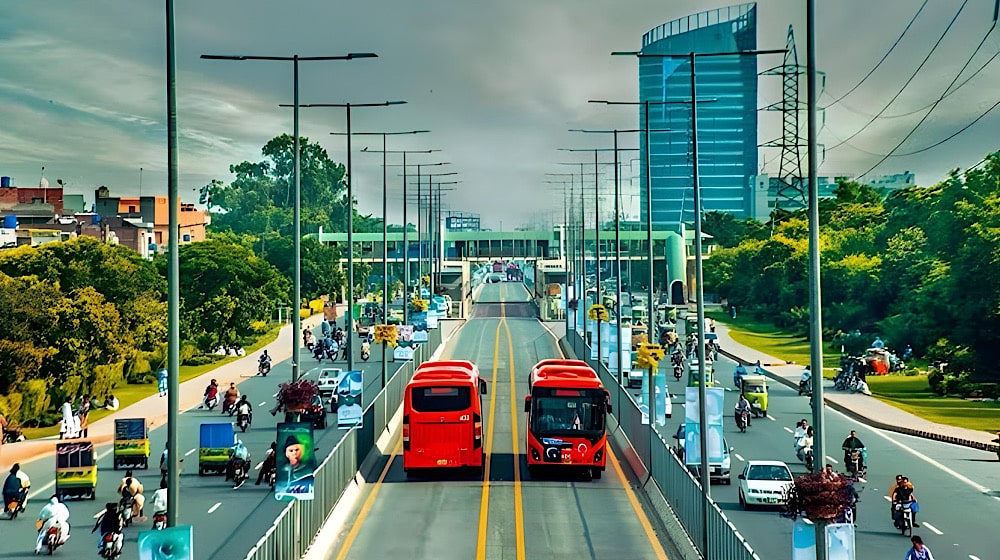
Optimizing Urban Connectivity: The Faisalabad Orange Line Catalyst
The Faisalabad Orange Line project is poised to fundamentally redefine urban mobility within Faisalabad, initiating a strategic upgrade to the city’s public transport infrastructure. With the Punjab Mass Transit Authority (PMTA) having finalized all preparatory stages, this ambitious initiative, led by Chief Minister Maryam Nawaz Sharif, will introduce 27 metro buses and two trams. These systems will operate along a precisely calibrated 21.3-kilometer corridor, linking Faisal Town on Jaranwala Road to Tahirpura on Jhang Road. This structural enhancement is projected to serve thousands of daily commuters, thereby significantly boosting urban efficiency and accessibility.
The Translation: Deconstructing Faisalabad’s Transit Blueprint
The formal approval of PC-1 for the Faisalabad Orange Line at an estimated cost of Rs 80 billion signifies a foundational investment in Pakistan’s urban future. This financial allocation is specifically designed to construct a robust transit network. Consequently, the project encompasses the development of 21 strategically located stations, two comprehensive depots for vehicle maintenance, and six crucial U-turns to ensure seamless operational flow. Captain (Retd) Zahid Saeed, a PMTA Member, confirmed these structural details during a pivotal meeting with Commissioner Raja Jahangir Anwar. Furthermore, this system is engineered to provide daily transport to a significant segment of the city’s population, thereby directly addressing critical commuting needs.
Project Overview and Scope
The Faisalabad Orange Line represents a comprehensive urban planning endeavor. Its precise specifications include:
- Deployment of 27 state-of-the-art metro buses and two modern tram systems.
- Establishment of a 21.3-kilometer transit corridor, bridging key urban and suburban areas.
- Construction of 21 strategically positioned stations to maximize accessibility for commuters.
- Development of two dedicated depots for efficient maintenance and operational support.
- Integration of six critical U-turns to optimize route efficiency and traffic management.
- An allocated budget of Rs 80 billion, underscoring the project’s national economic significance.
The Socio-Economic Impact: Reshaping Daily Life in Faisalabad
The implementation of the Faisalabad Orange Line is projected to catalyze significant positive transformations in the daily lives of Pakistani citizens. For students, this new transit system will calibrate access to educational institutions, reducing travel times and associated costs. Professionals will experience enhanced commuting efficiency, enabling better time management and potentially expanding employment opportunities across the urban landscape. Moreover, households will benefit from improved connectivity, facilitating easier access to markets, healthcare facilities, and recreational areas. Consequently, this infrastructure investment fosters greater social mobility and economic participation, particularly impacting urban and peri-urban populations by streamlining their daily movements and reducing reliance on less efficient transport modes.
Operational Imperatives: Ensuring Seamless Integration and Safety
The successful deployment of the Faisalabad Orange Line mandates meticulous attention to operational safety and urban integration. Captain (Retd) Zahid Saeed has issued directives emphasizing stringent safety arrangements across all construction sites, ensuring worker and public protection. Furthermore, departments are tasked with developing alternative traffic plans, a critical measure to maintain fluid vehicle movement throughout the construction phase. This proactive planning minimizes disruption to existing urban logistics. Additionally, essential utility providers—including WASA, FESCO, Sui Northern Gas, Parks and Horticulture Authority, Municipal Corporation, Traffic Police, and PTCL—have been instructed to conduct comprehensive surveys and submit demand notices for utility relocation within a strict ten-day deadline. This calibrated coordination is essential for preventing delays and ensuring the structural integrity of the project.
Strategic Implementation & Safety Protocols
Effective project execution hinges on a multifaceted approach to management and oversight:
- Rigorous Safety Protocols: Mandatory implementation of strict safety measures at all construction sites.
- Dynamic Traffic Management: Development and deployment of alternative traffic routes to ensure continuous urban flow.
- Utility Relocation Coordination: Expedited surveys and demand notices from all relevant utility departments (WASA, FESCO, SNGPL, PHA, MC, Traffic Police, PTCL) within 10 days.
- Inter-Agency Collaboration: Active participation from Deputy Commissioner Captain (Retd) Nadeem Nasir and Mass Transit Authority representatives in planning and oversight meetings.
The “Forward Path”: A Momentum Shift for Faisalabad
This significant investment in the Faisalabad Orange Line clearly represents a Momentum Shift for urban development in Pakistan. It is not merely a stabilization move; rather, it is a strategic and structural leap forward in urban infrastructure. The scale and comprehensive planning—from route design to utility coordination—indicate a precise intent to modernize and expand urban capabilities. This project will serve as a foundational catalyst for future urban planning initiatives, setting a new benchmark for efficient mass transit systems and fostering sustainable economic growth within Faisalabad and beyond. Its successful implementation will calibrate the city for advanced operational efficiency and improved citizen quality of life.








