Pakistan’s Ministry of Climate Change (MoCC) has precisely articulated its position to the Islamabad High Court (IHC) regarding the controversial mulberry tree cutting in Islamabad. The Ministry asserts that paper mulberry trees are classified as a non-native species, consequently making their strategic removal permissible within the federal capital. This intervention clarifies a critical environmental debate, providing a baseline for urban ecological management.
The Translation: Deconstructing Environmental Directives
The MoCC’s formal submission confirms that the recent tree-cutting operation specifically targeted paper mulberry trees. Importantly, a comprehensive review ensured the preservation of indigenous species, including kachnar, sumbal, pine, and sukh chain, which were meticulously marked. While the Capital Development Authority (CDA) implemented compensatory plantation at alternative sites following removals, a procedural lapse emerged. The Ministry emphasized that prior approval is a mandatory protocol for any tree-cutting activity; the current operation proceeded without adequate consultation.
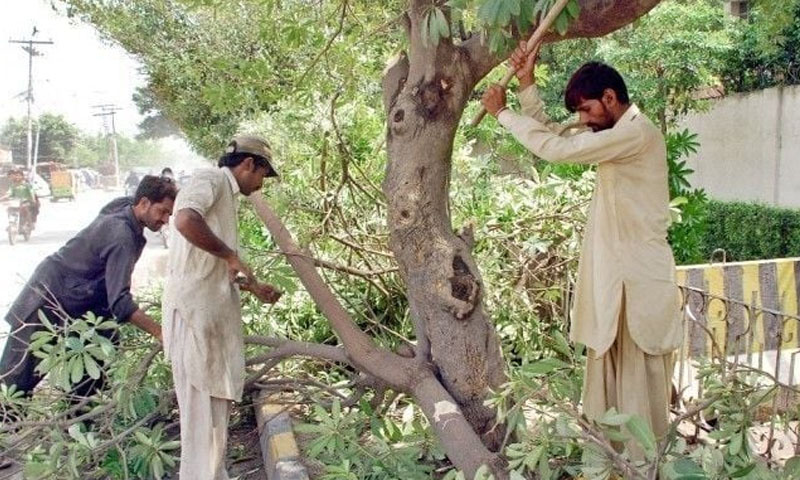
Furthermore, the Islamabad Wildlife Management Board (IWMB) conducted a field inspection in the Shakarparian area, responding to public complaints. Structural policy dictates that the CDA must secure approval from the Pakistan Environmental Protection Agency (Pak-EPA) for such activities, alongside mandatory consultation with the IWMB. The MoCC, upon discovering the unapproved cutting, promptly communicated its concerns to the interior secretary. Moreover, the court was apprised that Pak-EPA had stressed the necessity of joint planning and consultation directly to the CDA’s member environment, indicating a need for systemic integration.
Socio-Economic Impact: Calibrating Urban Green Spaces
This development directly impacts the daily lives of Pakistani citizens, particularly those residing in Islamabad. The strategic removal of non-native paper mulberry trees, often associated with pollen allergies, could potentially enhance public health outcomes, especially for students and professionals. However, the procedural oversight in the mulberry tree cutting in Islamabad also raises critical questions about transparency and accountability in urban planning. Citizens rely on clear, coordinated environmental governance to maintain green spaces, which are vital for recreational well-being and air quality.

Conversely, Islamabad’s historical reputation for lush greenery is under threat. Infrastructure projects have led to significant tree removal across the city, sparking considerable public anger and legal challenges. Data from Global Forest Watch indicates that Islamabad experienced a loss of 14 hectares of tree cover between 2001 and 2024, an area equivalent to twenty football fields. This statistic, which excludes tree cover gains, underscores the urgency for a calibrated approach to urban forestry, balancing development with ecological preservation to safeguard future generations’ quality of life.
The Forward Path: A Stabilization Move for Environmental Protocols
This development represents a Stabilization Move rather than a significant Momentum Shift. While the Ministry’s defense of removing non-native species is ecologically sound and data-driven, the acknowledged lack of prior consultation signifies a systemic procedural deficit. Moving forward, the imperative is to fortify inter-agency coordination and adherence to established environmental protocols. Precision in planning and execution, coupled with transparent public engagement, will be catalytic in ensuring that Islamabad’s green infrastructure evolves sustainably. This approach will mitigate public concern and align urban development with robust ecological stewardship.