Precision in Progress: How Chinese AI Rivals Redefine Image Generation Economics
The global digital landscape is undergoing a significant recalibration, driven by advanced technological competition. China’s vanguard technology firms are strategically expanding its global footprint in artificial intelligence, introducing advanced yet cost-effective image generation models. ByteDance and Alibaba Cloud have specifically launched innovations designed to directly challenge Google’s Nano Banana Pro, presenting compelling Chinese AI rivals that prioritize both performance and economic accessibility. This development promises to democratize AI tools for diverse user bases, from enterprise solutions to individual creators, representing a structural shift in global AI accessibility.
The Translation: Unpacking Next-Gen Image Creation
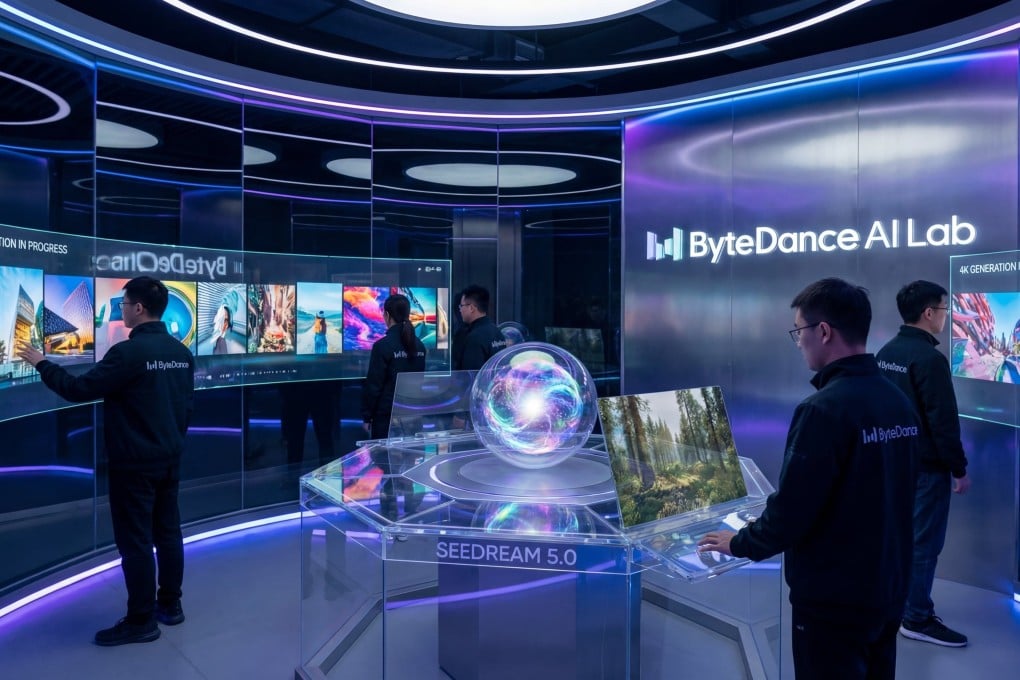
At its core, this development centers on sophisticated artificial intelligence models capable of generating and editing images from textual prompts. Historically, such advanced capabilities were often resource-intensive and costly. However, ByteDance’s Seedream 5.0 and Alibaba Cloud’s Qwen-Image-2.0 are now offering similar, if not enhanced, functionalities at a reduced economic baseline. Seedream 5.0, for instance, exhibits improved reasoning capabilities and interprets complex prompts with greater precision. Furthermore, it allows for granular, specific image edits without requiring an entire design regeneration. This contrasts with previous generations that often necessitated full re-renders for minor adjustments. Qwen-Image-2.0, developed by Alibaba’s Qwen team, integrates both generation and editing into a unified system. It supports extensive prompts, up to 1,000 tokens, and produces high-resolution 2K images. Importantly, Qwen-Image-2.0 excels in rendering complex structured layouts and intricate Chinese text, a critical advancement for regional content creation. These features signify a strategic pivot towards more efficient and integrated AI solutions.
ByteDance Seedream 5.0: Calibrating Creative Control
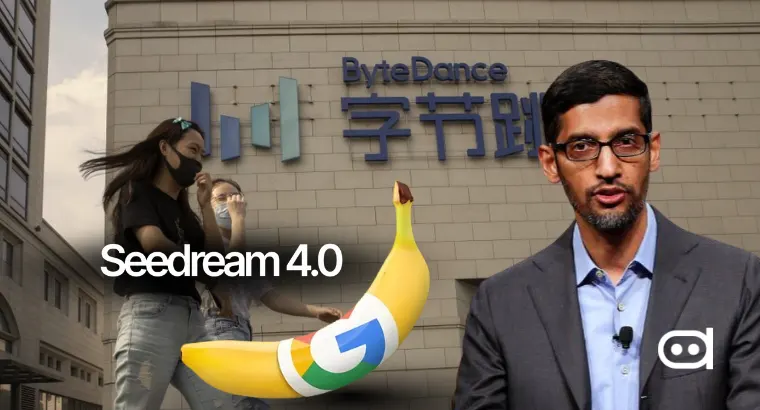
ByteDance has strategically launched Seedream 5.0, making it available for beta testing on Jimeng within China and globally via CapCut. This model represents a significant leap in AI-driven creativity. According to company data, Seedream 5.0 substantially improves reasoning capabilities and demonstrates a superior capacity to interpret intricate prompts. Consequently, users can now edit specific elements within an image without the computationally intensive process of regenerating the entire composition. A notable demonstration involved modifying a snowy night scene by toggling lights on and off, meticulously preserving the original environmental composition. This release closely follows ByteDance’s earlier introduction of Seedance 2.0, an AI video model recognized for its ability to produce hyper-realistic, Hollywood-grade video content, further cementing ByteDance’s position as a formidable competitor in the AI domain.

Alibaba Cloud’s Qwen-Image-2.0: Structural Integration for Precision
Alibaba Cloud has introduced Qwen-Image-2.0, a product of its dedicated Qwen team. This model distinguishes itself by integrating both image generation and editing functionalities within a singular, efficient system. It supports comprehensive prompts, accommodating up to 1,000 tokens, and consistently produces high-fidelity 2K resolution images. Qwen-Image-2.0 is specifically engineered to adeptly handle structured layouts, multi-panel designs, and maintain consistent character appearances across diverse scenes. Furthermore, its robust performance in rendering accurate Chinese text and complex calligraphy represents a specialized capability, underscoring its utility in culturally specific content creation. This integrated approach ensures a streamlined workflow for complex visual projects.
The Socio-Economic Impact: Democratizing Digital Creation in Pakistan
For Pakistani citizens, this influx of cost-effective, high-performance Chinese AI rivals represents a critical momentum shift. Students, particularly those in design, media, or computer science programs, gain access to advanced tools previously out of reach due to licensing costs or computational demands. This democratizes learning and project development, fostering a new generation of digital innovators. Professionals in marketing, graphic design, and content creation can now produce high-quality visual assets more efficiently and affordably. Small and medium-sized enterprises (SMEs) in both urban and rural Pakistan can leverage these tools to enhance their digital presence without significant capital investment. Consequently, this development empowers local businesses, stimulates innovation, and reduces the barrier to entry for digital entrepreneurship, ultimately enhancing the nation’s overall digital literacy and economic output. The reduced operational cost translates directly into greater creative latitude and expanded market access for countless individuals.

The Forward Path: A Momentum Shift for Global AI Competition
This strategic move by ByteDance and Alibaba Cloud unequivocally represents a Momentum Shift in the global artificial intelligence arena. The introduction of highly competitive, yet more accessible, Chinese AI rivals challenges the established market dominance and forces a beneficial recalibration of pricing and features across the industry. This is not merely a stabilization move; it is a catalyst for accelerated innovation and broader technological adoption. The precision in their model development, coupled with a focus on cost-efficiency, suggests a future where advanced AI tools are not exclusive to tech giants but become standard instruments for creators worldwide. Pakistan, in particular, stands to gain significantly from this competitive landscape, as it will facilitate local talent to harness cutting-edge technology without prohibitive financial overheads. This ensures a more equitable distribution of AI capabilities globally.

Comparative Analysis: Next-Gen Image Generation Tools
A structural comparison of these advanced models reveals distinct strategic advantages. While Google’s Nano Banana Pro has set a high benchmark, the Chinese AI rivals offer compelling alternatives with unique specializations.
| Feature | ByteDance Seedream 5.0 | Alibaba Qwen-Image-2.0 | Google Nano Banana Pro |
|---|---|---|---|
| Developer | ByteDance | Alibaba Cloud (Qwen team) | Google DeepMind (Gemini) |
| Core Function | Text-to-image generation and editing | Unified image generation and editing | Image generation and advanced editing |
| Native Output Resolution | Supports 2K and 4K outputs | Native 2K (2048×2048) output | Up to 4K resolution output |
| Prompt Handling | Designed for detailed prompt understanding | Supports long prompts up to around 1,000 tokens | Advanced prompt-based generation (no official token limit stated) |
| Text Rendering | Generates legible text within images | Strong typography and structured text rendering | Advanced multilingual text rendering |
| Generation and Editing Integration | Supports selective image edits | Generation and editing are integrated in one model | Integrated image creation and editing tools |
| Availability | Beta testing via Jimeng (China) and CapCut (global) | Available via Qwen platforms | Available through Gemini apps and Google AI tools |
| Model Base | Proprietary Seedream model | Qwen multimodal architecture | Built on Gemini 3 Pro Image |
Disclaimer: Feature details are based on publicly available information and are subject to periodic recalibration and updates.