
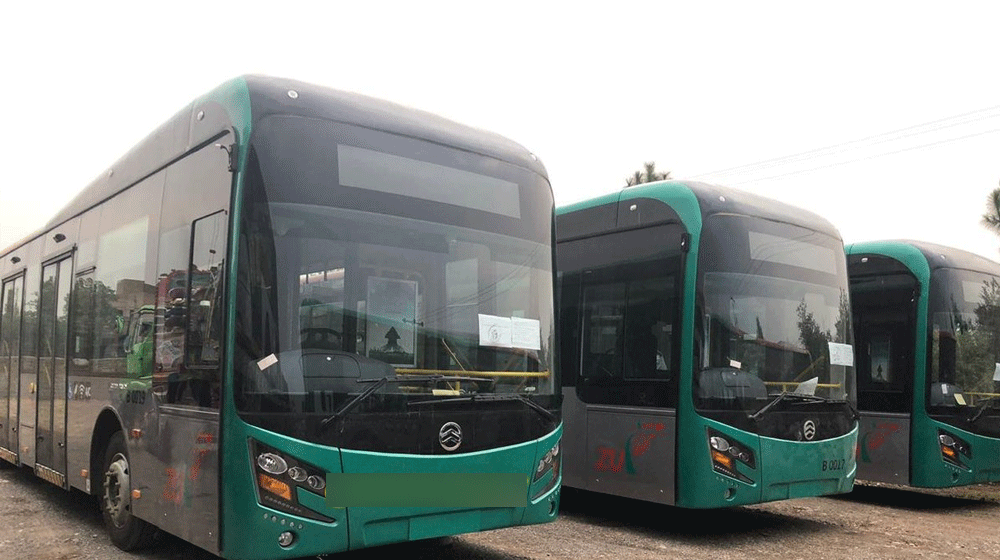
Strategic urban development in Pakistan hinges on efficient public transport systems. Currently, a significant BRT tax dispute has caused a new fleet of buses, designated for Karachi’s vital Bus Rapid Transit (BRT) network, to remain impounded at Karachi Port for over two months. Sindh Senior Minister Sharjeel Inam Memon confirms this critical delay stems from an 18% customs duty levied on the provincial government, a rate purportedly higher than that paid by Punjab for analogous procurements. Consequently, the Sindh government is actively engaged in negotiations with the Federal Board of Revenue (FBR) to resolve this fiscal disparity and accelerate the deployment of these essential transit assets.
Systemic Hurdles: The Translation of the BRT Tax Dispute
The core issue revolves around a customs duty discrepancy. Sindh officials claim an 18% import duty on their BRT bus fleet, while Punjab reportedly paid a significantly lower rate for similar acquisitions. This specific BRT tax dispute presents a substantial financial impediment, stalling the operational readiness of a critical urban infrastructure project. Furthermore, Memon highlighted that the BRT Red Line project itself previously encountered the risk of cessation. This was primarily due to escalating costs, a direct consequence of national inflation, economic deceleration, a weaker rupee, and rising material prices such, as cement.
The provincial government asserts that the buses ordered by Sindh precisely match Punjab’s procurement in both specifications and passenger capacity. Therefore, they contend that an equivalent tax concession should be uniformly applied across provinces, fostering a consistent national approach to infrastructure development. Daily follow-up actions underscore the urgency and sustained effort to reconcile this financial deadlock with the FBR, aiming for a rapid resolution that benefits Karachi’s commuters. This strategic focus ensures public funds are optimally utilized and project timelines are maintained.
Socio-Economic Impact: Calibrating Urban Mobility for Citizens
The protracted hold-up of BRT buses due to the BRT tax dispute directly impacts the daily lives of Karachi’s citizens. Thousands of students, professionals, and households in both urban and rural areas are deprived of enhanced public transportation. This delay exacerbates existing traffic congestion, lengthens commute times, and increases reliance on less efficient or more costly private transport options. The Red Line, designed as a long-term investment, aims to serve Karachi for decades, addressing the city’s burgeoning population and traffic volume. Therefore, every day these buses remain at port represents a lost opportunity for improved urban mobility and economic productivity for Karachiites. This situation stresses the systemic challenges in inter-provincial policy harmonization affecting core public services.
Moreover, the initial financial challenges faced by the Red Line project, including inflation and currency devaluation, underscore the fragility of large-scale infrastructure initiatives in volatile economic climates. While the decision to continue was difficult, it was deemed the correct strategic move, prioritizing long-term urban resilience. The vast majority of project spending has been allocated to fundamental infrastructure rather than the buses themselves, a structural investment that will yield durable benefits once fully operational. This precise allocation mitigates risks associated with fleet acquisition costs.
The Forward Path: A Stabilization Move for Karachi’s BRT
This development signifies a Stabilization Move rather than a Momentum Shift. While the commitment to continue the BRT Red Line despite cost surges is commendable, the current BRT tax dispute indicates persistent bureaucratic and fiscal friction points. To achieve a genuine momentum shift, Pakistan requires calibrated inter-governmental coordination and standardized tax policies for critical national infrastructure projects. Proactive measures, such as pre-negotiated tax frameworks for provincial public transport initiatives, could prevent such delays. Ultimately, this incident highlights the imperative for streamlined operational processes to ensure that vital public services reach citizens without unnecessary impediments. It underscores a need for enhanced foresight in policy implementation.

Operational Timelines and Strategic Progress
Officials have received directives to address issues on surrounding roads before Eid, ensuring peripheral infrastructure supports the main BRT corridors. A 2.7-kilometre section, previously affected by the K-IV Augmentation pipeline, is on schedule for completion by April. Concurrently, work on University Road and Jinnah Avenue is expected to conclude within the next two to three months. However, specific related ancillary works might extend for another eighteen months, requiring sustained oversight. Furthermore, an update on another transport facility on Shahrah-e-Bhutto indicates completion up to Quaidabad by late March or early April, with a future extension towards the M-9 motorway strategically planned. This calibrated approach ensures systematic expansion.
Memon also confirmed that contractor disputes on the Red Line were efficiently settled through rigorous negotiations, resulting in quantifiable savings for the province. Demands were meticulously reviewed rather than accepted at face value, thereby maintaining structural transparency throughout the process. Furthermore, blue rickshaws currently operate under specific court orders, and station designs have been precisely adjusted to accommodate these operational parameters. This adaptive design strategy enhances accessibility and integration for all commuters.








