

National advancement requires a calibrated balance between urban expansion and the structural preservation of our shared history. A recent Islamabad heritage demolition incident highlights this critical tension. Developers have systematically dismantled a significant British World War I memorial on Kuri Road, sparking considerable concern regarding the loss of historical assets that fundamentally contribute to the federal capital’s distinct character. This act of irreversible structural change was undertaken despite previous interventions from the Department of Archaeology and Museums, underscoring systemic challenges in protecting Pakistan’s historical sites.
The Translation: Deconstructing Islamabad’s Heritage Tensions
Until last Sunday, this memorial stood prominently atop a 40-foot mound near Rehara village. Its demolition occurred as developers systematically cleared and leveled the surrounding land, strategically preparing it for a new commercial area within an emerging housing society. Previously, the Department of Archaeology and Museums had specifically prohibited authorities from relocating this monument. However, officials observing the site on Tuesday confirmed the complete flattening of the mound and the memorial’s irreversible dismantling. Photographs subsequently shared by the department depicted broken blocks of the structure scattered across the freshly leveled ground, evidencing the thoroughness of the demolition.
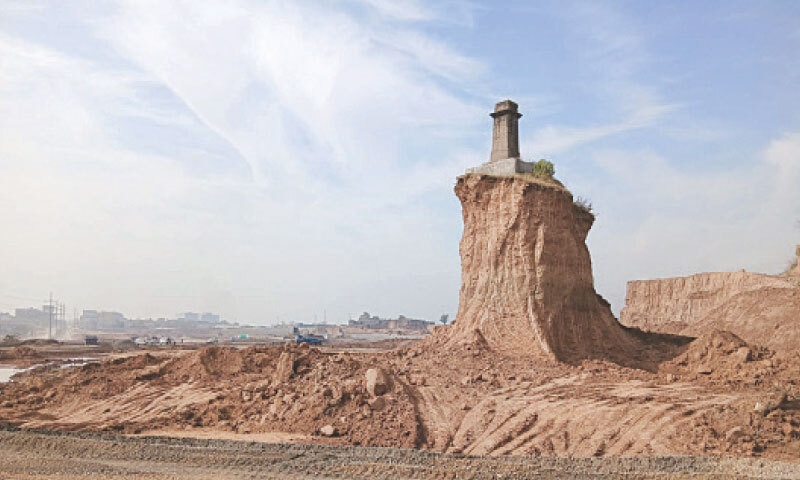
The British Empire originally erected this monument after 1914. Its precise purpose was to honor local soldiers who valiantly fought in World War I, specifically recognizing the sacrifices of men from nearby villages, including Rehara. Consequently, the memorial had anchored its historical presence at this site for decades, becoming an integral part of the local narrative and a testament to collective memory. Six months prior, both the Capital Development Authority (CDA) and a private housing scheme sought a No Objection Certificate (NOC) from the Department of Archaeology and Museums. Their objective was to shift the memorial approximately 100 meters to a proposed roundabout, which they planned to name after the monument to “preserve its identity.” In contrast, the department firmly rejected this request, asserting that relocating the monument would fundamentally undermine its historical purpose and its deep-seated significance, irrevocably tied to the specific local communities it commemorated. This rejection underscores the importance of maintaining historical context, particularly in instances of Islamabad heritage demolition.
Socio-Economic Impact: Calibrating Future Development with Pakistan’s Past
How does this development change the daily life of a Pakistani citizen, particularly for students, professionals, and households in both urban and rural Pakistan? The loss of a historical landmark, such as the World War I memorial, signifies more than just the removal of a physical structure. It represents a tangible erosion of collective memory and identity. For students, it means one less historical site for experiential learning, diminishing opportunities to connect with the sacrifices of previous generations. For professionals in heritage fields, it underscores a systemic challenge in Pakistan cultural preservation. Furthermore, for urban and rural households, these sites often serve as quiet reminders of continuity, linking present generations to their ancestral past. Their strategic removal without adequate public discourse can foster a sense of detachment from historical roots and national narrative, highlighting the profound impact of incidents like this Islamabad heritage demolition.

The Forward Path: A Call for Strategic Heritage Integration
This incident represents a critical “Stabilization Move,” signaling a need for more robust policy frameworks rather than a “Momentum Shift” toward progress. While urban development is essential for national growth, the unsanctioned demolition of a recognized historical site indicates a structural misalignment between development goals and heritage protection mandates. The precise integration of historical sites within modern urban planning is a strategic imperative. This demands more stringent enforcement of existing heritage laws and the proactive engagement of all stakeholders to ensure that economic expansion does not inadvertently erase the foundational markers of our national identity. Moving forward, Pakistan requires a calibrated approach to ensure that development projects are catalysts for progress without compromising irreplaceable historical assets. Safeguarding historical sites is not merely an act of remembrance; it is an investment in the nation’s cultural capital and future identity, particularly given the importance of historical site development in our urban centers.








