A fundamental re-evaluation of energy storage technology is underway as sodium-ion batteries rapidly approach cost parity with traditional lithium-ion cells. Experts project this critical convergence by 2027, signaling a strategic shift towards more abundant and affordable battery solutions. This development promises to redefine Pakistan’s energy independence and catalyze advancements across commercial vehicles and grid-scale storage infrastructure.
The Translation: Unpacking Battery Economics
The ongoing discourse surrounding battery technology often highlights complex metrics. Essentially, this analysis by Zhongke Haina’s Li Shujun translates a crucial economic indicator: the per-watt-hour cost of energy storage. Lithium-ion batteries currently operate within a cost range of 0.3 to 0.5 yuan per Wh. In contrast, sodium batteries, despite their nascent large-scale production, are rapidly descending from their current 0.5-0.7 yuan per Wh range. Consequently, their inherent cost advantage, stemming from the ubiquitous availability of sodium, establishes a clear trajectory towards a more efficient and sustainable energy future.
The Socio-Economic Impact for Pakistan
For the Pakistani citizen, this shift towards more affordable sodium-ion batteries represents a substantial leap forward. Imagine urban and rural households gaining access to cheaper, more reliable energy storage for solar installations, directly reducing utility burdens and enhancing energy security. Students could benefit from improved educational infrastructure powered by stable, cost-effective energy. Furthermore, professionals in logistics and transport will witness reduced operational costs as commercial vehicles powered by these new battery chemistries become more economical, fostering economic growth and improving supply chain efficiencies across the nation.
The Forward Path: A Momentum Shift
This projected cost convergence and performance enhancement undeniably represent a Momentum Shift. It moves beyond mere maintenance of existing energy paradigms. The transition towards sodium-based energy solutions is a structural recalibration of our energy matrix, positioning Pakistan to leverage globally abundant resources for national advancement rather than relying on finite, geographically concentrated materials. This precise, data-driven forecast indicates a proactive evolution in energy strategy.
Calibrating Battery Economics: Sodium vs. Lithium
A precise economic analysis reveals the impending cost convergence between traditional lithium-ion and emergent sodium battery technologies. Currently, lithium-ion battery costs calibrate between 0.3 and 0.5 yuan per Wh ($0.044–$0.073). In contrast, sodium battery costs, while presently higher at 0.5 to 0.7 yuan per Wh ($0.073–$0.102), demonstrate a rapid decline. This decline is a direct consequence of sodium’s global abundance, a stark contrast to the rare earth metal status of lithium. Consequently, industry experts like Li Shujun predict a critical intersection of these cost ranges by 2027, with a full overlap projected by 2028. This strategic alignment is a prerequisite for the widespread adoption of next-generation battery technologies, paving the way for cost-effective energy solutions.
Scaling Production for Future Energy Needs
Post-2028, the trajectory for sodium battery production includes a projected scale reaching the hundred gigawatt-hour level. This structural expansion is anticipated to drive cell costs down significantly, potentially to approximately 0.3 yuan per Wh ($0.044). Furthermore, advancements are set to elevate energy density, with specialized products engineered to surpass 180 Wh/kg. Hina Battery Technology proactively leads this commercialization effort in China, strategically deploying these innovative batteries in commercial vehicles and robust energy storage systems, demonstrating tangible progress.
Advancements in Heavy Vehicle Integration
Precision engineering in heavy-duty applications marks a significant milestone for sodium-ion batteries. Hina Battery Technology recently presented calibrated testing data, affirming substantial progress in heavy-duty truck integration. Key performance indicators include:
- Temperature Resilience: “Haixing” sodium cells maintain operational integrity across an extreme range, from -40°C to 60°C.
- Cold Weather Performance: These batteries retain over 90% discharge capacity even at -20°C.
- Durability: They demonstrate impressive longevity, achieving more than 8,000 fast-charge cycles.
Moreover, data indicates that sodium-powered trucks exhibit approximately 15% lower energy consumption per kilometer compared to their lithium-ion counterparts. Consequently, a deeper discharge capability translates to about 20% longer range under standard conditions. These validated results confirm a transition from technical validation to early-stage commercial application, establishing a new baseline for heavy vehicle power solutions.
Key Players Catalyzing Industry Evolution
The global energy sector observes multiple innovators catalyzing the evolution of sodium battery technology. Leading manufacturers are making strategic advancements:
- CATL: This industry giant has unveiled a sodium battery platform, achieving an energy density of approximately 175 Wh/kg. Their focus targets passenger vehicles and extensive energy storage solutions.
- BAIC: Through rigorous testing, BAIC has engineered a sodium battery prototype showcasing rapid charging capabilities (approximately 11 minutes) and an energy density exceeding 170 Wh/kg, alongside enhanced low-temperature performance.
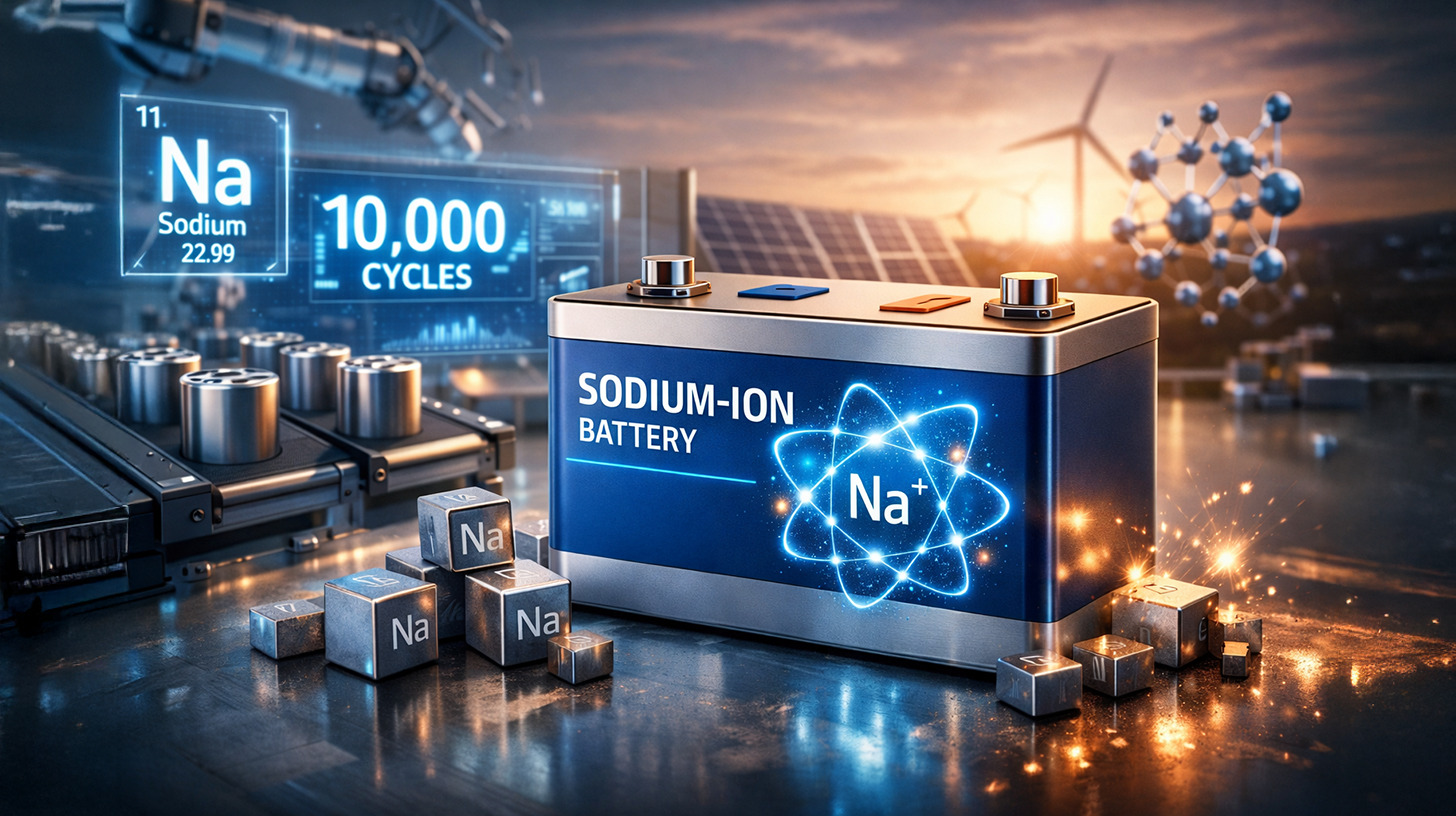
- BYD: Strategically, BYD aims to elevate sodium battery durability to 10,000 charge cycles. Concurrently, they are pioneering solid-state battery development, with both technologies targeting commercial viability around 2027.
These concerted efforts underscore a robust, competitive landscape driving forward battery innovation.
Strategic Policy and Market Trajectory for Sodium-Ion Batteries
Strategic policy frameworks are intrinsically supporting the diversified development of battery chemistries. In 2025, authorities articulated a clear mandate to advance lithium, sodium, and other crucial battery technologies. This directive forms part of a broader national strategy to enhance energy safety and fortify long-duration energy storage capabilities. Within this structural framework, sodium-ion batteries are precisely positioned as a vital alternative. They effectively mitigate dependence on lithium resources while robustly supporting critical applications in grid-scale energy storage, commercial vehicle fleets, and challenging cold environments. Consequently, the anticipated cost convergence between 2027 and 2028 is expected to serve as a primary catalyst for widespread adoption, harmonizing improvements in pricing, performance, and manufacturing scale.