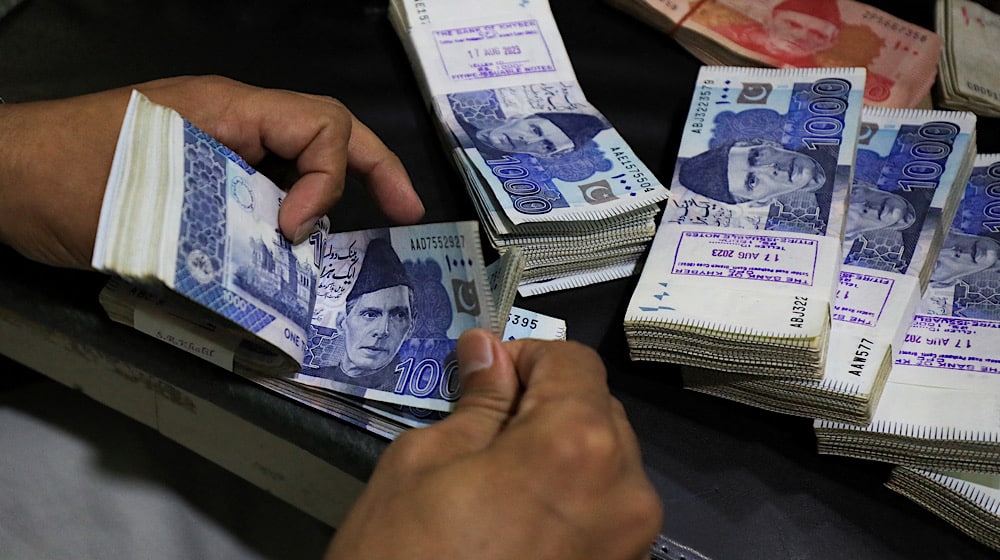
Pakistan’s financial architecture demonstrates robust Pakistan bank deposits, reflecting a significant 18.2 percent year-on-year increase to Rs. 36.6 trillion by January 2026. This precise data, compiled by Topline Securities, underscores a critical systemic trend: a notable expansion in the banking sector’s deposit base even amidst a calibrated reduction in private sector lending. This shift signifies a strategic re-evaluation within financial institutions, favoring investment in government papers to bolster stability.
The Translation: Deconstructing Banking Sector Dynamics
The latest financial metrics from Pakistan’s banking sector reveal a crucial realignment. Total deposits have surged, reaching Rs. 36.6 trillion in January 2026—a substantial 18.2 percent increase from the previous year. Conversely, advances, or private sector lending, experienced a 3 percent year-on-year contraction, settling at Rs. 14.29 trillion. This decline indicates a reduced demand for credit compared to the previous year’s Rs. 14.72 trillion. Furthermore, investments by banks escalated sharply by 29.4 percent, now standing at Rs. 38.8 trillion, a significant rise from Rs. 30.02 trillion in the corresponding period last year. This trend highlights a deliberate shift in asset allocation, prioritizing stability over aggressive lending.

Strategic Financial Rebalancing: ADR and IDR Analysis
A deeper analysis of key ratios further elucidates this structural shift. The Advances-to-Deposits Ratio (ADR) precisely measured 39 percent in January 2026, marking an 8.5 percent year-on-year decrease from 47.5 percent. In contrast, the Investments-to-Deposits Ratio (IDR) expanded to 106 percent, showcasing a 9.2 percent year-on-year ascent. This pronounced increase in the IDR definitively indicates banks’ growing preference for government papers over direct private sector lending. Month-over-month comparisons also reveal a controlled deceleration: deposits decreased by 2.1 percent, while advances fell by 4 percent from December 2025. Nonetheless, investments recorded a marginal 2.5 percent increase during the same period, affirming a consistent, albeit cautious, growth trajectory. Industry forecasts from brokerage firms like Topline Securities project continued deposit growth in the range of 10-15 percent throughout 2026, signaling a baseline of financial health.

Socio-Economic Impact: How This Changes Daily Life for Pakistanis
For the average Pakistani citizen, these banking sector dynamics translate into a calibrated financial environment. The substantial rise in Pakistan bank deposits signifies increased public confidence in the banking system, potentially leading to more secure savings options for households. However, the concurrent decline in private sector lending could impact small and medium-sized enterprises (SMEs) and aspiring entrepreneurs. Access to capital for business expansion or new ventures might become more constrained. Consequently, this environment places a premium on robust government fiscal management, as banks increasingly channel funds into sovereign instruments. Students and professionals seeking business loans might face stricter criteria, while those with savings could benefit from a more stable financial system, albeit with potentially moderate returns if interest rates remain conservative. This structural shift necessitates a proactive approach from policymakers to stimulate private sector credit without compromising overall systemic stability.

The Forward Path: A Stabilization Move for Pakistan’s Economy
This development represents a Stabilization Move rather than an immediate momentum shift. While the impressive growth in Pakistan bank deposits is a positive indicator of financial system strength and public trust, the concurrent reduction in private lending is a structural adjustment aimed at de-risking the banking sector. Financial institutions are strategically prioritizing secure government investments amidst prevailing economic conditions. This move, while prudent for baseline stability, also highlights a need for policy interventions that can galvanize private sector credit growth. To achieve a true momentum shift, Pakistan must implement calibrated reforms that encourage banks to confidently re-engage with businesses, fostering innovation and job creation. Sustained national advancement requires a delicate balance between systemic stability and dynamic economic expansion.