In a strategic endorsement of cricketing fairness, former India off-spinner Ravichandran Ashwin has precisely validated the legality of Pakistan spinner Usman Tariq’s bowling action. This critical intervention emerges amidst heightened scrutiny ahead of Pakistan’s T20 World Cup clash with India. Tariq’s impactful three-wicket performance against the United States recently catalyzed widespread debate concerning his unique delivery pause. Consequently, Ashwin’s defense champions structural parity for bowlers, aligning scrutiny with the established freedoms granted to batters in modern cricket.
Decoding the Delivery Dynamics: Understanding the Usman Tariq Bowling Action
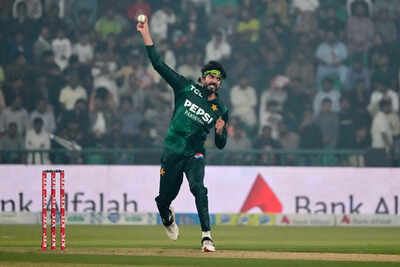
The distinctive pause in Usman Tariq’s bowling stride has become a central point of discussion following his significant contribution to Pakistan’s T20 World Cup campaign. This visible hesitation before ball release prompted varied interpretations among cricket analysts and former players. Furthermore, figures like Aakash Chopra and Shreevats Goswami publicly questioned the procedural acceptability of such pauses within a run-up. Goswami notably drew parallels to football penalty rules, where continuous motion is mandated.

Ashwin, however, adopted a firm, analytical stance. He systematically challenged the prevailing double standards, inquiring why bowlers frequently encounter more rigorous examination than batters. He highlighted that batters execute unconventional shots, such as switch-hits, without mandatory prior notification to umpires. In contrast, bowlers must inform officials even when merely altering their bowling arm. This structural disparity, Ashwin argues, warrants a re-evaluation to ensure balanced governance within the sport.
Elevating Sporting Standards: The Socio-Economic Impact for Pakistani Talent
The rigorous scrutiny applied to a player like Usman Tariq carries profound socio-economic implications, particularly for emerging Pakistani cricketing talent. Such public debates, while seemingly technical, directly influence the perception and confidence of young athletes aspiring to professional careers. When a legitimate action faces unfounded questions, it can create a baseline of uncertainty, potentially deterring innovation or unique techniques. This situation underscores the critical need for transparent and equitable assessment processes in sports.
Consequently, Ashwin’s articulate defense serves as a vital safeguard. It reinforces the principle that evaluations must rely on objective, accredited methods rather than subjective visual judgments. For Pakistani students and aspiring professionals, clarity on rules and fair implementation provides a more stable ecosystem. This stability allows talent to flourish, ensuring that unique abilities, such as Tariq’s, are recognized and nurtured within the established parameters of the game.
Strategic Validation: A Momentum Shift for Player Development
Ashwin further elaborated on the calibrated approach required for assessing bowling legality, stating unequivocally that visual judgment alone is insufficient. He stressed that precise evaluations are exclusively possible at an ICC-accredited bowling action testing center. Here, bowlers are meticulously assessed against the internationally permitted 15-degree elbow extension limit. This standardized protocol ensures scientific validation over anecdotal observation, providing a definitive framework.
Historically, Tariq has faced previous reports for a suspect action during the Pakistan Super League, yet on both instances, the ICC officially cleared him. His distinctive action is directly influenced by his double-jointed elbows, a physiological condition preventing full arm straightening, notably shared with Sri Lankan legend Muttiah Muralitharan. Ashwin strategically concluded that Tariq’s delivery pause, being a consistent and natural element of his stride rather than a deceptive tactic, should be considered fully legal.
This development represents a Momentum Shift. Ashwin’s expert intervention solidifies the importance of evidence-based adjudication in cricket. It provides a robust defense against subjective criticism, thereby promoting confidence and fostering a fairer environment for player development within the sport. Furthermore, it reinforces the structural integrity of ICC protocols, ensuring that unique talents are judged by precise, objective metrics.