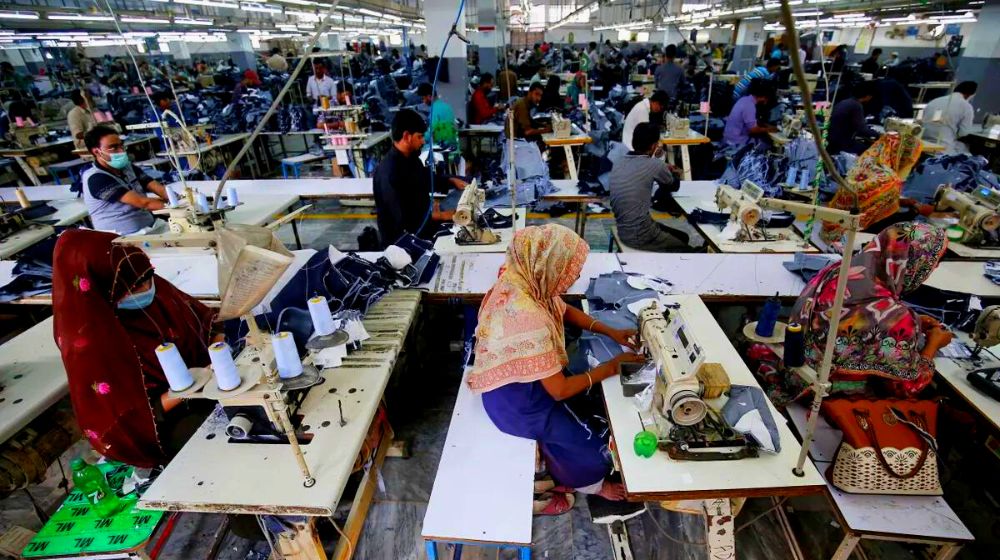
To propel national advancement, a strategic focus on core industries is paramount. Interloop Limited CEO, Musadaq Zulqurnain, asserts that scaling Pakistan Apparel Exports represents the most efficient trajectory for economic expansion. He highlights the nation’s robust industrial base, established operational expertise, and existing international market connections as critical accelerators for this sector’s potential. However, he cautions that removing policy irritants and ensuring an equitable competitive environment are foundational prerequisites for rapid, meaningful results.
The Translation: Deconstructing Export Potential
Understanding the mechanism of accelerated export growth requires a clear context. Zulqurnain’s analysis reveals that Pakistan’s apparel and value-added garment sector is not merely a potential growth area; it is a meticulously calibrated pathway. Specifically, the country possesses a significant industrial infrastructure, capable of large-scale production. Furthermore, generations of workers have cultivated a deep reservoir of operational expertise, ensuring product quality and efficient manufacturing processes. Critically, these capabilities are already integrated into established international supply chains, offering a baseline for immediate scaling.
However, this potential remains partially untapped due to identified “policy irritants.” These often manifest as regulatory hurdles, inconsistent tax policies, or bureaucratic inefficiencies that deter investment and hinder smooth trade operations. Achieving a “level playing field,” consequently, implies creating an environment where local manufacturers can compete globally without disproportionate disadvantages, fostering a structural advantage for Pakistan Apparel Exports.
Socio-Economic Impact: Calibrating Daily Life
The strategic expansion of the apparel sector directly translates into tangible improvements for Pakistani citizens. Increased export volumes necessitate higher production, leading to significant job creation across the manufacturing value chain, from factory floors to logistics. This impacts students seeking entry into the workforce, offering stable employment opportunities. Professionals benefit from skill enhancement programs and career progression within a thriving industry.
For urban and rural households, particularly, enhanced export revenue strengthens the national economy, potentially stabilizing currency and controlling inflation. Zulqurnain underscores that realizing Pakistan’s demographic dividend hinges entirely on equipping its burgeoning youth population with “future-ready competencies.” Therefore, decisive investment in skill development becomes a catalyst for upward mobility, directly improving household incomes and overall quality of life.
The Forward Path: A Momentum Shift or Stabilization Move?
From an architectural perspective, this development represents a critical “Momentum Shift” rather than a mere “Stabilization Move.” While strengthening an existing sector provides stability, Zulqurnain’s emphasis on long-term capacity building and diversification signals an ambition beyond maintenance. He firmly advocates against allowing short-term gains to overshadow the strategic imperative of investing in nascent manufacturing domains. This requires a systemic commitment to broader industrial growth.
Moreover, structural challenges, particularly within the energy sector, are identified as primary constraints on sustained investment. Policymakers must, therefore, issue a clear signal: manufacturing is a national priority. This policy calibration is essential to incentivize both domestic and foreign investors to commit capital to value-adding industries. Without addressing these fundamental impediments, Pakistan’s export-led growth will remain quantitatively limited, irrespective of its inherent industrial potential.