

Understanding the Pakistan Airfare Increase: A Structural Adjustment
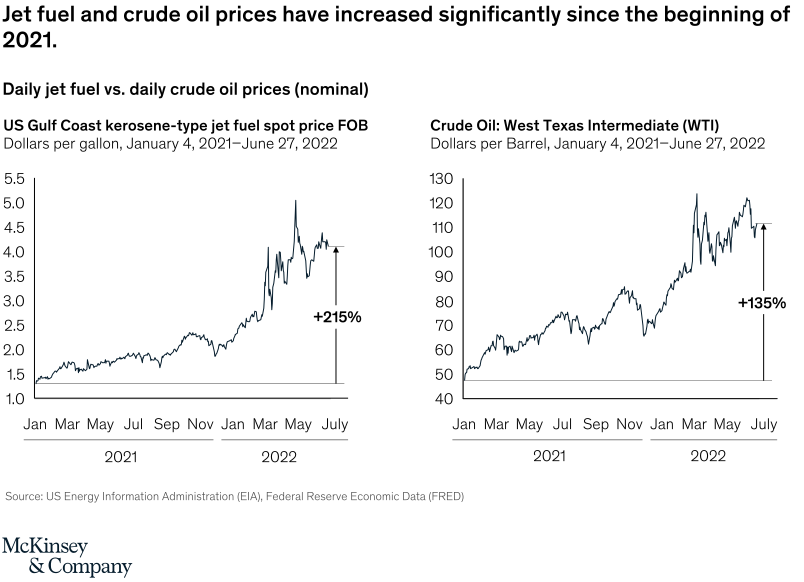
A significant Pakistan airfare increase is now impacting domestic and international travel following a sharp surge in jet fuel costs. This calibrated adjustment by airlines reflects a direct response to a Rs. 154 per liter hike, pushing fuel prices to Rs. 342 per liter. Consequently, travelers face substantial increases, with domestic tickets rising by Rs. 2,800 to Rs. 5,000, and international fares seeing an increase of Rs. 10,000 to Rs. 28,000, depending on the destination. This development underscores the critical link between global commodity prices and localized economic realities, necessitating strategic financial planning for all Pakistani citizens.
The Translation: Deconstructing the Fuel Price Catalyst
The recent jet fuel price hike Pakistan is not merely an incremental change; it represents a structural shift in operational baselines for the aviation sector. Previously, jet fuel was priced lower, but the current increase of Rs. 154 per liter to a new rate of Rs. 342 per liter significantly escalates airline operating expenses. This direct cost pressure inevitably translates into higher ticket prices, as airlines must maintain profitability and operational viability. For example, a flight from Karachi to Lahore now costs an additional Rs. 2,800 to Rs. 5,000 per ticket. Furthermore, this financial recalibration affects long-haul international routes more acutely due to greater fuel consumption.

The Socio-Economic Impact: Navigating Rising Travel Expenses
This Pakistan airfare increase directly affects the daily lives of countless Pakistani citizens, from students studying abroad to professionals commuting for work, and families planning essential visits. Domestically, the increased cost makes inter-city travel less accessible for many, potentially reducing internal tourism and business mobility. Internationally, the impact is more pronounced:
- Middle East & Central Asia: Fares have risen by up to Rs. 15,000, impacting labor migration and trade.
- Toronto & Manchester: One-way economy fares have surged by as much as Rs. 28,000, now exceeding Rs. 250,000. This places significant financial strain on expatriates and those seeking educational or medical opportunities.
Consequently, households must re-evaluate budgets, with travel becoming a more substantial expenditure. This economic pressure point requires adaptable financial strategies from citizens and stakeholders alike.
The “Forward Path”: A Stabilization Move Amidst Market Dynamics
This development represents a Stabilization Move rather than a Momentum Shift. Airlines are implementing a necessary adjustment to operational costs, ensuring continued service delivery in a volatile global energy market. While the immediate impact is higher travel expenses for consumers, this strategic recalibration aims to maintain the structural integrity of the aviation sector. Future advancements must explore more resilient fuel supply chains or alternative energy sources to mitigate such dependencies. Ultimately, a proactive approach to energy diversification will be a catalyst for long-term air travel affordability and national advancement.









