Shaheen Afridi Sets New Pakistan T20 Record in T20 World Cup 2026
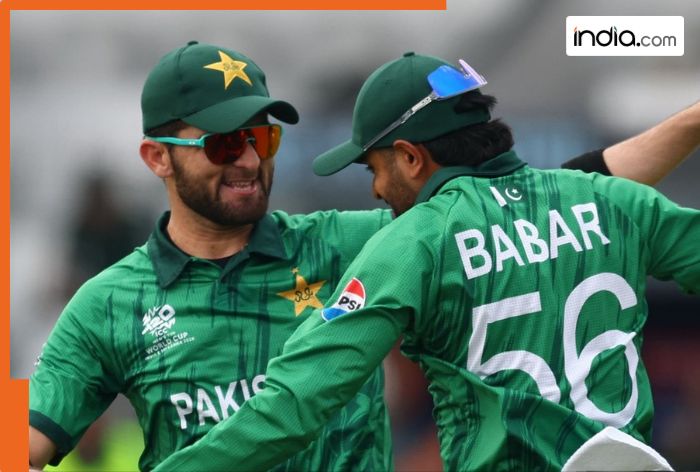
Pakistan’s fast bowling spearhead, Shaheen Shah Afridi, has established a significant Shaheen Afridi T20 record, becoming the nation’s highest wicket-taker in T20 International cricket. This calibrated performance, while personally momentous, regrettably coincided with Pakistan’s defeat against England in the ICC Men’s T20 World Cup 2026 Super Eight stage. Afridi’s strategic spell of 4 wickets for 30 runs across four overs in the critical match highlights his consistent impact, even as team efforts fell short of securing victory.
The Translation: Calibrating Performance Amidst Adversity
Afridi’s recent spell was not merely a good performance; it was a structural milestone. He now commands the top position as Pakistan’s leading T20I wicket-taker, accumulating 135 wickets from 102 matches. This achievement strategically surpasses Haris Rauf’s previous benchmark of 133 wickets in 94 matches. Furthermore, this data solidifies Afridi’s role as a pivotal asset in Pakistan’s bowling attack, consistently delivering high-pressure performances on the global stage.
Consequently, the national record now reflects a new hierarchy:
- Shaheen Afridi: 135 wickets (102 matches)
- Haris Rauf: 133 wickets (94 matches)
- Shadab Khan: 114 wickets (123 matches)
- Shahid Afridi: 96 wickets (98 matches)
- Mohammad Nawaz: 91 wickets
Despite Afridi’s early breakthrough, including a precision wicket in his very first over, Pakistan struggled to leverage this initial momentum. The strategic framework of the team’s bowling attack and overall game plan failed to provide adequate support, preventing a full capitalization on Afridi’s formidable start.
Socio-Economic Impact: Resonating National Aspirations
How does this Shaheen Afridi T20 record resonate with the daily life of a Pakistani citizen? While a team loss can dampen spirits, individual brilliance like Afridi’s provides a critical uplift. For students and aspiring athletes in urban and rural Pakistan, such milestones serve as tangible proof that dedication and skill can lead to national recognition. This individual achievement acts as a catalyst, inspiring a new generation to pursue excellence in sports, thereby fostering healthier lifestyles and potentially channeling youth energy towards productive national representation.
Professionals, likewise, can draw parallels from this disciplined pursuit of excellence. It underscores the importance of individual contribution within a team structure, even when collective outcomes are challenging. The narrative shifts from mere defeat to a recognition of structural strengths and areas requiring strategic improvement.
The “Forward Path”: A Momentum Shift for Individual Prowess
This development undeniably represents a Momentum Shift for Shaheen Afridi’s career trajectory and Pakistan’s cricketing legacy. His consistent ability to perform at peak levels, culminating in this T20 record, establishes a new baseline for fast bowling in the nation. However, for the team’s overall progression in the ICC Men’s T20 World Cup 2026, the performance against England signals a Stabilization Move. It highlights fundamental areas—particularly in batting cohesion and bowling support—that require urgent and precise calibration for future tournaments.
The match, held in Kandy, Sri Lanka, saw England secure a two-wicket victory, significantly impacting Pakistan’s semi-final prospects. Pakistan captain Salman Ali Agha’s decision to bat first, unfortunately, did not yield the desired strategic advantage. Despite notable contributions from Sahibzada Farhan (63 runs), Babar Azam (25 runs), Fakhar Zaman (25 runs), and Shadab Khan (23 runs), the collective batting effort was insufficient to set a formidable target.
Intriguingly, another record was meticulously set during the match: Shadab Khan and Salman Mirza forged a 15-run ninth-wicket partnership. This precisely surpassed the previous T20 World Cup record for Pakistan’s ninth-wicket stand, initially held by Saeed Ajmal and Umar Gul, demonstrating resilient, albeit late, structural contributions.