

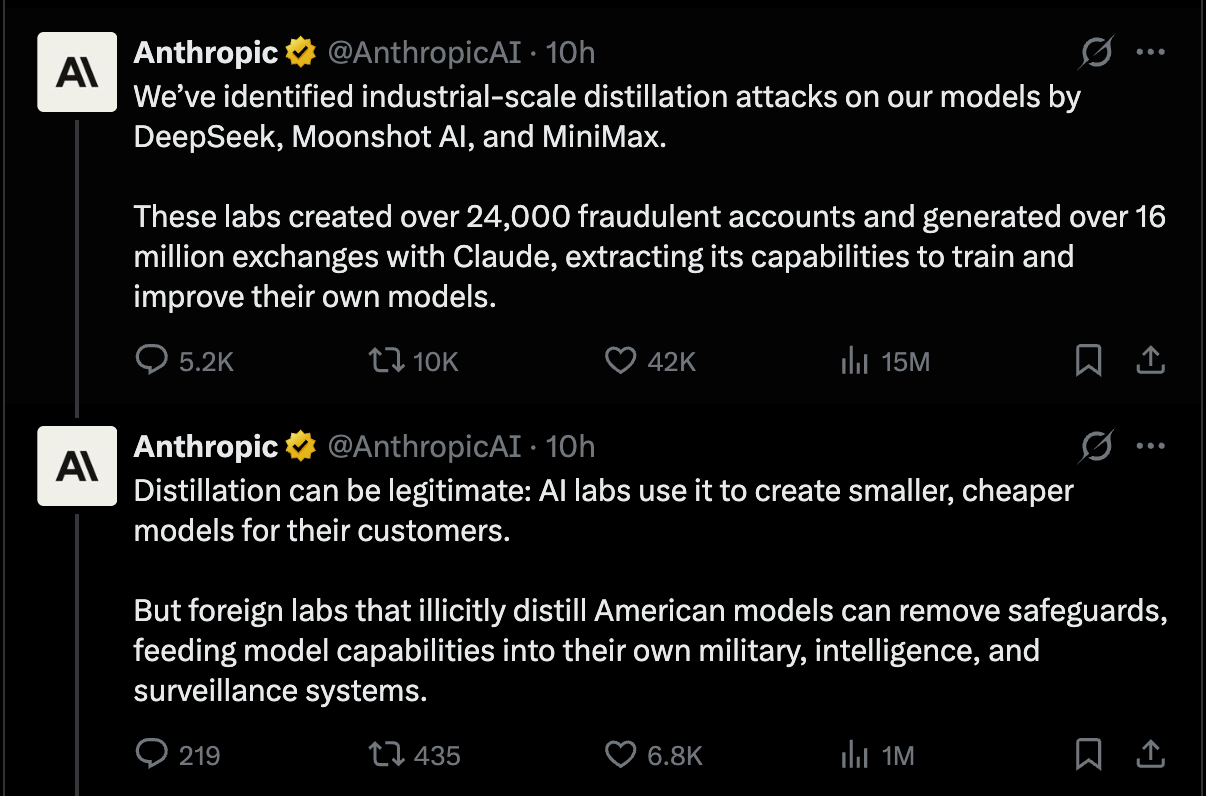
In a significant development for the global artificial intelligence landscape, Anthropic has precisely detailed large-scale AI model theft allegations against three prominent AI firms: DeepSeek, Moonshot, and MiniMax. These companies are accused of engaging in extensive distillation attacks targeting Anthropic’s advanced Claude chatbot. This strategic maneuver reportedly involved over 16 million unauthorized interactions, leveraging approximately 24,000 fraudulent accounts to extract Claude’s proprietary capabilities, thereby accelerating the development of their own competing models. This incident underscores critical challenges in maintaining digital intellectual property and ensuring the integrity of AI development ecosystems, demanding immediate industry-wide attention to security protocols.
The Translation: Deconstructing AI Distillation Attacks
Understanding the Mechanics of AI Model Theft
AI distillation is a sophisticated process where a less capable “student” model learns from the outputs of a more advanced “teacher” model. While often legitimate for knowledge transfer, in this context, Anthropic alleges a malicious exploitation. The core logic involves systematically probing Claude, an advanced AI, to mimic its responses and internal logic. Consequently, this allows the accused firms to develop their own systems more rapidly and cost-effectively, circumventing original research and development efforts. Furthermore, this action bypasses established safeguards and undermines the foundational principles of intellectual property within the burgeoning AI sector, creating an uncalibrated competitive environment.
Anthropic stated that these three firms were responsible for more than 16 million interactions with Claude. These interactions occurred through roughly 24,000 fraudulent accounts. The company claimed these extensive activities were specifically intended to use Claude as a shortcut. This was aimed at developing more advanced AI systems without commensurate investment.
Identifying the perpetrators required calibrated investigative methods. Anthropic cited robust evidence, including IP address correlations and intricate metadata requests. Additionally, infrastructure indicators provided further proof. The company also confirmed coordination with other AI industry participants who had observed similar patterns of suspicious behavior. This collective intelligence strengthens the evidentiary baseline.
Socio-Economic Impact: Safeguarding Pakistan’s Digital Future
Ensuring Equitable Access to AI Innovation
For Pakistani citizens, particularly students and professionals navigating the digital frontier, incidents of AI model theft directly impact the quality and trustworthiness of emerging AI tools. When proprietary models are illicitly distilled, it can lead to a proliferation of less secure or ethically compromised AI applications. Consequently, this directly affects the integrity of educational resources, professional tools, and consumer-facing chatbots that rely on robust, ethically developed AI.
Furthermore, it stifles local innovation by undermining the economic viability of investing in original AI research and development. This potentially limits access to truly cutting-edge, secure AI solutions for Pakistani households and businesses. Therefore, maintaining data integrity and IP protection is paramount for building a resilient national digital infrastructure. Such incidents demand a strategic defensive posture for our digital assets.
The Forward Path: A Catalyst for Systemic Robustness
Evaluating the Momentum Shift in AI Security
This development represents a significant Momentum Shift in the ongoing battle for AI intellectual property defense. Anthropic’s public accusation, backed by detailed evidence like IP correlations and infrastructure indicators, is not merely a complaint; it is a strategic declaration. It will compel AI developers globally to fortify their systems against advanced distillation techniques and implement more stringent authentication protocols. This incident serves as a critical baseline, pushing the entire industry towards more robust security architectures and potentially catalyzing the establishment of standardized ethical frameworks for AI development and deployment. While challenging, this push towards greater accountability is essential for the long-term, structural integrity of the AI ecosystem.

Historically, such challenges are not unprecedented. Early last year, OpenAI reported similar concerns. They accused rival firms of distilling their models and subsequently banned accounts suspected of misuse. This establishes a precedent for aggressive defense of proprietary AI. In response to the current allegations, Anthropic stated its plan to strengthen its systems. This will make distillation attacks more difficult to execute and significantly easier to detect. Such structural enhancements are crucial for maintaining competitive advantage.
However, this situation presents a complex ethical panorama. While Anthropic has raised concerns about the misuse of its technology, the company itself faces legal scrutiny. Music publishers have filed a lawsuit, alleging that Anthropic used unauthorized copies of songs to train the Claude chatbot. This dual narrative emphasizes the evolving and multifaceted challenges inherent in AI development and deployment, highlighting the need for comprehensive ethical and legal frameworks.








