The Karachi Red Line BRT project, a critical urban transit infrastructure, now anticipates an additional one to one and a half years for complete operationalization. Provincial Minister Sharjeel Inam Memon recently detailed these revised projections, citing persistent logistical and operational challenges as the primary drivers for the extended timeline. However, the Sindh government has strategically reaffirmed its unwavering commitment, issuing calibrated directives for the expedited completion of crucial side roads before Eid and prioritizing swift clearance of the University Road corridor. This disciplined approach aims to minimize ongoing disruption while maintaining consistent forward momentum on this pivotal initiative.
Deconstructing Delays: Clarity on the Red Line BRT Timeline
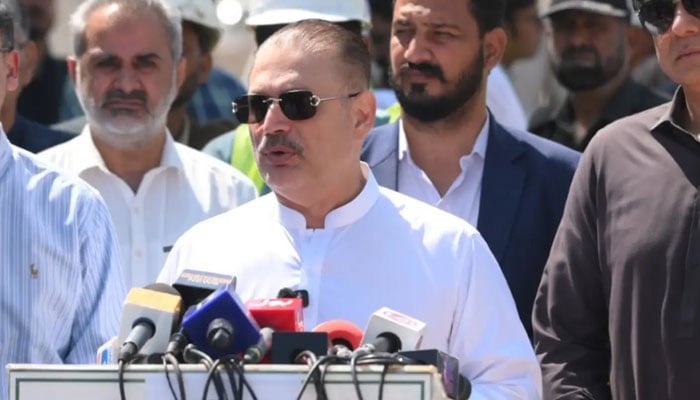
Minister Memon explicitly stated that numerous issues have substantially impeded the initial timeline for the Red Line project, even reaching a point where suspension was a risk. Nevertheless, the Sindh government conducted a thorough analysis and made a firm decision to proceed, ensuring the project’s continuity. This commitment involves intensified construction efforts on vital thoroughfares such as University Road and Jinnah Avenue, with completion projected within the next two to three months. Furthermore, work on Shahrah-e-Bhutto, which strategically links to the M-9 motorway, is slated to commence by late March or early April, enhancing Karachi’s broader connectivity network.

Addressing Supply Chain Bottlenecks
A critical operational impediment, as highlighted by Minister Memon, concerns the prolonged customs clearance for new transit buses. These essential vehicles have been stalled for two months, exacerbating logistical complexities. Moreover, a significant disparity in customs duty rates—allegedly a one percent charge for Punjab compared to a demanded 17 to 18 percent for Sindh—has prompted the provincial government to formally appeal to the Federal Board of Revenue for uniform treatment. Consequently, this inequitable policy structurally impacts project costs and delivery schedules, underscoring the need for a unified national approach to regional infrastructure development.
Socio-Economic Impact: Elevating Urban Mobility for Karachi Citizens
The revised timeline for the Red Line BRT project directly influences the daily commutes and economic productivity of Pakistani citizens, particularly in Karachi. Students and working professionals will continue navigating current transit challenges for an extended period, requiring adaptive strategies for their daily movements. Conversely, the government’s reaffirmed dedication signals a future characterized by reduced travel times, alleviated traffic congestion, and improved access to critical educational and employment hubs upon the system’s operationalization. For households across both urban and rural Karachi, especially those reliant on public transit, the project’s eventual completion promises significantly enhanced urban mobility and, consequently, expanded socio-economic opportunities. The ongoing development, including the strategic Shahrah-e-Bhutto link, signifies a calibrated investment in Karachi’s long-term urban resilience and infrastructural connectivity.
Structural Investments in Connectivity and Growth
This comprehensive infrastructure development serves as a powerful catalyst for broad-based economic growth. Enhanced public transport facilitates more efficient access for the workforce to industrial zones and commercial centers, thereby increasing overall productivity. Furthermore, it systematically reduces individual transportation expenses, effectively reallocating household income towards other essential needs. Strategically, improved connectivity seamlessly integrates diverse neighborhoods, fostering robust community interaction and expanding access to vital services. Despite facing challenges, the project’s steadfast progression underscores a profound commitment to a more interconnected, efficient, and economically vibrant Karachi.
The Forward Path: A Stabilization Move for Karachi’s Urban Fabric
This development fundamentally represents a “Stabilization Move” rather than an immediate “Momentum Shift.” While the extended timeline is undeniably suboptimal, the Sindh government’s decisive action to ensure project continuity, despite substantial obstacles, clearly demonstrates a structural commitment to urban infrastructure. The ongoing large-scale development work across Karachi, coupled with direct intervention on customs disparities, collectively indicates a disciplined effort to address systemic challenges head-on. This strategic patience and calibrated execution are absolutely essential for establishing a robust baseline for future urban advancements, ultimately ensuring the Karachi Red Line BRT delivers its intended long-term benefits to the populace.