Calibrating for Catastrophe: Northern Pakistan’s Climate Challenges
Precision data indicates a concerning surge in the Gilgit-Baltistan GLOF risk, driven by unprecedented warming patterns across northern Pakistan. Below-normal winter precipitation, coupled with sustained clear-sky conditions, has critically elevated regional temperatures. Consequently, this climatic anomaly accelerates snow and glacier melt, particularly at lower altitudes, increasing water accumulation in glacial lakes. The Pakistan Meteorological Department (PMD) rigorously monitors these evolving conditions to calibrate proactive mitigation strategies for vulnerable communities.
The Translation: Unpacking Gilgit-Baltistan’s Warming Trajectory
Northern Pakistan experienced significantly reduced rainfall and snowfall during the recent winter season, aligning precisely with the PMD’s seasonal forecast. This deficit in precipitation, combined with stable atmospheric patterns, has generated persistently elevated temperatures throughout Gilgit-Baltistan, particularly within the first three weeks of February 2026. For instance, daytime maximum temperatures registered 3–5°C above the climatological average. Furthermore, nighttime minimum temperatures remained 1–3.5°C above the 1981–2010 baseline, structurally inhibiting crucial overnight refreezing processes.
Specific regions like Gilgit and Bunji have manifested the highest warming trends, while Chilas and Bunji notably experienced increases in minimum temperatures. This calibrated analysis confirms that sustained above-normal temperatures are a primary catalyst for accelerating snow and glacier melt, predominantly at mid to lower altitudes. Moreover, the reduced nocturnal cooling further amplifies meltwater runoff, directly contributing to heightened water volumes within glacial lakes.

The Socio-Economic Impact: Daily Life Under Heightened GLOF Risk
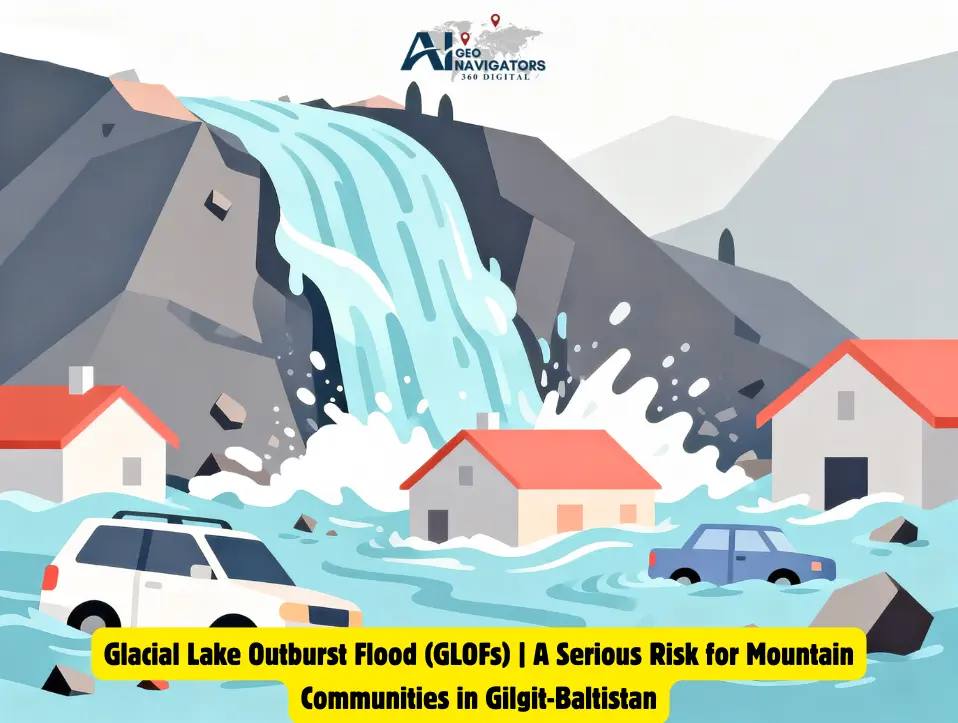
The accelerated meltwater accumulation in both moraine and glacier-dammed lakes critically elevates the likelihood of Glacial Lake Outburst Flood (GLOF) events in downstream valleys. Consequently, this scenario directly threatens the daily lives of Pakistani citizens, impacting students, professionals, and households across urban and rural landscapes in the region. For instance, a GLOF event can swiftly devastate agricultural land, essential infrastructure like roads and bridges, and vital water supply systems. This structural vulnerability necessitates robust preparedness.
Furthermore, communities in areas such as Gilgit, Ghizar, Hunza, Bunji, Chilas, and Astore face potential displacement and severe economic disruption. The loss of livelihoods, educational continuity, and access to basic services represents a profound socio-economic challenge. Therefore, understanding the mechanics of this heightened Gilgit-Baltistan GLOF risk is not merely an environmental concern but a foundational issue of national stability and human security.
The Forward Path: Strategic Resilience Against Future Climate Events
The PMD’s calibrated outlook for February–April 2026 projects a high probability of continued above-normal temperatures across northern Pakistan, encompassing Gilgit-Baltistan and Kashmir. If this warming trajectory persists, the structural risk of glacier melt acceleration and subsequent GLOF occurrences will demonstrably increase in already vulnerable areas. This necessitates a strategic intensification of monitoring and early warning systems.
The PMD maintains continuous vigilance, closely monitoring temperature trends, glacier melt conditions, and hydro-meteorological parameters. This precision oversight enables the issuance of timely advisories to relevant authorities and at-risk communities. This proactive stance represents a Stabilization Move—a critical maintenance effort to mitigate immediate threats. However, for true national advancement, a more profound Momentum Shift is required, encompassing long-term climate adaptation strategies and investment in resilient infrastructure to systematically reduce future GLOF vulnerabilities.