

Pakistan’s capital is undergoing a systemic reset in public order. Islamabad Police have arrested 588 professional beggars this year, marking a significant intensification of the Islamabad begging crackdown. This precision operation targets not only individuals but also the organized networks and facilitators exploiting vulnerable populations for economic gain, aiming to reclaim urban spaces and enhance citizen safety under the Islamabad Prevention of Beggary Act.
The Translation: Deconstructing the Enforcement Framework
This decisive action by Islamabad Police represents a structural commitment to public order, moving beyond superficial responses to address the root mechanisms of organized begging. The ongoing Islamabad begging crackdown is not merely about individual arrests; it is a calibrated strategy to dismantle the logistics, transport, and financial support systems that enable these networks to operate. Data indicates that comprehensive actions are targeting facilitators and even parents who exploit children, recognizing their integral role in perpetuating this cycle.
Furthermore, authorities leverage advanced surveillance, including Safe City cameras and human intelligence, to precisely identify and apprehend those providing logistical support. This dual approach of direct intervention and network disruption ensures a more sustainable impact on urban safety. Consequently, the focus shifts towards prevention and the restoration of civic integrity, rather than simply reactive measures. This structural pivot is crucial for the success of the Islamabad begging crackdown.
Strategic Enforcement Against Organized Networks
Under the direct leadership of Inspector General of Police Syed Ali Nasir Rizvi, the Islamabad Police have executed operations with unprecedented rigor. These initiatives are designed to restore urban functionality and prevent harassment in public zones, including roads, intersections, and commercial centers. By registering cases under the Islamabad Prevention of Beggary Act, the legal framework is robustly applied to reinforce accountability.
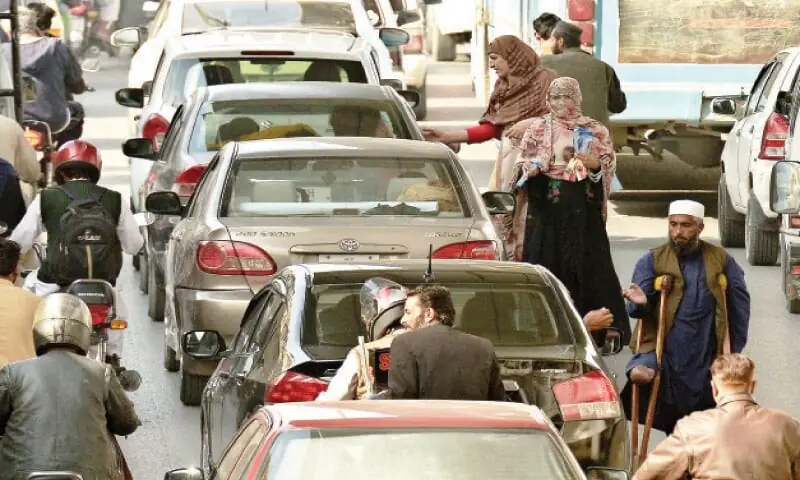
Moreover, the police reported that eight large-scale search and combing operations were conducted. During last week’s efforts, 1,340 individuals were checked, 604 houses inspected, 10 hotels and 21 shops searched. Furthermore, 428 motorcycles and 137 vehicles underwent examination, with 86 suspicious individuals, including 20 foreigners, along with 25 motorcycles, being taken to police stations for verification. These statistics underscore the depth of the operational reach in the overall Islamabad begging crackdown.
Identifying and Disrupting Facilitation
A critical component of this systematic intervention involves targeting the underlying support structures. Investigations have revealed that many individuals posing as beggars are also implicated in various street crimes across the city. This revelation underscores the nexus between organized begging and broader criminal activities, thereby necessitating a multi-faceted law enforcement response. Police efforts specifically focus on identifying and prosecuting contractors and parents who enable these illicit operations, marking a significant elevation in operational scope.
The Socio-Economic Impact: Calibrating Urban Livability
For the average Pakistani citizen, particularly those residing in Islamabad’s urban and peri-urban zones, this sustained crackdown translates into tangible improvements in daily life. Reduced begging and associated street crime enhance public safety, allowing families and professionals to navigate markets and public spaces with greater confidence. Students, in particular, will benefit from safer routes to educational institutions and less exposure to potentially exploitative elements. This strategic intervention directly contributes to a more secure environment, fostering greater civic participation and economic stability.
In rural areas, where many individuals are often transported from, the disruption of organized networks could potentially deter human trafficking and exploitation, though secondary impacts will require further monitoring. Ultimately, the objective is to elevate the overall quality of life by restoring a baseline of order and security, which is fundamental for both individual well-being and collective advancement. The results of the Islamabad begging crackdown are critical here.
The “Forward Path”: A Momentum Shift for Public Order
This comprehensive operation represents a decisive Momentum Shift rather than a mere Stabilization Move. The integrated approach, targeting both individuals and their support structures, signifies a calibrated long-term strategy to systematically eradicate organized begging from the capital. The utilization of technology, coupled with intelligence-driven operations and public cooperation, establishes a robust template for urban security management. This proactive stance, aiming to protect citizens’ lives and property, sets a critical precedent for future initiatives across Pakistan, signifying a structural advancement in national policing efforts.








