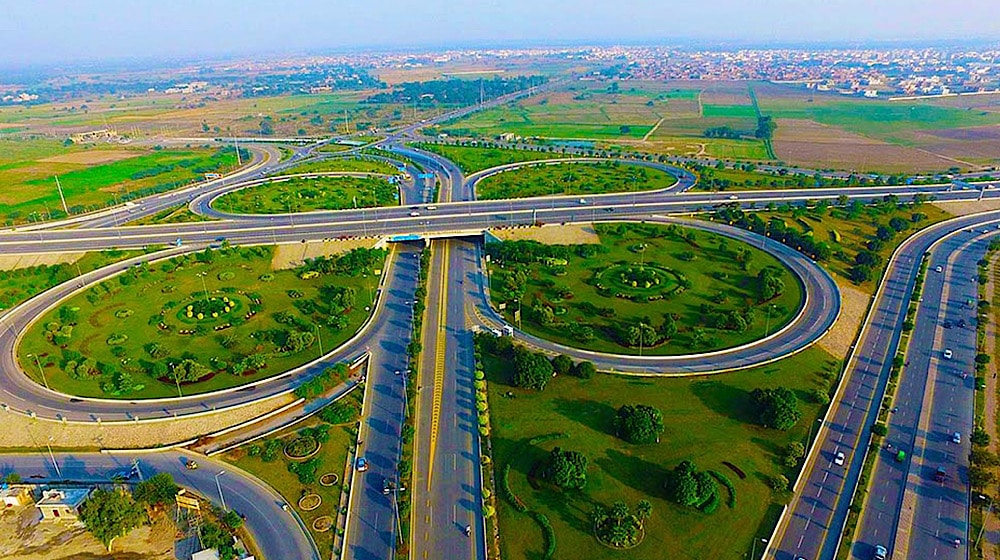
Pakistan’s infrastructure blueprint advances with the imminent commencement of the Thalian Interchange construction, a pivotal Rs. 5 billion component of the Rawalpindi Ring Road (RRR) project. This strategic initiative, slated to begin next week, will optimize urban transit by enhancing critical motorway connectivity, directly impacting the daily commute of over 18,000 vehicles. Consequently, the divisional administration has initiated accelerated land acquisition for the revised project scope, ensuring timely execution of this national development.
The Translation: Calibrating Urban Connectivity
Initially, the plan designated 557 kanals for the interchange; however, design revisions necessitated acquiring an additional 358 kanals adjacent to the motorway. This expansion reflects a calibrated engineering adjustment to accommodate the projected traffic volume and integration with the wider RRR network. Furthermore, Section 14 has been imposed to streamline land acquisition, demonstrating a decisive administrative move to secure the project’s foundational requirements. Authorities have addressed property displacement challenges, aiming for resolution within days.
Structural Progress and Project Enhancements
The Frontier Works Organisation (FWO) has received directives to prepare for the Thalian Interchange construction. Significantly, the RRR project has achieved substantial progress, with contractors completing 28 kilometers of asphalt work on the 38.3-kilometer stretch. Other interchanges and overpasses are finalized, and the installation of lampposts and lighting systems is underway. Furthermore, crews have completed jersey barrier installations and expect to conclude water channel construction within two weeks, ensuring the project’s structural integrity and operational readiness.
Socio-Economic Impact: Streamlining Daily Life and Commerce
The operationalization of the Thalian Interchange fundamentally transforms daily life for citizens, professionals, and businesses in Rawalpindi and its environs. For students and daily commuters, this strategic link will significantly reduce travel times and alleviate congestion on existing routes, translating into tangible efficiency gains. Consequently, businesses will benefit from enhanced logistics and reduced transportation costs, fostering regional economic growth. The direct connection to the motorway at this juncture will serve as a catalyst for urban development, benefiting both urban households and facilitating access for rural communities to major economic hubs.
The Fiscal Framework: Project Cost and Revenue Model
Integrating the Thalian Interchange has incrementally increased the total project cost of the Rawalpindi Ring Road to Rs. 47 billion. This comprehensive project features five interchanges, operating as a six-lane controlled-access corridor engineered for a design speed of 120 kilometers per hour. Moreover, the administration has adopted the Lahore Ring Road’s successful toll model, proposing an Rs. 80 charge per vehicle. This revenue mechanism represents a sustainable fiscal strategy for infrastructure maintenance, with a summary for approval slated for submission to the Punjab government next week.
The Forward Path: A Momentum Shift for Regional Infrastructure
This development undeniably represents a Momentum Shift for Pakistan’s infrastructure matrix. The Thalian Interchange construction and the broader Rawalpindi Ring Road project move beyond mere maintenance, signifying a proactive investment in future-proof urban planning. The systematic execution, strategic land acquisition, and adoption of a proven financial model collectively demonstrate a disciplined approach to national advancement. This project will serve as a baseline for future large-scale infrastructure undertakings, enhancing connectivity and calibrating the nation’s transit efficiency for decades to come.