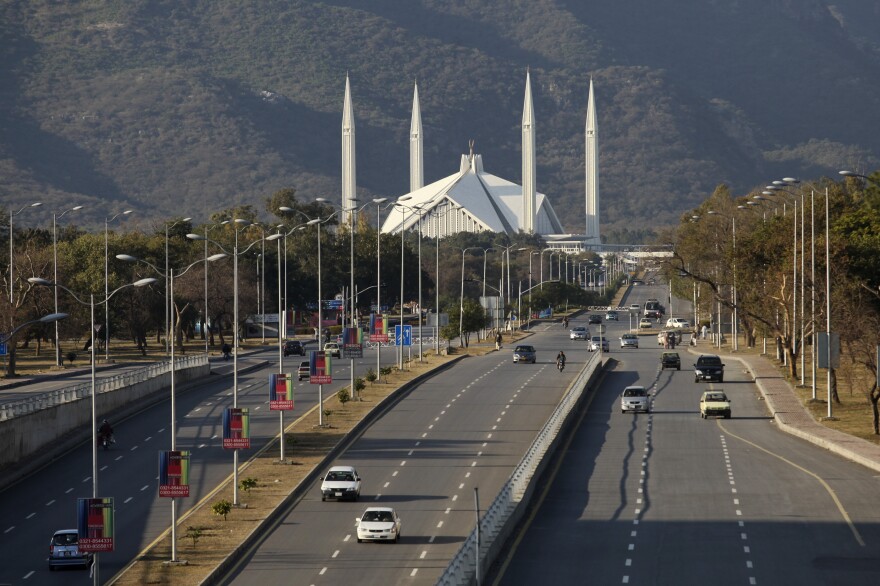
To strategically alleviate Islamabad’s intensifying traffic congestion, the Capital Development Authority (CDA) has launched a precision initiative: the construction and rehabilitation of a 9-kilometer Islamabad Expressway service road. This critical infrastructure project, extending from Faizabad Interchange to Gulberg Greens, is engineered to provide a robust alternative route, significantly enhancing daily commuting efficiency and connectivity for thousands of residents along the capital’s busiest corridor.
The Translation: Deconstructing Islamabad’s Traffic Solution
The CDA’s strategic decision directly addresses chronic traffic bottlenecks on the main Islamabad Expressway. Specifically, this new Islamabad Expressway service road will span 9 kilometers, linking the Faizabad Interchange to Gulberg Greens. Subsequently, officials plan a further extension from Korral to Rawat, creating a continuous alternate traffic corridor. This phased development ensures a calibrated approach to infrastructure enhancement.
Furthermore, this project prioritizes key populated areas. These include Soan, Pindorian, Shakrial, Garden Town, Khanna, Kangal, Ghouri Town, and Korral. Consequently, residents in these sectors will gain direct access to an efficient, secondary route, circumventing the primary highway’s congestion. The immediate objective is to reduce travel times and improve overall traffic flow for urban and suburban commuters.

Socio-Economic Impact: Calibrating Daily Life for Pakistani Citizens
This infrastructure upgrade carries significant socio-economic benefits for ordinary Pakistani citizens. For students and professionals, reduced commute times translate directly into more productive hours, alleviating daily stress associated with urban travel. Families residing in rapidly expanding sectors along the Expressway will experience improved accessibility to educational institutions, workplaces, and vital commercial zones.
Moreover, the enhanced traffic flow promises economic advantages. Businesses dependent on timely logistics will benefit from faster transportation routes, potentially reducing operational costs. In contrast, for households in both urban and adjacent rural areas, better road networks signify greater integration into the capital’s economic fabric, fostering regional development and access to critical services. This project fundamentally recalibrates urban mobility.
The Forward Path: A Momentum Shift for Urban Mobility
This new Islamabad Expressway service road project represents a clear “Momentum Shift” for Pakistan’s urban infrastructure development. It signifies a proactive, rather than reactive, approach to managing metropolitan growth and its inherent challenges. The CDA’s plan to continually upgrade road infrastructure is a catalyst for sustainable urban planning, moving beyond mere maintenance to genuine progress.
Consequently, by investing in foundational connectivity, Pakistan signals its commitment to creating efficient, resilient urban systems. This strategic development not only solves an immediate traffic problem but also lays structural groundwork for future expansion and economic vitality. Therefore, it is a definitive step towards a more efficient and interconnected capital.